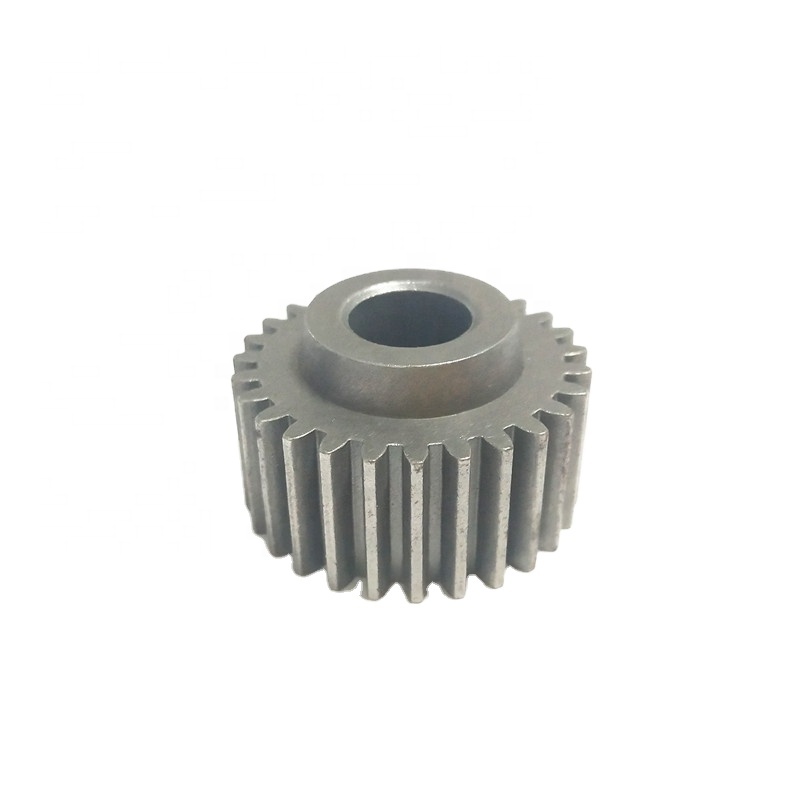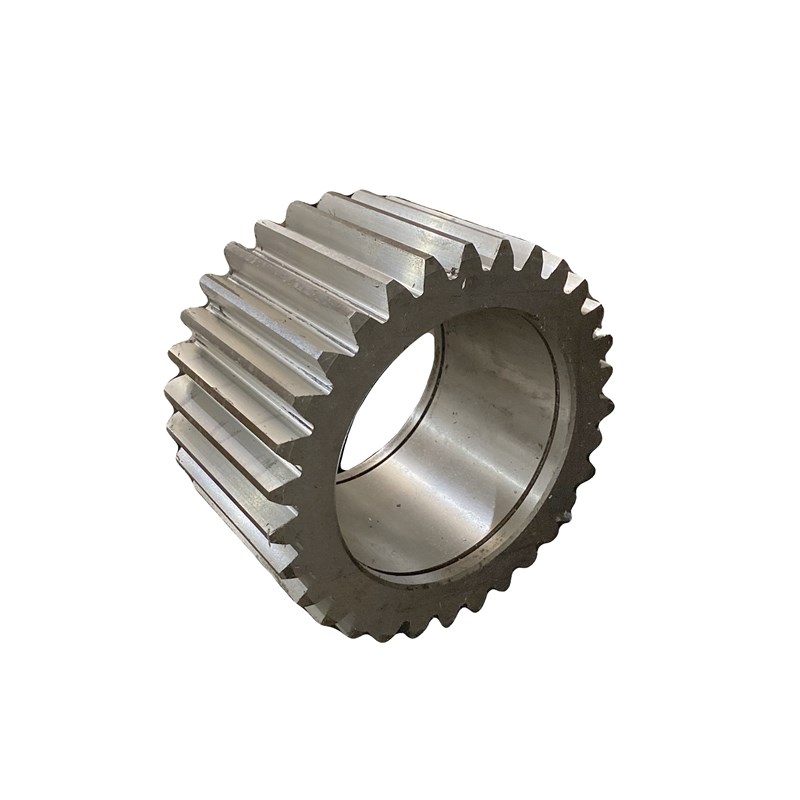
Starter Drive Transmission Machine Precision anodize Aluminium Spur Gear
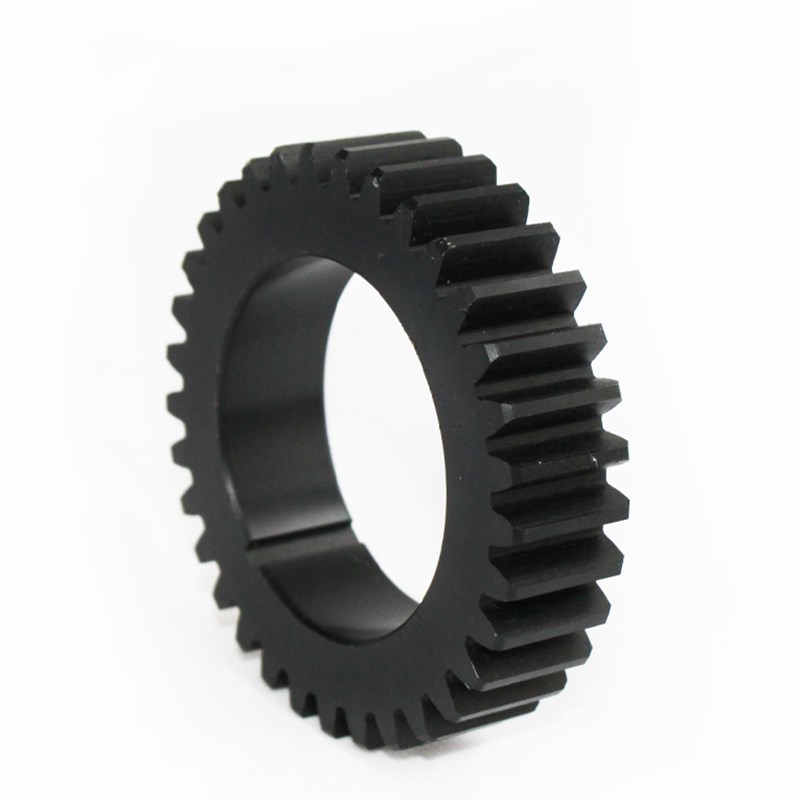
Anodized Aluminum Spur Gears: Lightweight Precision Power for High-Performance Automotive Transmissions
In the competitive world of automotive engineering, every component counts. The transmission system, in particular, is a focal point for improving fuel efficiency, reducing emissions, and enhancing driving dynamics. For manufacturers of engine components – especially those supplying to demanding Asian markets – choosing the right gear material and manufacturing process is no longer just a matter of cost; it is a strategic decision that affects vehicle performance, durability, and brand reputation.
From the perspective of a seasoned precision gear product manager, this article provides an in-depth look at a proven solution: hard anodized aluminum spur gears. We will explore why aluminum alloy, when properly engineered and surface-treated, is an ideal choice for automotive transmission applications, and how Gearseiko has successfully delivered such components to a leading Asian engine component manufacturer.
1. The Material Challenge in Modern Transmissions
Traditional automotive transmissions rely heavily on alloy steel gears. Steel offers high strength and wear resistance, but it also brings significant weight and high rotational inertia. In the era of electrification, hybridization, and strict CO₂ regulations, every kilogram matters. Heavier gears increase fuel consumption, reduce acceleration response, and place higher demands on synchronizers and bearings.
Aluminum alloys present a compelling alternative. With a density of approximately 2.7 g/cm³ – about one-third that of steel (7.85 g/cm³) – aluminum can drastically reduce gear mass. Lower mass means lower inertia, which translates into faster synchronization, smoother shifting, and reduced energy loss due to churning in the transmission oil bath. However, untreated aluminum lacks the surface hardness required for tooth flank contact under load. This is where hard anodizing becomes indispensable.
2. Hard Anodizing: Transforming Aluminum into a Wear-Resistant Engineering Material
Hard anodizing is an electrochemical process that converts the surface of an aluminum part into a dense, ceramic-like aluminum oxide (Al₂O₃) layer. Unlike decorative anodizing, hard anodizing produces a much thicker coating – typically 50 to 100 microns – with hardness values reaching HV 300 to HV 500, comparable to hardened steel or even corundum.
For gears, this ceramic layer offers multiple benefits:
-
Exceptional wear resistance – The anodized surface withstands repeated tooth meshing without galling or adhesive wear.
-
Low friction coefficient – The oxide layer has a naturally low affinity for lubricants and counter surfaces, reducing friction losses.
-
Corrosion protection – Anodized aluminum resists oxidation from transmission fluids, moisture, and road salts.
-
Thermal stability – The oxide layer remains stable up to the melting point of aluminum (around 660°C), far beyond typical transmission operating temperatures (-40°C to 150°C).
Importantly, hard anodizing does not compromise the mechanical strength of the aluminum core. The substrate retains its toughness and ductility, while the hard shell protects the contact surfaces.
3. Why Spur Gears for Automotive Transmissions?
Spur gears – cylindrical gears with straight, parallel teeth – are a classic choice for many transmission applications. Unlike helical gears, spur gears generate no axial thrust, simplifying bearing arrangements and housing designs. This makes them particularly suitable for:
-
Reverse gear trains – Where axial space is limited and load direction changes frequently.
-
Synchronizer hubs and sleeves – Where precise axial movement is required.
-
Low-to-medium torque gear stages – Where efficiency and compactness are prioritized over absolute load capacity.
When manufactured from anodized aluminum, spur gears offer additional advantages specific to automotive transmissions:
-
Reduced churning losses – Aluminum gears cut through transmission fluid with less resistance than steel gears, improving overall drivetrain efficiency by 2–4% in real-world driving cycles.
-
Better shift quality – Lower inertia allows synchronizers to equalize speeds more quickly, reducing shift effort and improving driver comfort.
-
Lower noise, vibration, and harshness (NVH) – The damping characteristics of aluminum, combined with precise gear cutting, can result in quieter operation compared to steel in certain speed ranges.
4. Gearseiko’s Engineered Solution for an Asian Engine Component Leader
Gearseiko is a specialized manufacturer of high-end precision gears, with deep expertise in aluminum gear design, hobbing, heat treatment, and anodizing. Our recent collaboration with a leading Asian engine component supplier illustrates the real-world value of anodized aluminum spur gears.
The Customer Requirement
The customer – a tier-one supplier to several major automotive brands – was developing a new generation of small turbocharged gasoline engines. Their transmission required a spur gear component with the following specifications:
-
Weight reduction – At least 35% lighter than the existing steel design.
-
Durability – Minimum 100,000 load cycles at maximum input torque (280 Nm) without pitting or excessive wear.
-
Temperature range – Functionally stable from -40°C to +150°C, with no measurable distortion.
-
Cost-effectiveness – Suitable for annual volumes of 50,000+ units.
Our Approach
After a thorough engineering review, Gearseiko proposed the following solution:
-
Base material – 7075-T6 aerospace-grade aluminum alloy, known for its high strength-to-weight ratio and good anodizing response.
-
Gear cutting – 5-axis CNC hobbing on German-sourced machines, achieving JIS Class 0 tooth profile accuracy (profile error ≤3μm, lead error ≤3μm).
-
Hard anodizing – A proprietary mixed-acid electrolyte (sulfuric-oxalic) operating at 0–4°C with pulsed current to ensure uniform oxide thickness across the tooth flank, root, and tip. Target thickness: 65±5μm.
-
Sealing – High-temperature nickel acetate sealing to close micropores and maximize corrosion resistance.
-
Inspection – 100% dimensional check using a CNC gear measuring center; sample cross-section analysis for oxide thickness and microhardness.
Results Achieved
Customer validation testing, including a 300-hour transmission durability cycle simulating urban and highway driving, confirmed the following:
-
Weight reduction – 36% lighter than the steel baseline.
-
Wear performance – Tooth flank wear was only one-fifth that of the steel gear after equivalent cycles.
-
No thermal distortion – All gears remained within JIS Class 1 tolerance after thermal cycling.
-
Efficiency gain – The complete transmission showed a 2.8% reduction in oil churning losses at high speed, contributing to a measurable fuel economy improvement.
The customer has since approved the anodized aluminum spur gear for serial production, and Gearseiko is now the exclusive supplier for this component.
5. Why Choose Gearseiko for Your Aluminum Gear Needs?
Not every gear manufacturer can successfully produce anodized aluminum gears that meet automotive standards. Gearseiko brings together three critical capabilities under one roof:
Precision Machining
We operate a fleet of German and Japanese gear cutting machines – hobbing, shaping, and shaving – capable of holding DIN, JIS, or AGMA grades up to the highest levels. For aluminum gears, we use specialized carbide tooling and optimized cutting parameters to prevent burr formation and achieve excellent surface finish (Ra ≤0.4μm).
Anodizing Expertise
Hard anodizing of gears is non-trivial. The complex tooth geometry requires carefully designed fixturing to ensure uniform current distribution. Our anodizing line includes programmable rectifiers, closed-loop temperature control, and custom racking systems for gears from 20 mm to 300 mm in diameter. We routinely achieve thickness uniformity within ±5μm across all tooth surfaces.
Quality Assurance
Every batch undergoes:
-
Dimensional inspection – Gear measuring center (tooth profile, lead, pitch, runout).
-
Oxide thickness measurement – Eddy current testing on reference coupons plus destructive cross-section sampling.
-
Microhardness testing – Verification of HV 350+ on the oxide layer.
-
Visual and dye-penetrant inspection – To detect cracks or discontinuities.
We also maintain a collaborative R&D process with our customers, sharing failure mode analysis and continuously improving design rules for aluminum gears.
6. Looking Ahead: Aluminum Gears in Future Transmissions
As the automotive industry moves toward higher efficiency, lower emissions, and increased electrification, the role of lightweight materials will only grow. Anodized aluminum gears are already appearing in electric vehicle (EV) reducers, hybrid transmission modules, and performance-oriented dual-clutch transmissions. The combination of low inertia, good thermal conductivity, and wear resistance makes them an attractive option wherever rotating mass must be minimized without sacrificing reliability.
Gearseiko is actively developing next-generation anodizing processes – including plasma electrolytic oxidation (PEO) – to further enhance hardness and lubricity. We are also exploring high-strength aluminum alloys beyond 7075, such as 7068 and aluminum-lithium compositions, to push the performance envelope even further.
Conclusion
Anodized aluminum spur gears have moved beyond laboratory curiosity. They are a proven, reliable, and cost-effective engineering solution for modern automotive transmissions. By combining the inherent lightweight properties of aluminum with a hard, wear-resistant ceramic surface, manufacturers can achieve significant improvements in fuel economy, shift quality, and durability.
Gearseiko has demonstrated this capability through a successful series production program for a leading Asian engine component supplier. If you are facing challenges with steel gear weight, inertia, or efficiency – or if you simply want to explore what aluminum can do for your transmission – we invite you to contact our engineering team. From material selection to anodizing parameters and gear geometry optimization, we are ready to support your next project.
Gearseiko – Precision aluminum gears driving a lighter, more efficient future.
Steel Metal Starter Pinion Precision Wheel Transmission mechanical arm Bevel Gear
High Precision Stainless Steel Electric bicycle transmission Spur Gear
Related Article