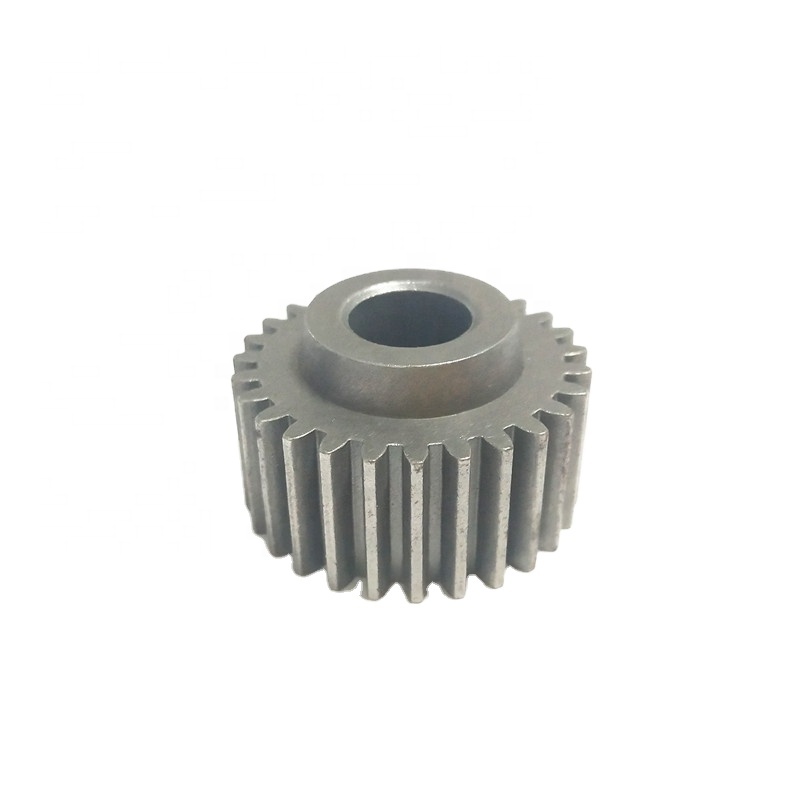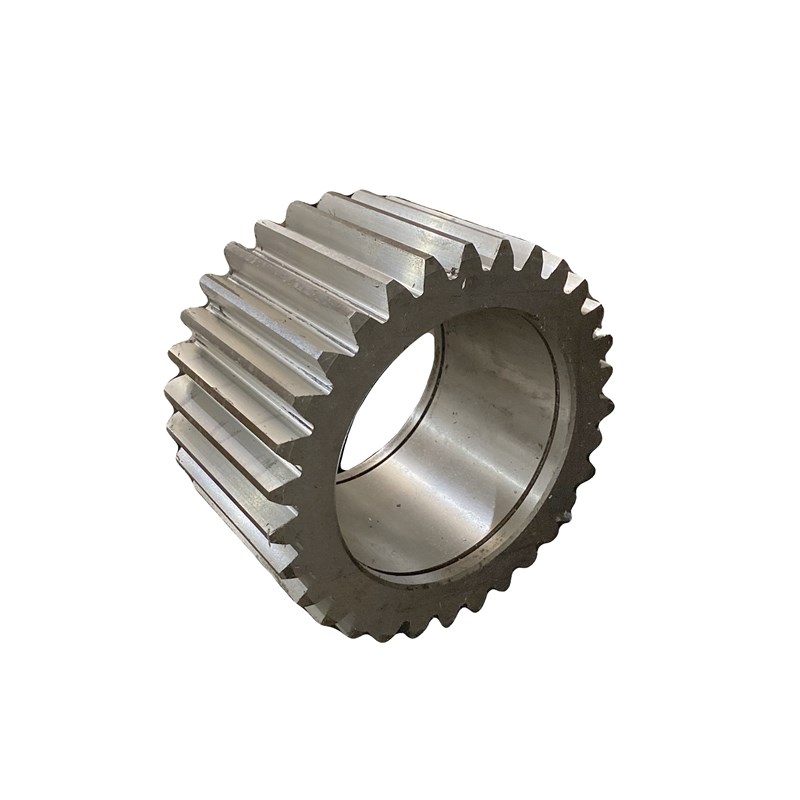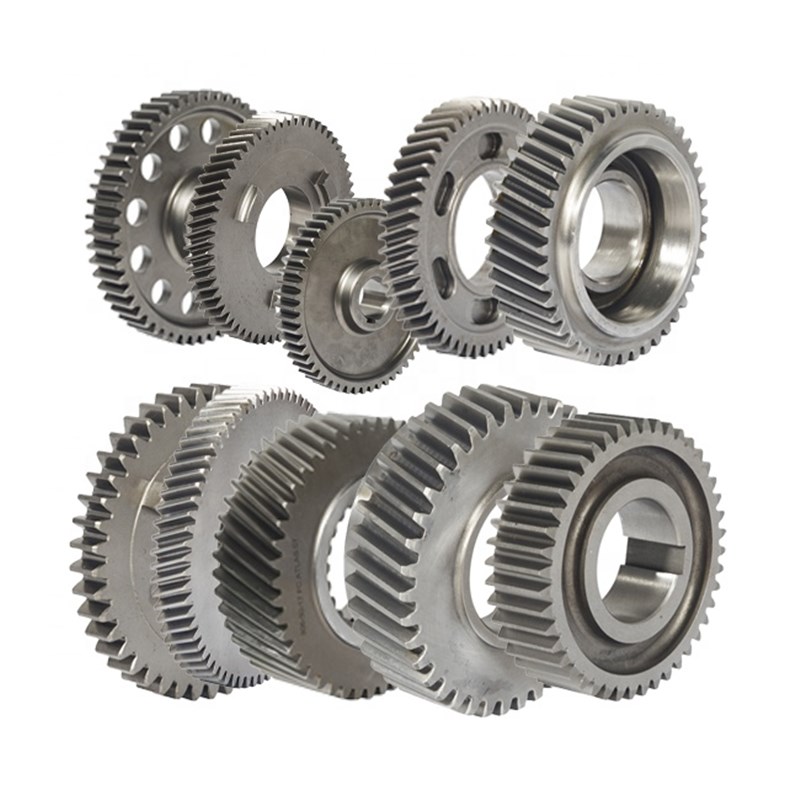
Precision Transmission Steel Metal motorcycle engine Helical Spur Gear
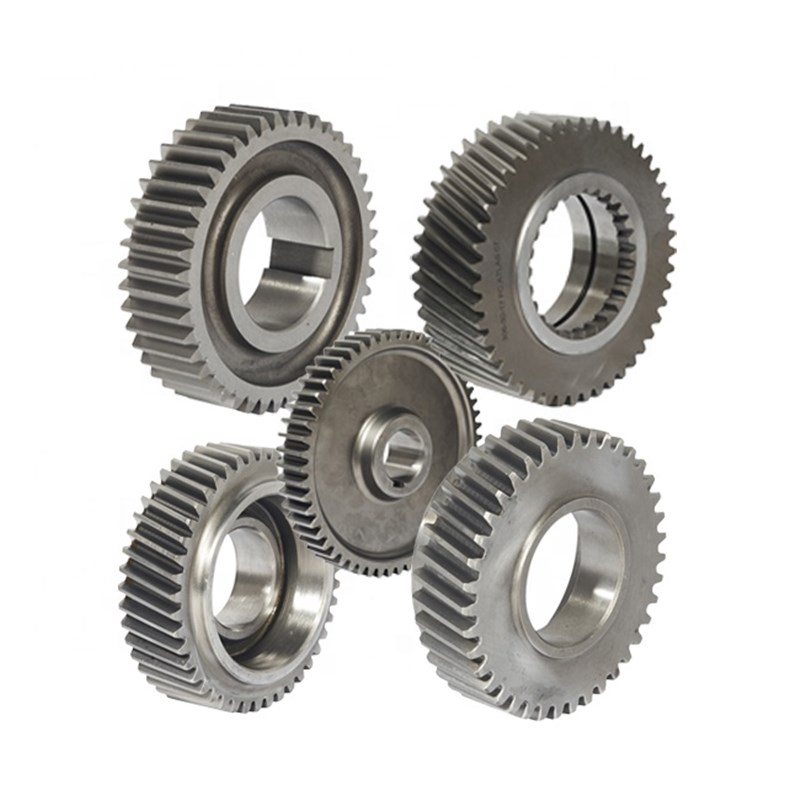
Precision 45# Steel Bevel Gears for Motorcycle Engine Camshaft Drives: The Material That Defines Reliability
When a motorcycle engine settles into a smooth idle and then surges toward its redline, an unseen component endures relentless demands—the bevel gear pair that drives the camshaft. In a four-stroke engine, the crankshaft must rotate twice for every single rotation of the camshaft to maintain perfect valve timing. This task directly determines power delivery, fuel efficiency, noise levels, and engine longevity. Within the bevel gear set, the driving bevel gear at the lower end carries the full load from the crankshaft through a vertical shaft and a 90° turn to the camshaft. The choice of gear material, the stability of heat treatment, and the precision of tooth flank machining together form the foundation of reliability.
Gearseiko has long specialized in manufacturing high-precision, high-end gears. Our recent collaboration with a renowned European motorcycle engine manufacturer on 45# steel bevel gears exemplifies this commitment. The customer required gears capable of maintaining stable meshing characteristics and extremely low wear under continuous high-speed operation, frequent thermal shock, and marginal lubrication conditions. By selecting 45# steel as the base material and applying full-process quality control, we delivered a drive solution that exceeded expectations.
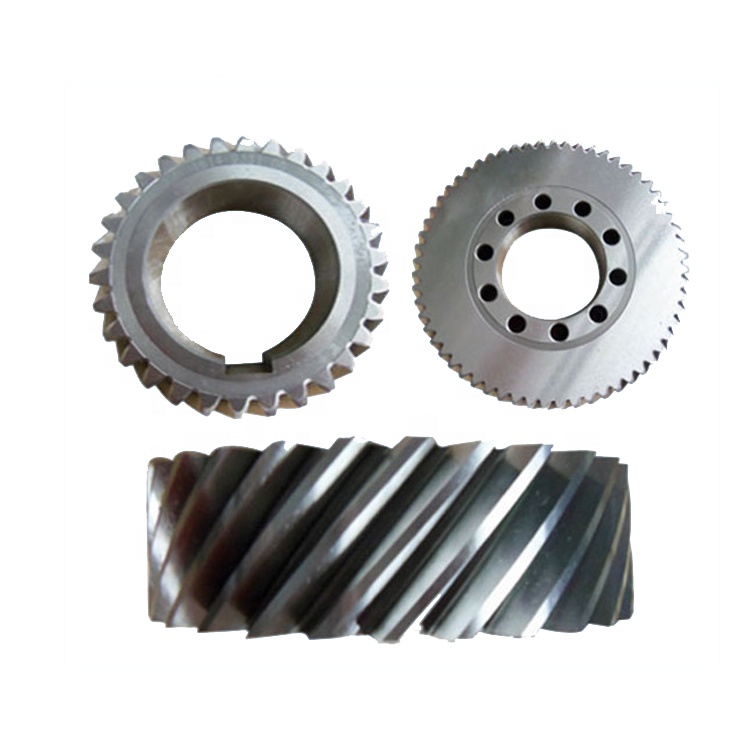
Why 45# Steel Is Indispensable for Camshaft Drive Bevel Gears
In real-world motorcycle riding, the camshaft drive bevel gear faces multiple challenges. First, alternating torque impact: rapid throttle opening and closing creates high-frequency shock loads transmitted to the gear teeth. Second, sustained high-speed operation: sport-oriented engines often run above 8,000 rpm, generating very high tooth sliding velocities that demand exceptional scuffing resistance and fatigue strength. Third, thermal cycling: from cold start to full operating temperature, the engine experiences a temperature rise of more than 100°C. The coefficient of thermal expansion of the gear material must match that of the shaft system; otherwise, backlash drift occurs, leading to noise and even premature failure.
45# steel (a high-quality carbon structural steel per GB/T 699) has become a classic choice for this application because of its unique balance of properties. Its chemical composition—carbon 0.42%–0.49%, silicon 0.17%–0.37%, manganese 0.50%–0.80%, with sulfur and phosphorus each limited to ≤0.035%—ensures a clean matrix. After normalizing at 850°C, the hardness does not exceed 197 HB, providing excellent machinability for tooth cutting and shaving. Most importantly, after the precisely controlled quenching and tempering process developed by Gearseiko—quenching at 840°C followed by high-temperature tempering at 600°C—the microstructure of 45# steel transforms into uniform tempered sorbite. Tensile strength stabilizes at ≥600 MPa, yield strength ≥355 MPa, and impact toughness (Akv) ≥39 J. Final tooth surface hardness is controlled within HRC 42–46. This hardness range effectively resists contact fatigue (pitting and wear) while avoiding the brittle fracture risk associated with excessively high hardness. Compared to ordinary carbon steel (which lacks strength) or case‑hardened alloy steel (significantly more expensive and prone to distortion in thin‑wall bevel gears), 45# steel achieves an optimal balance among performance, cost, and process stability.
From Forged Blank to Finished Gear: The Gearseiko Precision Manufacturing Chain
To fully exploit the potential of 45# steel, Gearseiko has established a complete process control system.
Step 1 – Controlled flow forging. We use closed‑die forging to align the metal flow lines along the gear tooth profile. After forging, shot blasting removes surface scale, and 100% magnetic particle inspection eliminates folds and cracks.
Step 2 – Precision cutting. Six‑axis CNC spiral bevel gear milling machines generate the tooth surfaces by the forming method. Rough grinding stock is kept at 0.15–0.20 mm, followed by gear grinding with CBN (cubic boron nitride) wheels. Tooth profile accuracy reaches ISO Grade 6, with surface roughness Ra ≤0.4 μm. For the journal portion of the driving bevel gear, hard turning ensures a cylindricity within 0.005 mm for the bearing fit.
Step 3 – Controlled‑atmosphere heat treatment. The final performance of the gear depends on precise execution of the heat treatment parameters. We perform quenching in a continuous controlled‑atmosphere furnace with carbon potential precisely controlled at 0.45%–0.50% to prevent surface decarburization. The quenching medium is a special isothermal martempering oil maintained at 80–120°C to minimize distortion. Tempering is carried out twice at 600°C, each soak for two hours, to fully transform retained austenite and completely relieve internal stresses. Every batch of gears is accompanied by a heat treatment process curve record and hardness test report.
Step 4 – 100% inspection and cleanliness control. Tooth geometry is inspected using a Klingelnberg gear measuring center, including cumulative pitch deviation, total profile deviation, and helix deviation. All gears undergo magnetic particle inspection and 100% dye penetrant inspection to ensure that no micro‑cracks exist at the tooth root or flank. Finally, high‑pressure spray cleaning reduces residual oil and particle content to less than 2 mg per part, meeting the cleanliness requirements of European engine assembly lines.
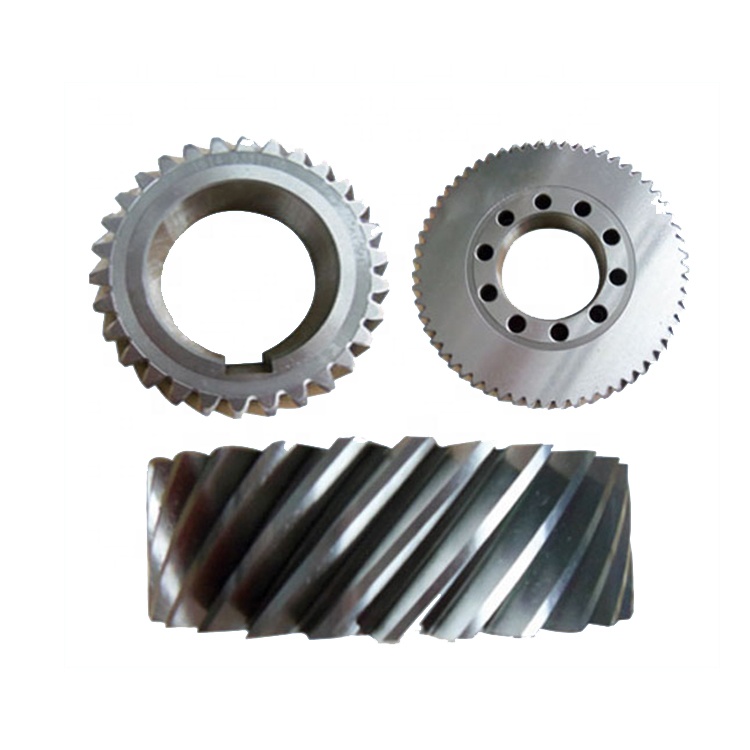
Real-World Performance in Motorcycle Engines: Verified Advantages
The 45# steel bevel gears have completed more than 500 hours of dynamometer durability testing and 30,000 km of on‑road testing in the customer’s 650cc parallel‑twin and 800cc V‑twin engines. The results demonstrate:
-
Backlash stability: Initial meshing backlash set at 0.08–0.12 mm. After full‑load endurance testing, the change in backlash was less than 0.02 mm, with no visible wear step on the tooth flanks.
-
Scuffing resistance: Under extreme conditions of oil temperature up to 130°C and engine speed 9,500 rpm, the tooth flanks showed no scuffing marks—only a uniform, normal run‑in polished surface.
-
Noise performance: In 1‑meter sound pressure level tests, the bevel gear order noise was reduced by 2.3 dB(A) compared to the original design. No abnormal whine was perceptible during riding.
-
Service life advantage: After 200 hours of alternating load fatigue testing, the contact pattern remained above 50% of the tooth height and 60% of the tooth length—far exceeding industry standard requirements.
These data directly prove that a bevel gear made of 45# steel with Gearseiko’s precision process can maintain stable camshaft drive performance throughout the motorcycle’s service life, reduce maintenance frequency, and enhance overall vehicle reliability and riding quality.
Gearseiko: A Trusted Partner for European Motorcycle Engineering
This partnership with a European motorcycle engine manufacturer did not happen by chance. The customer had evaluated multiple materials and suppliers before choosing Gearseiko. Their decision was based on a clear fact: we deliver not just parts that meet the drawing, but complete solutions covering material selection, heat treatment simulation, and mass production process control. Every 45# steel bevel gear is fully traceable—from the mill certificate and our incoming inspection report, through forging parameters, to final measurement data.
For engineers and procurement professionals who value intrinsic engine quality, Gearseiko represents stability, reliability, and expertise. Whether you need to reduce bevel gear noise in an existing engine or develop a high‑power‑density drive system for a new platform, we are ready to discuss your requirements. Starting with 45# steel and following the path of precision manufacturing, we deliver the transmission core that your motorcycle engine can rely on over time.
Gearseiko – Precision Drive, Reliable at Heart.
Background and Significance of Gear Transmission Reliability
Planetary Transmission Precision Pinion starter drive Worm Gear
Related Article