Precision Beyond Limits The Enduring Advantages of Large Gear Shaping with Rack Type Cutters
author: Cash
2026-07-10

Precision Beyond Limits: The Enduring Advantages of Large Gear Shaping with Rack-Type Cutters | Gearseiko
Introduction
In the high-stakes field of large-diameter precision gear manufacturing, few processing technologies boast timeless reliability comparable to MAAG gear shaping, also widely recognized as rack-type cutter gear shaping. Discontinued by the Swiss manufacturer since 1990, classic MAAG gear shaping machines have never faded from industrial production. Decades-old original units and CNC-retrofitted upgraded models still serve gear factories worldwide, thanks to their legendary structural durability, long-term precision stability, and exclusive processing capabilities — especially for double-helical gears with ultra-narrow clearance grooves that most conventional equipment cannot handle.
As a professional manufacturer specializing in large-scale high-precision gear fabrication, Gearseiko operates premium MAAG large gear shaping equipment. With years of in-depth mass production practice, we have fully verified the unique technical strengths and irreplaceable application value of rack-type cutter shaping technology in high-end large gear manufacturing.
1. Rack-Type Cutter: Inherent Structural Simplicity & Ultra-High Machining Consistency
The core competitiveness of MAAG-style gear shaping originates from its uniquely structured rack-type cutter (comb cutter). Featuring a simplified geometric design, rack cutters support ultra-precise manufacturing and consistent batch quality, laying a solid foundation for high-standard large gear processing.
At Gearseiko, we adopt dedicated universal fixtures and wire EDM machining for independent rack cutter production. Through one-time clamping positioning and multi-pass CNC finishing, we strictly control all core tolerances — including cutter positioning accuracy, tooth profile flatness, pitch uniformity and angular precision — within 0.01 mm. Every newly manufactured rack cutter achieves identical dimensional accuracy, delivering far superior batch consistency compared to custom large-module gear hobs.
This exceptional tool manufacturing precision translates directly to stable finished gear quality. Different from gear hobbing, where gradual hob wear continuously deteriorates tooth profile and lead accuracy throughout production, rack-type cutters allow immediate replacement at the first sign of minor wear without repeated alignment or position calibration. This ensures zero accuracy deviation from the first workpiece to the last in a full production batch — a crucial advantage for high-value large gear production, where rework and scrap are completely unaffordable.
2. Ultra-Wide Processing Range & Flexible Custom Machining
MAAG rack gear shapers are renowned for their industry-leading versatility in large gear manufacturing, covering an extensive range of gear sizes and types. Our mainstream SH-1200 model supports gear machining with diameters from 1 meter up to 12 meters, and module specifications ranging from 14 mm to over 62 mm, fully covering the size requirements of heavy-duty equipment, wind power, mining and metallurgical large gears.
Beyond size diversity, the equipment adapts to multiple complex gear types, including standard spur gears, integral shaft gears, ultra-narrow gap herringbone gears, and stacked double composite gears. All diverse workpieces can be processed on a single machine by replacing professional auxiliary attachments, greatly optimizing production flexibility and equipment utilization.
The unique stroke cutting mechanism further enhances process flexibility. Unlike fixed tool engagement length in gear hobbing, rack shaping completes tooth space forming through the linear stroke of the cutter slide. Operators can freely adjust stroke length based on cutter tooth count: cutters with more teeth adopt short-stroke high-efficiency processing, while fewer-tooth cutters use extended strokes to guarantee forming completeness. This targeted optimization balances cycle time efficiency and tool service life for every customized large gear project.
3. Zero Principle Kinematic Errors for Superior Surface & Dimensional Precision
Precision stability is the most prominent advantage of rack-type gear shaping, especially for large wide-face gears and high-tooth-count large-diameter gears. The entire shaping process eliminates the inherent kinematic errors that plague traditional gear hobbing: there is no complex differential transmission chain to induce lead deviation, and tooth profiles are generated by standard true involute rack trajectories, completely avoiding the approximate profile errors caused by hob structural limitations.
In actual mass production, Gearseiko’s MAAG shaping process stably delivers Ra 3.2 μm ultra-smooth tooth surface roughness. All core precision indicators — tooth profile accuracy, lead accuracy and pitch accuracy — consistently meet or exceed ISO/DIN Grade 7 standards. For large gears with strict operational stability and fatigue resistance requirements, this zero-principle-error processing feature fundamentally eliminates latent transmission errors and wear risks, ensuring long-term stable operation of heavy-duty transmission systems.
4. CNC Precision Tooth Modification with Repeatable Accuracy
Modern high-performance large gear design relies on precise tooth modification technologies (such as tip relief and flank correction) to optimize load distribution, reduce meshing impact and suppress operating noise. Rack-type gear shaping achieves high-precision tooth modification through direct CNC path programming, with all modification parameters digitally controlled and accurately executed.
This digital modification mode outperforms traditional hob-based processing by a large margin. Gear hobbing requires complex grinding wheel dressing for tooth modification, which suffers from inherent approximation errors and uneven wheel wear, leading to inconsistent modification accuracy between workpieces. In contrast, Gearseiko’s CNC-controlled rack shaping realizes fully consistent, repeatable tooth modification effects for every gear, perfectly matching customized design parameters for high-end modified large gears.
5. Optimized Contact Patterns & Outstanding Tooling Economy
Gears processed by rack-type shaping exhibit superior meshing performance after assembly, especially when serving as driving pinions in large transmission sets. Reasonable CNC-programmed tip relief removes excess material at tooth tips, effectively optimizing gear contact patterns, dispersing meshing stress, reducing operating noise and friction wear, and significantly extending the service life of large gear pairs.
In terms of production cost control, rack cutters deliver remarkable economic advantages for large gear manufacturing. Compared with expensive custom large-module spiral hobs, rack-type cutters feature simple structures, lower manufacturing thresholds and more affordable production costs. They support multiple repeated regrinding cycles: repeated face grinding does not change the original cutting edge profile, and the cutter remains usable until only a few millimeters of thickness remains.
To further enhance cost performance and tool life, Gearseiko adopts professional TiAlN (titanium aluminum nitride) coating for high-speed steel rack cutters. The coating effectively improves high-temperature resistance and wear resistance of cutting edges, greatly reducing tool replacement frequency and long-term production costs for batch large gear processing.
6. Gearseiko’s Professional Large Gear Rack Shaping Capabilities
Gearseiko perfectly combines the timeless precision advantages of classic MAAG rack shaping equipment with modern CNC intelligent control systems and standardized quality management processes. We break the limitations of traditional old equipment, achieving efficient, stable and high-precision manufacturing of various complex large gears.
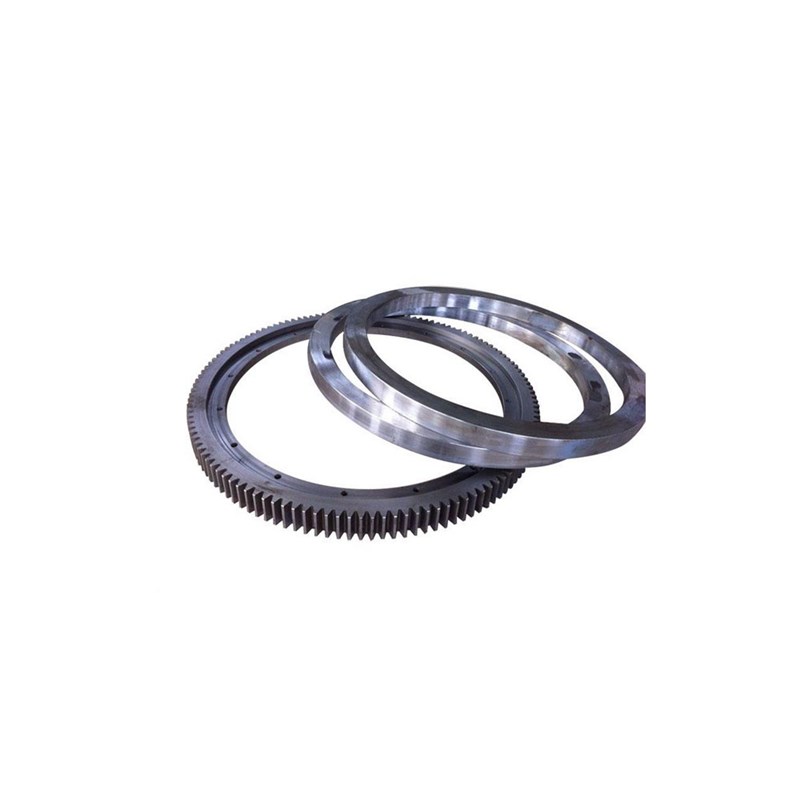
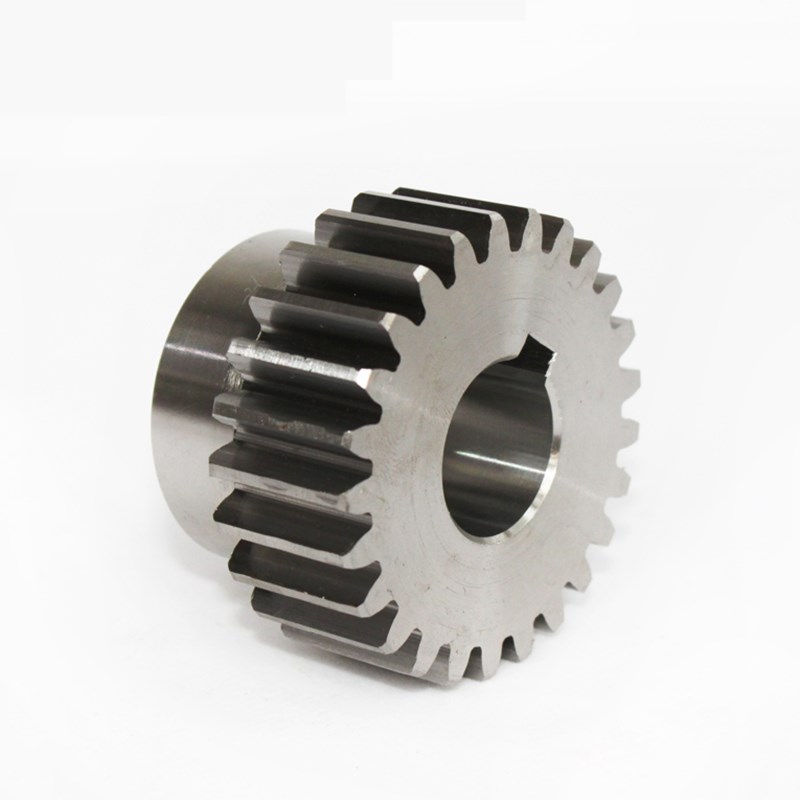
Our service covers all types of large-diameter gear customization: standard large spur gears, ultra-narrow clearance herringbone gears, high-precision modified profile large gears, and special stacked composite gears. Strict full-process quality inspection is implemented from tool manufacturing, trial cutting and formal processing to finished product testing, ensuring every delivered gear meets ultra-high precision and stability requirements.
For large gear manufacturing projects that demand zero compromise on precision and reliability, Gearseiko’s rack-type gear shaping technology is your most trustworthy solution partner.
Conclusion
Although MAAG rack-type gear shaping technology has a century-long development history, its unique advantages of zero principle error, ultra-wide processing range, flexible tooth modification and low tooling cost make it irreplaceable in the field of high-end large precision gear manufacturing. Combining vintage reliable equipment performance with modern digital processing technology, Gearseiko continues to deliver consistent, high-quality large gear products for global heavy equipment, wind power, mining and metallurgical industries.
FAQ | Large Gear Rack-Type Shaping & MAAG Shaping Technology
Q1: Why are MAAG rack shaping machines still widely used despite discontinued production?
A1: MAAG gear shapers feature extreme structural durability, long-term precision stability, and exclusive capabilities for processing double-helical gears with narrow clearance grooves. Equipped with modern CNC retrofits, they maintain irreplaceable processing advantages in large high-precision gear manufacturing.
Q2: What precision tolerance can Gearseiko’s rack-type shaping achieve?
A2: Our self-produced rack cutters control core tolerances within 0.01 mm. The finished large gears stably reach DIN/ISO Grade 7 or higher precision, with tooth surface roughness up to Ra 3.2 μm.
Q3: What is the core advantage of rack shaping over traditional gear hobbing?
A3: Rack shaping eliminates inherent kinematic and profile approximation errors of hobbing, ensuring consistent accuracy in full batch production. It also supports flexible stroke adjustment and high-precision CNC tooth modification, with far better tooling economy for large-module gears.
Q4: What gear specifications and types are suitable for MAAG shaping?
A4: It processes gears with 1–12 m diameter and 14–62+ mm modules, covering spur gears, shaft gears, narrow-gap herringbone gears and stacked double gears.
Q5: How does Gearseiko achieve accurate tooth modification for large gears?
A5: We adopt direct CNC path programming for tip relief and flank modification, realizing fully digital, repeatable high-precision correction, avoiding the approximate errors of traditional hob wheel dressing modification.
Q6: What are the cost advantages of rack-type cutters?
A6: Rack cutters are cheaper to manufacture and maintain, support multiple regrinding cycles without profile deformation, and can be TiAlN-coated to extend service life, greatly reducing tool costs for large gear mass production.
Fly Tool Generating for Worm Wheel Machining on Hobbing Machines A Complete Technical Guide
Gearseikos High Efficiency Precision Solution
Related Article