How Gearseiko Redefines the Manufacturing Standard for High End Precision Gears
author: Cash
2026-06-03
Fine Blanking: How Gearseiko Redefines the Manufacturing Standard for High-End Precision Gears | Gearseiko
Within advanced precision manufacturing, gears function as indispensable core power-transmission components whose precision and finished quality directly govern equipment operating performance, running noise and overall service lifespan. High-end applications covering automotive transmissions, aerospace actuators, precision measuring instruments and robot articulated joints can no longer satisfy strict technical specifications via regular conventional stamping. Specialized in premium precision gear production, Gearseiko has fully mastered mainstream fine blanking processes including high-pressure V-ring fine blanking and closed-die fine blanking, delivering stable IT7 dimensional precision and burr-free near-net-shape gear forming solutions.Get free fine blanking gear feasibility assessment and customized quotation from Gearseiko’s engineering team.
What Is Fine Blanking: A Disruptive Upgrade from Ordinary Stamping
Fine blanking (precision blanking) is categorized into three mainstream variants: high-pressure blankholder fine blanking, opposed-die fine blanking and flat-blankholder fine blanking; high-pressure V-ring blankholder fine blanking stands as the dominant mature craft for high-precision gear production thanks to outstanding forming stability and consistent finished quality. Distinct from regular stamping with unilateral cutting clearance reaching 5% of workpiece thickness, fine blanking adopts tailor-made die sets fitted with V-ring indent blankholder and movable counterpunch to build three-dimensional compressive hydrostatic stress inside the shear zone, restraining crack propagation and realizing smooth, perpendicular, tear-free cutting edges within a single press stroke.
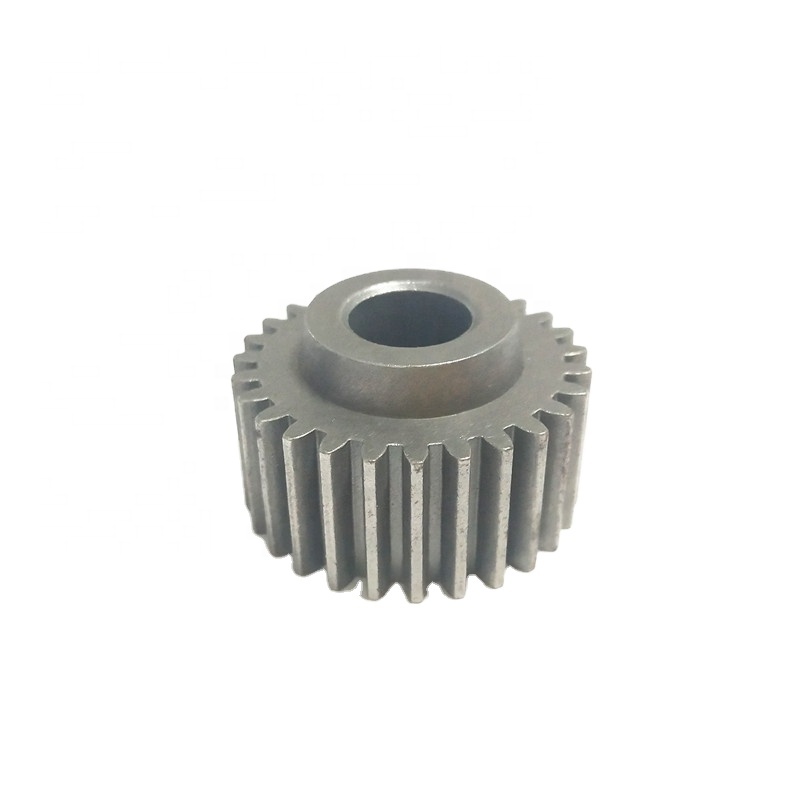
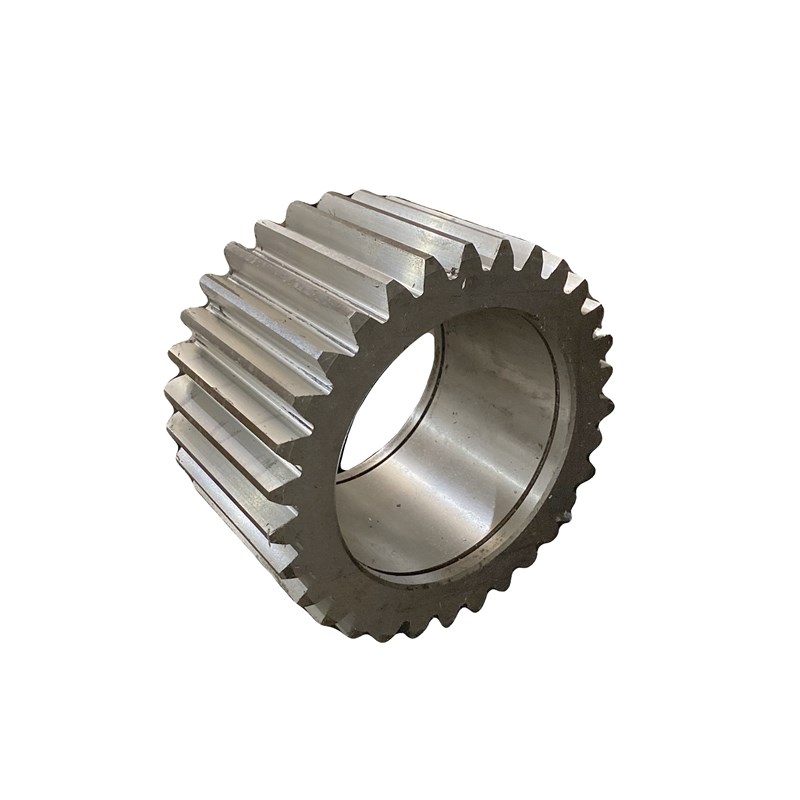
Practical fine-blanked gear samples from Gearseiko feature complete shear surfaces free from fracture layers and prominent burrs, requiring nearly zero follow-up machining to meet assembly requirements – the most intuitive distinction separating fine blanking from traditional blanking.
Four Core Competitive Superiorities of Gearseiko Fine-Blanked Gears
1. Superior Dimensional Accuracy & Premium Surface Finish (IT7 tolerance, Ra down to 0.63μm)
Precision directly determines gear meshing smoothness, load-bearing capacity and low-noise operation. Gearseiko fine-blanked products steadily hit IT7 precision class, with partial premium-grade components reaching upper IT7~IT11 tolerance standard; cutting edge surface ranks Grade II~III and surface roughness ranges 0.63~2.5μm. Thinner or high-purity workpiece materials achieve even finer surface effect. By comparison, conventional stamped gears only reach IT11~IT13 precision with Ra>6.3μm and obvious fractured tearing zones.
Besides, fine blanking brings remarkable improvement on workpiece flatness and verticality: leftover burrs are tiny and single-directional, while material rollover band only accounts for 10%~20% of blank thickness versus 20%~30% irregular bidirectional burrs from common stamping. Our finished gears are ready for direct precision assembly and drastically eliminate secondary reworking.

2. Exceptional Productivity: Full-profile gear forming in one single stroke
Traditional hobbing, shaping and broaching need repeated multi-process setup to machine complex tooth profiles, accompanied by expensive dedicated cutting equipment and long production cycles. In contrast, fine blanking finishes integrated forming of gear teeth, positioning holes and irregular contours in one punching movement. Gearseiko’s high-speed automated fine blanking production lines excel at mass production of miniature watch gears, automotive shift sprockets and instrument precision gears, shortening lead time and avoiding accumulated dimensional errors generated from repeated clamping and multi-step machining.
3. Remarkable Comprehensive Cost Reduction on Raw Material & Post-processing
As a chip-free near-net-shape forming technology, fine blanking avoids massive raw material loss from cutting chips and improves material utilization substantially to slash blank procurement cost. Meanwhile, cold work hardening triggered during fine blanking enhances surface hardness and generates favorable surface residual compressive stress, frequently removing mandatory quenching and tempering procedures, cutting energy consumption and compressing overall production cycle. The cost advantage becomes especially prominent for bulk-volume precision gear orders.
4. Wide Cross-industry Application Coverage from Watch Components to Aerospace Parts
Fine blanking has expanded beyond classic precision watch, optical and office appliance fields into automotive, aerospace, household electrics and intelligent robotics industries. Ongoing technical upgrades enable reliable mass fabrication of formerly hard-to-manufacture special gears including asymmetric tooth profiles, fine-module dense-tooth gears and internal ring gears. Leveraging proprietary closed-die fine blanking mold technology, Gearseiko develops qualified high-reliability gears for multiple high-spec industrial sectors.
Die Structure Difference: Fine Blanking vs Conventional Stamping
Ordinary stamping relies on large unilateral clearance without effective compression blankholder or floating ejector, resulting in irregular torn cutting edges. Fine blanking die adopts ultra-small punch-die clearance matched with V-ring blankholder and movable counterpunch; three-way compression stress restrains crack initiation fundamentally. Gearseiko’s in-house tooling department specializes in customized fine blanking die R&D and fabrication to sustain long-term stable precision during continuous high-volume production.
Closed-Die Fine Blanking Application on Precision Spur Gear Production
For high-spec spur gear projects, Gearseiko applies advanced closed-die fine blanking: raw blank is fully enclosed in the closed cavity composed of main die, counter die, forming punch and floating counterpunch. Precise independent force adjustment on each die component establishes uniform triaxial compressive stress across the whole forming zone, optimizing metal flow property and preventing premature shear crack occurrence. Two mature structural designs are available:
- Flat closed-die layout: Preferred option when blank volume can be precisely calculated, featuring optimal raw material utilization rate.
- Step protrusion closed-die layout: Adopted for irregular complex geometry with hard-to-calculate blank volume to eliminate forming defects with slightly compromised material usage rate.
Our technical team selects proper die structure per actual gear outline and order batch size to balance finished quality and production cost. Closed-die fine blanking delivers edge quality far exceeding standard fine blanking and outperforms traditional stamping plus partial conventional machining solutions.

Why Cooperate with Gearseiko for Fine-Blanked Precision Gears
- Stable precision guarantee: IT7 dimensional tolerance, Ra 0.63~2.5μm, controlled rollover and minimal residual burr
- High-efficiency craft: One-shot integral forming skipping repeated multi-step cutting processing
- Full cost optimization: Saved raw material plus omitted redundant heat-treatment procedures
- Diversified production capacity: From tiny fine-module watch gears to medium-large automotive transmission gear components with customized design support
- Mature closed-die fine blanking technology to tackle hard-to-form complex gear geometries via optimized hydrostatic compression forming
Fine blanking has evolved into irreplaceable core technology for modern high-end precision gear manufacturing. Gearseiko masters full-set fine blanking parameter optimization and sophisticated die development, backed by complete in-process QC and finished-product inspection management system. No matter automotive drive gears, aerospace actuator components or robot reducer precision gears, we provide cost-effective high-precision fine blanking forming solutions.
Reach our technical team right now for customized fine blanking gear project assessment and scheme confirmation. Upgrade your equipment performance with Gearseiko’s professional fine blanking technology.
FAQ | Fine Blanking Precision Gear Manufacturing
Q1: What core fine blanking type is widely used for Gearseiko’s precision gears?
A1: High-pressure V-ring blankholder fine blanking plus advanced closed-die fine blanking for high-spec spur gears.
Q2: What precision and surface roughness can Gearseiko fine-blanked gears reach?
A2: Stable IT7 dimensional accuracy, surface roughness Ra ranging from 0.63μm to 2.5μm with tear-free clean shear edge.
Q3: What main structural parts distinguish fine blanking die from regular stamping die?
A3: V-ring indent blankholder, movable counterpunch and ultra-small punch-die working clearance to build triaxial compressive stress.
Q4: What are two kinds of closed-die fine blanking structures and respective features?
A4: Flat type (high material utilization for calculable blank volume); Step protrusion type (defect-free forming for complex irregular gears with slightly lower material yield).
Q5: What cost advantages does fine blanking bring compared with traditional gear cutting?
A5: Higher raw material utilization, saved multi-processing expense and frequently cancelled post-forming heat treatment cost.
Overcoming Undercutting Increasing Tooth Strength
How Gearseiko Delivers High-Performance Solutions for Demanding Applications
Related Article