How Gearseiko Redefines High-Precision Gear Manufacturing
author: Cash
2026-06-07
Deep Dive into Gear Hobbing: How Gearseiko Redefines High-Precision Gear Manufacturing | Gearseiko
Gear dimensional precision directly decides mechanical equipment’s service lifespan, running noise and overall transmission efficiency across modern industrial drive systems. Among mainstream tooth forming processes, gear hobbing stands out for outstanding mass-production efficiency and reliable precision performance and becomes the most widely adopted processing craft. As a professional high-end precision gear manufacturer, Gearseiko takes optimized gear hobbing technology as core competitiveness and keeps upgrading processing standards to deliver customized gear products exceeding regular industrial specification thresholds.Contact Gearseiko’s engineering team for free hobbing process scheme consultation and customized gear manufacturing quotation.
Core Precision & Production Superiority of Gear Hobbing
Gear hobbing perfectly balances high-volume batch output and tight dimensional tolerance control. In accordance with GB/T10095.1-2008 & GB/T10095.2-2008 national precision standards: medium-module gears stably reach Grade7~8 after standard hobbing; Gearseiko’s refined hobbing technique elevates small-module gear precision up to Grade5~6 with finished tooth surface roughness Ra ≤3.2μm. Such precision grade fully satisfies strict production requirements of automotive transmission gears, industrial robot joints and precision instrumentation components.
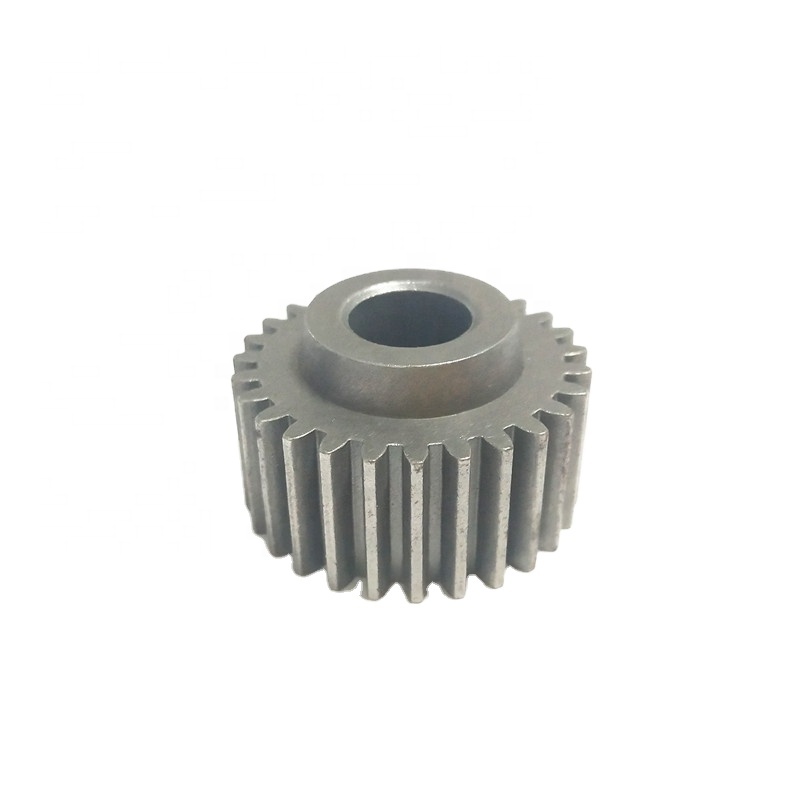
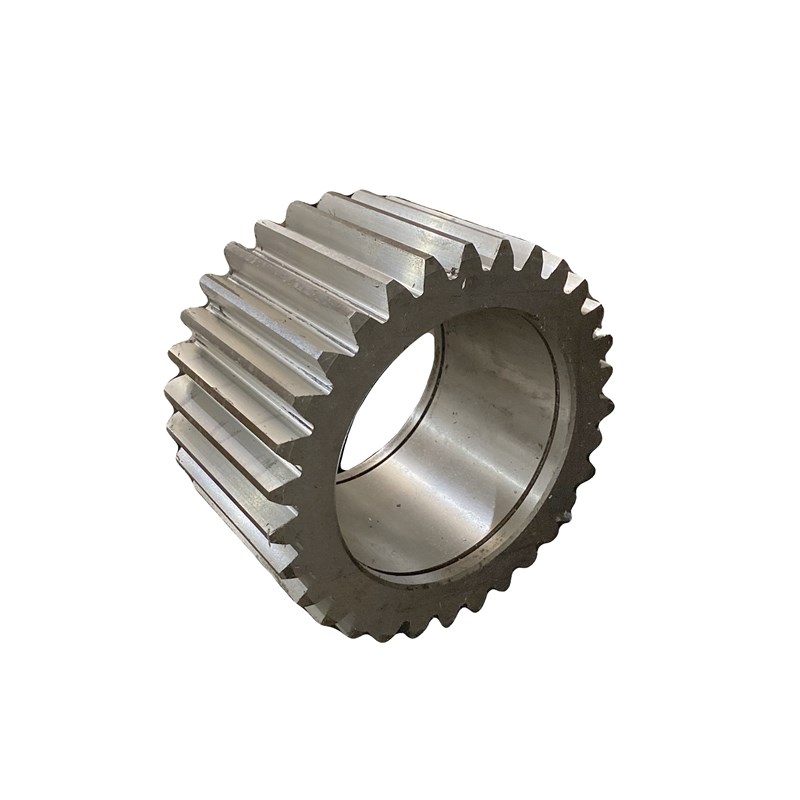
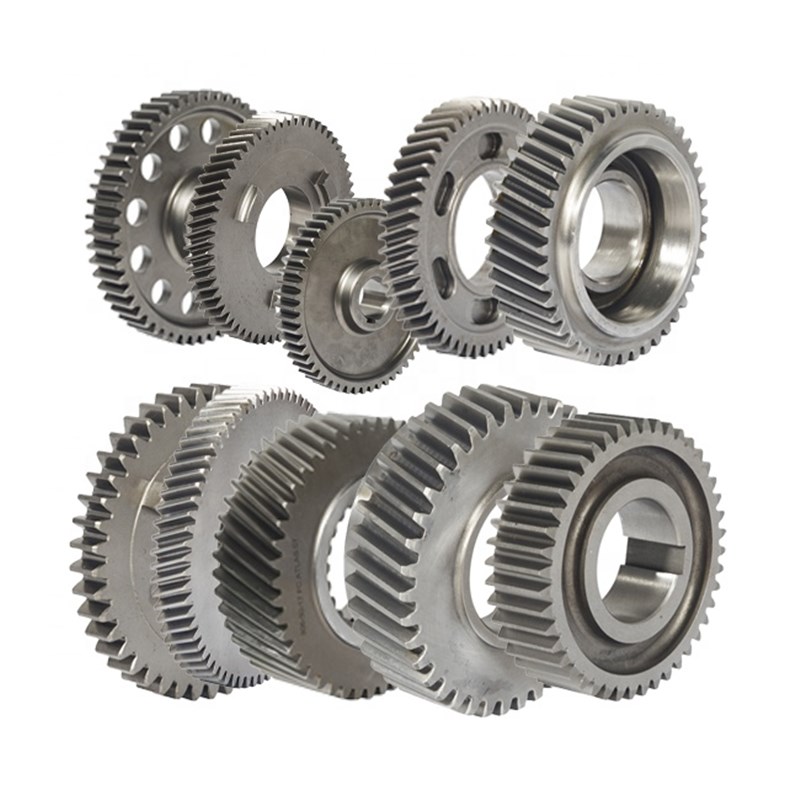
Beyond standard spur & helical cylindrical gears, hobbing realizes efficient one-step forming of worm wheels, involute splines, sprockets and cycloidal gears. By replacing different specification hobs on identical hobbing equipment, manufacturers flexibly process diversified tooth profiles to slash custom tool procurement expense and shorten production lead time, supporting Gearseiko’s fast-turnaround customized gear service for global clients.

Hob Material Upgrade & High-Speed Cutting Parameter Matching
Final hobbing performance hinges on hob substrate material and surface coating technology:
- Conventional HSS high-speed steel hob: cutting speed 100~200m/min, applicable for blank hardness 300~400HBW soft gear hobbing;
- Solid carbide hob: cutting speed up to 300m/min, capable of direct hobbing for quenched gear blank up to 62HRC;
- Coated carbide & ceramic alloy cutter: ultra-high cutting speed peak at 2000m/min with prominent wear resistance and extended tool service cycle.
Combining workpiece raw material, finished hardness target and precision requirement, Gearseiko selects matched hob type and optimizes cutting parameters independently, supplying cost-effective processing solutions covering soft blank mass hobbing and hard stock replace-grinding hobbing forming.
Hobbing Generating Principle Based on Helical Gear Conjugate Meshing
The core theoretical foundation of gear hobbing originates from helical gear meshing kinematics: gear hob is equivalent to a multi-start oversized helix-angle worm with divided chip flutes and relieved back-off tooth flank, while workpiece blank serves as mating driven gear.
During machining, hob and blank maintain fixed synchronous rotation ratio to simulate conjugate rolling meshing; meanwhile hob feeds axially along gear face width continuously. Multiple sequential cutting edges of the enveloping virtual rack remove blank allowance layer by layer to envelope complete standard involute tooth profile. Theoretically any conjugate tooth shape can be formed via matched hob profile, which explains hobbing’s extensive application versatility across various gear types.
Practical Hobbing Deviation Sources & Gearseiko Three-Dimensional Error Control Solution
Limited by finite cutting edge quantity on actual hob cutter, finished tooth contour consists of numerous tangent line segments instead of ideal smooth involute and generates inherent micro profile deviation; periodic longitudinal ripple also occurs on tooth flank caused by axial feeding motion. Gearseiko eliminates excess machining error via three targeted control measures:
- Optimized custom hob design: increase effective cutting edge quantity + high-precision cutter back-off processing to make cutting edge contour fit theoretical involute closely;
- High-rigidity CNC hobbing equipment setup: precisely calibrate rotating speed ratio and rotary direction between hob and workpiece to comply with standard helical meshing motion;
- Pre-production digital process simulation: forecast tooth form deviation in advance and feed parameter compensation back into machining program to narrow finished profile error down to micron level.

Core Cooperation Advantages of Selecting Gearseiko’s Hobbing Production
Gearseiko integrates mature hobbing craft into standardized full-process QC management: incoming raw material inspection → tool precision verification → in-process real-time dimensional monitoring → finished gear comprehensive detection. We supply full-chain service covering gear design consultation, process formulation, prototype trial cutting and mass OEM production. Whether Grade5 ultra-precision small-module gears or high-hardness hard-cut drive components, we take refined hobbing as base working procedure and match follow-up finishing treatment to meet diversified global customer precision demands.
Precision hobbing is a comprehensive craft balancing productivity, dimensional accuracy and manufacturing cost. Gearseiko keeps optimizing hobbing technology to create high-quality transmission gears for all industries.
FAQ | Precision Gear Hobbing Process & Production
Q1: What precision grades can Gearseiko’s hobbing reach for different module gears?
A1: Medium-module: GB Grade7~8; small-module optimized hobbing up to Grade5~6, Ra down to 3.2μm.
Q2: What gear types are available for hobbing forming?
A2: Spur/helical gears, worm wheels, splines, sprockets, cycloidal gears and other customized tooth profiles.
Q3: Speed difference of different material hobs during cutting?
A3: HSS:100~200m/min; carbide:300m/min; ceramic alloy peak at 2000m/min.
Q4: Main reasons of inherent hobbing tooth profile error?
A4: Finite number of cutting edges and axial feeding ripple on tooth longitudinal direction.
Q5: Full service scope provided by Gearseiko?
A5: Gear design, process development, prototype test, mass production and finished precision inspection.
5 Advanced Technologies That Are Redefining High End Manufacturing
A Key Technology for Improving Precision Transmission
Related Article