How Gearseiko Elevates Precision Gear Performance
author: Cash
2026-06-01
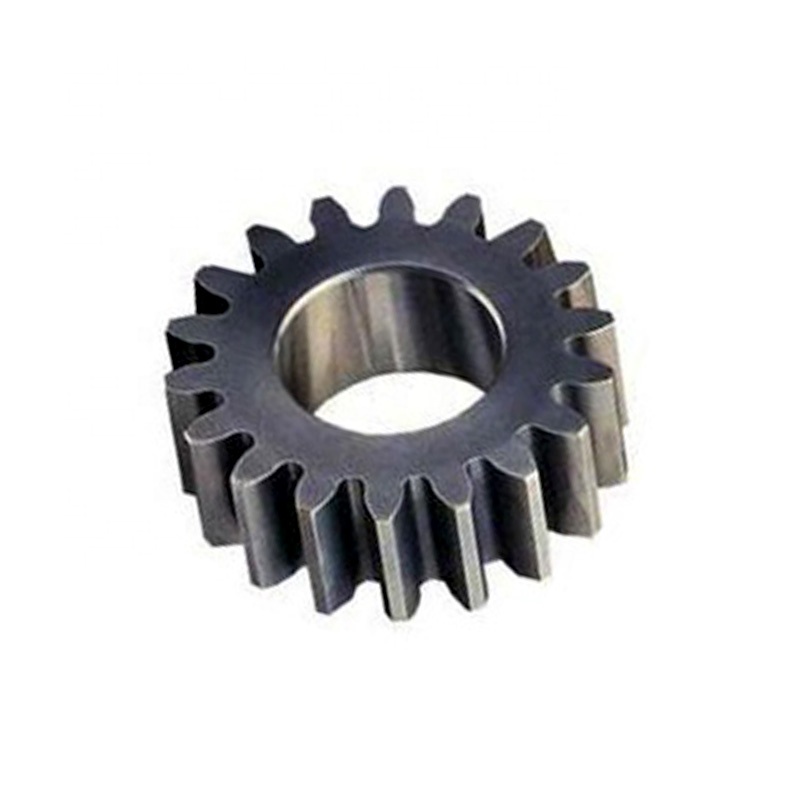
Laser Surface Hardening Breakthroughs: How Gearseiko Elevates Precision Gear Performance | Gearseiko
In the manufacturing of high-end precision gears, surface hardness is far more than a technical indicator. It determines whether gears suffer premature failure or maintain reliable operation for decades. Gearseiko has mastered advanced laser surface quenching technologies to push the boundaries of gear durability, wear resistance and fatigue life. Below are real R&D and application cases demonstrating how laser hardening optimizes regular steel materials and delivers exceptional gear performance.Discover high-performance laser-hardened precision gears and customized solutions from Gearseiko.
Advantages of Laser Quenching Over Traditional Heat Treatment
Conventional heat treatment techniques face obvious limitations when processing low-carbon steels and gears with complex profiles. Laser quenching realizes localized rapid heating at a rate over 1000 °C/s while causing extremely low distortion, which is critical for retaining gear precision. This process forms fine martensitic structures without surface melting, achieving higher hardness that cannot be obtained via traditional methods on identical materials.
Practical Application Cases
Case 1: Hardening of Low-Carbon Steel (20 Steel) – Breaking Technical Barriers
Traditional quenching can only deliver hardness below 10 HRC for 20 steel (0.20% carbon content). Gearseiko adopted a 2 kW CO₂ laser together with graphite coating for surface pretreatment, and conducted tests on 10×10×10 mm samples. With a 2.3×2.3 mm laser spot and scanning speed of 12.4 mm/s, the test results are as follows:
- 600 W output: Surface hardness 473–548 HV (≈49.3 HRC), crescent-shaped hardened layer with a depth of 0.5 mm
- 550 W output: Surface hardness 490–508 HV (≈48.5 HRC)

Microscopic examination shows fine lath martensite on the surface, alongside a transition zone composed of martensite and refined ferrite. The test proves low-carbon steel can reach over 40 HRC after laser quenching, which is impossible with furnace hardening.
Case 2: 40Cr Gear – 1.4 mm Maximum Effective Hardened Depth
The tested part is a 40Cr gear (module 6 mm, 13 teeth, face width 20 mm), pre-quenched and tempered to 320–395 HV. We applied phosphating coating to improve laser absorption, and adopted the self-developed CGJ-93 5 kW 5-axis CO₂ laser system with a 25×2 mm wide beam and potassium dichromate solution for auxiliary cooling.
Process parameters: Power 3 kW; Scanning speed 220 mm/s (tooth tip) / 100 mm/s (tooth root) Test results: Effective hardened depth (550 HV standard) 1.40 mm; Surface hardness 800–920 HV (depth 0–0.3 mm); Microstructure: cryptocrystalline martensite
Compared with conventionally quenched products, this gear features greatly improved fatigue strength and outstanding wear resistance on tooth flanks. No measurable distortion is generated, so the original AGMA precision class is fully preserved.
Case 3: 40CrNiMoA Alloy Steel – Gradient Microstructure for Excellent Toughness
The base material is 40CrNiMoA alloy steel with core hardness of 340 HV. We adopted a 2.8 kW laser and 25×2 mm spot, with scanning speed ranging from 110 mm/s to 220 mm/s. The final effective hardened depth reaches 1.5 mm and surface hardness hits 720–780 HV.
SEM and TEM analysis on material structure:
- Hardened layer: Fine lath martensite
- Transition zone: Martensite + tempered sorbite
- Core material: Fully tempered sorbite
The gradual hardness gradient eliminates brittle interfaces commonly seen in other surface hardening processes, enabling the gear to combine high surface hardness and excellent internal toughness.
Case 4: Precision Repair for 34CrNiMo6 Turbine Shaft Gear
A damaged helical modified gear (26 teeth, outer diameter 59.58 mm, face width 60 mm) made of 34CrNiMo6 required a 0.5 mm thick hardened layer for restoration. We used a 5 kW cross-flow CO₂ laser with blackening surface treatment and optimized process parameters: Parameters: Power 1.5 kW, scanning speed 1500 mm/min (25 mm/s) Results: Hardness 590–620 HV (peak value 670 HV); Fine lath martensite formed with zero detectable distortion.
Practical verification: Higher scanning speed reduces hardened depth but increases surface hardness; laser power can raise hardening depth within a certain range. The matched parameters balance hardened depth, hardness and narrow heat-affected zone perfectly. The gear is fully restored for service without secondary machining.
Hardening for 30Cr13 Stainless Steel Counter Gear (680 HV Surface Hardness)
Stainless steel is difficult to achieve uniform hardening via traditional methods. For a 30Cr13 counting gear, we performed laser hardening on tooth flanks using a 2 kW CO₂ laser. The finished part obtains a 1.0 mm hardened layer with surface hardness up to 680 HV, far exceeding the performance of conventional bulk hardening. Its wear resistance is significantly enhanced for high-speed counting working conditions.

Core Advantages of Choosing Gearseiko’s Laser Hardening Service
- Zero precision loss: Low heat input avoids post-hardening grinding procedures.
- Wide material compatibility: Applicable to low-carbon steel (20 steel), alloy steel (40Cr, 40CrNiMoA, 34CrNiMo6) and stainless steel.
- Customized process solution: Adjust laser power, scanning speed, spot size and pretreatment methods (graphite coating, phosphating, blackening) according to gear geometry and material.
- Verified reliable performance: Maximum hardness up to 920 HV, effective hardened depth 0.5–1.5 mm, fatigue life extended 3–10 times.
If you want to upgrade your gears with laser surface hardening for superior strength and precision, feel free to contact Gearseiko. We provide tailored solutions for turbine shaft gears, heavy-duty transmission gears, high-precision stainless steel components and more. We do not merely manufacture gears, but optimize their ultimate performance through professional engineering.
Gearseiko – Precision Engineered, Laser Perfected.
FAQ: Laser Surface Hardening Breakthroughs & Applications
Q1: What core strengths does laser quenching have against traditional heat treatment?
A1: It delivers rapid localized heating, minimal distortion, forms fine martensite and achieves higher hardness on the same materials.
Q2: Can laser hardening work for low-carbon steel like 20 steel?
A2: Yes. It can raise the hardness of 20 steel to over 40 HRC, which cannot be realized by conventional furnace hardening.
Q3: What is the maximum effective hardened depth we can achieve?
A3: Up to 1.5 mm for different steel grades, and the maximum surface hardness reaches 920 HV.
Q4: Why is 40CrNiMoA gear equipped with gradient microstructure better?
A4: It removes brittle interfaces, making the gear hard externally and tough internally for longer service life.
Q5: Can laser hardening be used for gear repair?
A5: Yes. It realizes precision restoration with low distortion and no need for re-machining.
How Gearseiko Drives Innovation in Precision Transmission
How Gearseiko Masters Key Parameters for Superior Tooth Surface Performance
Related Article