Gearseikos High Efficiency Precision Solution
author: Cash
2026-07-08
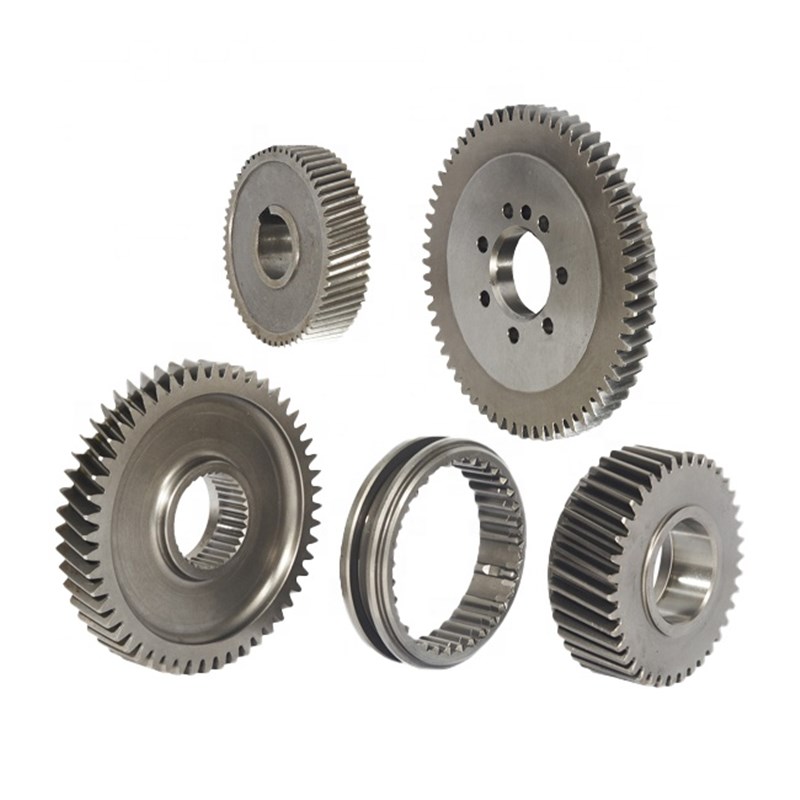
Rack Shaping Practice for Large Gears: Gearseiko’s High-Efficiency Precision Solution | Gearseiko
Introduction
Rack shaping is a classic generating machining technology that adopts rack-form cutting tools to form cylindrical gear tooth profiles, with a development history spanning more than 100 years and wide industrial popularization starting from the 1980s. As a manufacturer focused on custom high-end precision gear production, Gearseiko has accumulated abundant mass-production experience with rack shaping technology. This process boasts outstanding comprehensive strengths in finished gear precision, production cost control and processing efficiency. Especially for large-module gear workpieces, rack shaping delivers irreplaceable technical merits, and its processing efficiency can even surpass gear hobbing under most working conditions.
1. Remarkable Efficiency Superiority for Large-Module Gear Machining
The productivity gap between rack shaping and gear hobbing becomes prominent when processing gears with large modules. Both academic cutting tests and on-site production statistics verify that rack shaping achieves higher output efficiency once the gear module exceeds 10–12 mm, and this efficiency advantage is further amplified when machining high-hardness alloy steel gear blanks.
Core Mechanism of Efficiency Difference
- Gear hobbing restriction logic: Hob outer diameter rises proportionally with gear module. Subject to linear cutting speed limits, the hob spindle rotational speed has to drop sharply, forming an inherent bottleneck of low machining efficiency for large modules.
- Rack shaping operation logic: The reciprocating stroke frequency of the rack cutter is independent of gear module size, only determined by effective tooth width stroke length. Meanwhile, the radial plunge feed travel required for rack shaping is far shorter than that of hobbing, and the travel gap expands continuously as the module increases.
- Hard material cutting limitation: Although hobbing theoretically supports higher linear cutting speeds, manufacturers have to reduce actual cutting speed drastically to avoid severe hob abrasion and edge chipping when processing large-module or heat-treated hardened gears, which completely offsets its nominal speed advantage.
In summary, rack shaping is the optimal high-throughput process for large-module and high-hardness gear batch production.
2. Zero Inherent Principle Errors to Secure Superior Machining Precision
One core competitive edge of rack shaping is the complete elimination of theoretical generating errors, a key defect that cannot be avoided in gear hobbing. When using a hob with straight tooth profiles on its normal/axial cross-section to machine involute gears, inevitable theoretical principle errors will occur on the formed tooth surface, and error magnitude grows synchronously with module enlargement. Rack shaping adopts a linear rack cutter to perform pure generating motion, thoroughly erasing such inherent profile deviation.
Other precision guarantee characteristics:
- The number of enveloping cutting passes (circular feed quantity) can be freely adjusted according to precision requirements;
- Generating indexing movement pauses during the cutter cutting stroke, free from deformation interference caused by instantaneous cutting force; These design features jointly deliver ultra-stable tooth profile accuracy and consistent batch machining quality.
In terms of transmission running smoothness, gear contact pattern uniformity and finished tooth surface roughness, rack shaping processing results are generally superior to hobbing. Stable DIN Grade 6–7 gear precision can be realized with standard rack shaping parameters; for 58–62 HRC hardened large gears, the process is capable of stably reaching DIN Grade 5 ultra-precision standards, making it the ideal forming process for high-spec large precision gears.
3. Simple Rack Cutter Structure Delivers Outstanding Economic Benefits
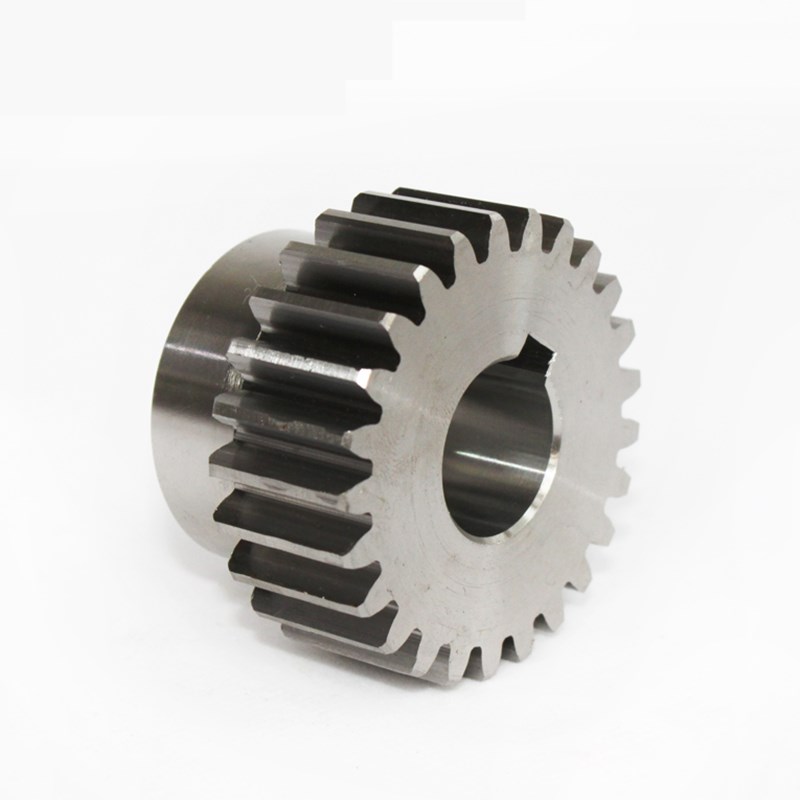
Rack-form shaping cutters feature a plain geometric structure, supporting high-precision blank manufacturing and reliable post-service regrinding performance. In the full gear production cost chain, rack cutter occupation cost remains extremely low: the cutter’s manufacturing and regrinding expenses are cost-effective, and a single rack cutter can be re-sharpened and reused more than 50 times, greatly lowering long-term tool amortization costs. This economic advantage is extremely prominent for single-piece trial production and small-batch customized manufacturing of large-module gears.
By contrast, large-module hobs possess complex multi-tooth spiral structures, accompanied by high initial processing costs and complicated regrinding procedures with high technical thresholds. Rack cutters only require simple linear surface regrinding to fully restore original cutting performance, effectively cutting the total tool investment for heavy-duty gear workshops. For wind power, mining machinery, heavy engineering equipment and other industries relying on large gear parts, rack shaping brings remarkable overall production cost optimization.
4. Gearseiko Mature Rack Shaping Mass Production Capability
Gearseiko widely applies rack shaping technology for precision forming of various large-module, surface-hardened and special modified profile gears. We deploy dedicated professional rack shaping machine tools and a well-trained technical team, consistently delivering finished gears meeting DIN Grade 6 and above precision standards.
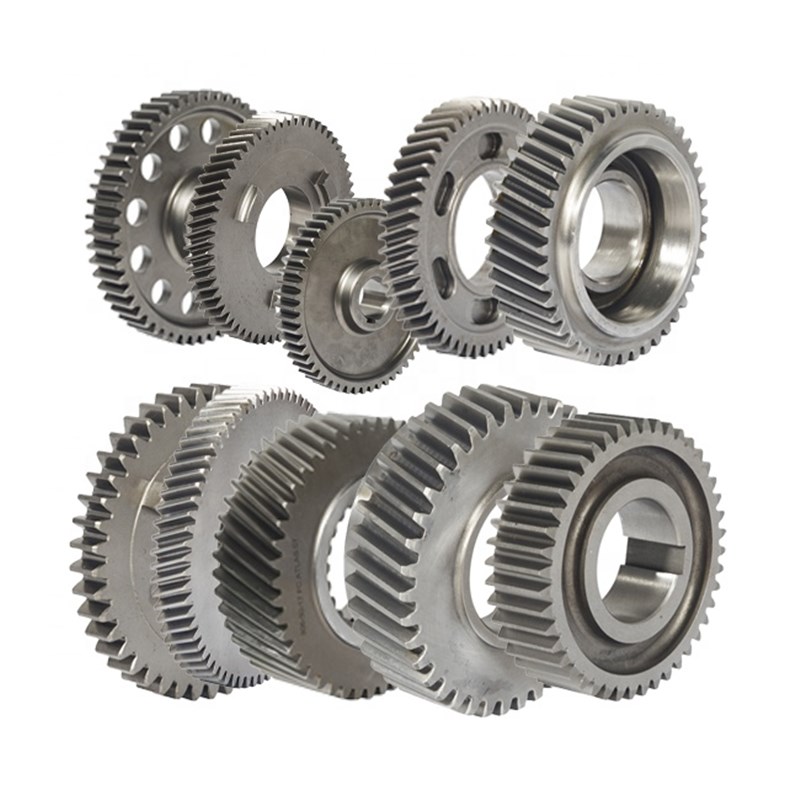
Our mature rack shaping process covers complex difficult-to-machine workpieces including: large-module double helical gears, multi-stack gear clusters with narrow separation grooves, heavy modification wide-tooth-width gears and customized special tooth profile large gears, providing full-cycle high-quality rack shaping manufacturing services for global heavy equipment manufacturers.
As an independent gear forming process parallel to hobbing and pinion cutter shaping, rack shaping holds exclusive technical and cost advantages in the large precision gear manufacturing segment. Gearseiko will continuously iterate and upgrade our rack shaping processing technology, supplying worldwide clients with more efficient, higher-precision and cost-competitive large gear customized manufacturing solutions.
For detailed technical parameters and production case information of Gearseiko’s large gear rack shaping service, feel free to contact our professional technical sales team.
FAQ | Large Gear Rack Shaping Technology & Process Advantages
Q1: At what module size does rack shaping become more efficient than gear hobbing?
A1: When gear module exceeds 10–12 mm, rack shaping shows obvious productivity advantages, and the gap widens for hardened high-hardness gear blanks.
Q2: Why does gear hobbing have inherent principle errors while rack shaping does not?
A2: Straight-profile hobs produce unavoidable theoretical involute forming errors which increase with module; rack cutter linear generating motion eliminates all inherent tooth profile principle errors.
Q3: What precision grades can rack shaping stably achieve?
A3: Standard processing reaches DIN Grade 6–7; for 58–62 HRC hardened large gears, the process can stably realize DIN Grade 5 ultra-precision.
Q4: What are the economic advantages of rack shaping cutters compared with large module hobs?
A4: Simple structure, low manufacturing & regrinding cost, single cutter reusable over 50 times; large hobs are complex, expensive and hard to regrind.
Q5: What complex large gear workpieces is Gearseiko’s rack shaping process suitable for?
A5: Large-module double helical gears, multi-gear clusters with narrow grooves, heavy-modified wide-face gears and special custom tooth profile large gears for wind power, mining and heavy machinery.
Q6: Which industries benefit most from rack shaping for large gears?
A6: Wind power equipment, mining machinery, heavy engineering machinery and other sectors requiring mass customized large-module precision gears.
Precision Beyond Limits The Enduring Advantages of Large Gear Shaping with Rack Type Cutters
The Gearseiko Approach to Precision Gear Manufacturing
Related Article