Gearseiko Helps You Choose the Optimal Transmission Solution
author: Cash
2026-06-04
Precision Gear Modification Technology Explained: Gearseiko Helps You Choose the Optimal Transmission Solution | Gearseiko
Within high-end precision gear manufacturing, profile modification stands as a pivotal technical approach to upgrade meshing performance and extend component service lifespan. Specialized in premium precision gear fabrication, Gearseiko tailors modified gear designs matching varied working conditions. This article systematically sorts three mainstream gear modification types and applicable scenarios to support customers’ scientific gear selection.Reach Gearseiko’s engineering team for free modification coefficient calculation and customized gear transmission scheme consultation.
Definition of Gear Profile Modification
Gear modification adjusts cutter-to-blank relative installation position to shift involute tooth contour and revise gear geometric parameters. The modification coefficient
x enables flexible optimization on tooth bending strength, assembly center distance and meshing property. Based on total shift coefficient Σx=x₁+x₂, meshed modified gear pairs fall into three core categories: zero-shift gearing, positive-shift gearing and negative-shift gearing.1. Zero Transmission (x₁+x₂=0): Mature & High Interchangeable Classic Design
Zero modification covers two implementation forms:
- Standard non-shift gearing (x₁=0, x₂=0): Simple structure, outstanding interchangeability; both pinion and gear need tooth quantity over minimum non-undercut tooth count to eliminate root undercut defect.
- Equivalent compensation shift gearing (x₁=-x₂, z₁+z₂>2zₘᵢₙ): Fixed assembly center distance while balancing bending strength between paired gears. Ideal for gear sets adopting dissimilar raw materials or different heat treatment crafts to greatly prolong whole transmission runtime.
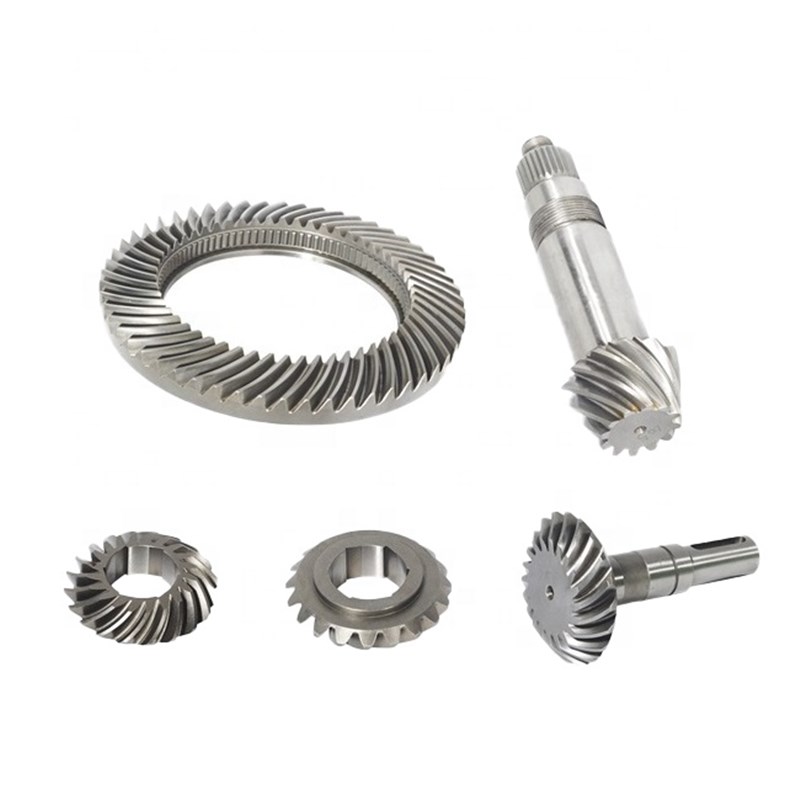
Gearseiko applies micron-level precision grinding equipment and full-range dimensional inspection to control modification tolerance strictly, realizing standard interchange plus optimized root strength for zero-shift gear products.
2. Positive Transmission (x₁+x₂>0): Heavy-Duty High-Load Preferred Solution
Total positive shift raises actual mounting center distance a’>standard a and working pressure angle α’>nominal α, also named positive angular modification. Positive shift thickens tooth root and upgrades flank contact fatigue resistance, lifting overall load capacity by 20%~30%, perfectly fitting heavy-load, shock-bearing and compact small-tooth-count reducer layouts. Minor shrinkage of contact ratio can be ignored under high-precision machining.
Our R&D team follows equal sliding rate principle to distribute shift coefficients rationally, balancing tooth root sliding wear of two mating gears and avoiding unilateral premature abrasion. In-house proprietary optimization software accelerates rapid matching of optimal shift pairing parameters for client projects.
3. Negative Transmission (x₁+x₂<0): Restricted Application for Limited Center Distance
Negative total shift leads to a’<a and α’<α, namely negative angular modification. It reduces tooth root thickness and flank bearing capacity, so it is only adopted when installation space locks center distance below standard value, such as old equipment retrofitting and ultra-narrow confined drivetrains. Precondition z₁+z₂>2zₘᵢₙ must be fulfilled to prevent severe undercut.
Gearseiko restricts negative modification unless mandatory space limitation occurs. Once selected, we execute FEA strength verification and supplement reinforcement solutions including premium grade material upgrading or tooth surface strengthening treatment to compensate inherent strength drop.
Scientific Selection Rules for Gear Modification Form
- Prioritize positive shift: Adjustable center distance + heavy impact/overload working condition for strength enhancement;
- Select equal-compensation zero shift: Fixed center distance & uneven service life between paired gears to balance respective durability;
- Adopt standard zero-shift gears: Light-load, high-speed equipment requiring universal interchangeability;
- Use negative shift only as final option after comprehensive strength risk assessment under rigid space constraint.
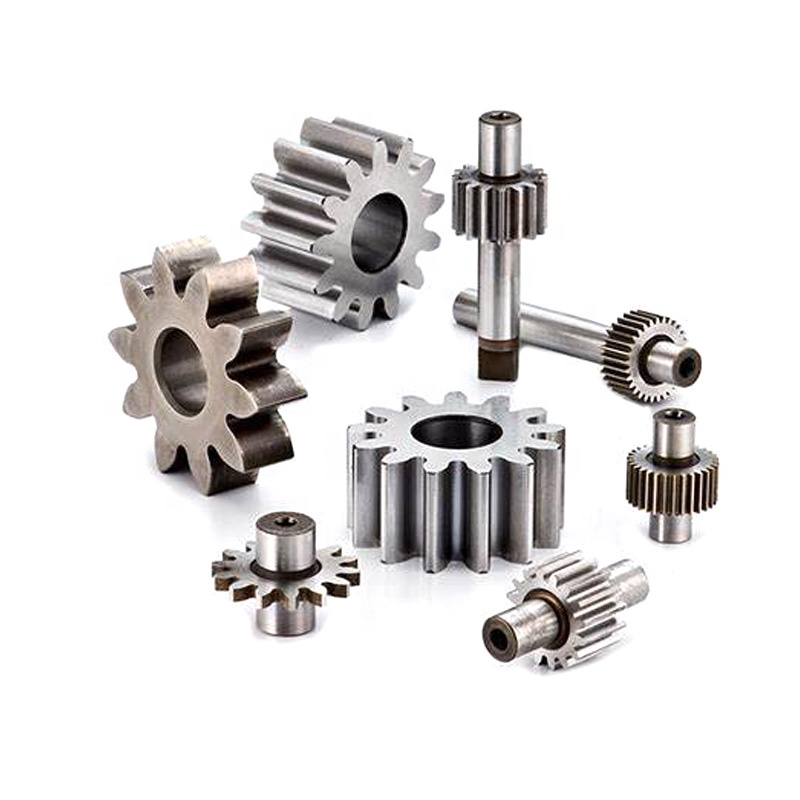
Gearseiko All-Round Custom Service Advantage
Our factory manufactures DIN/ISO/AGMA compliant modified precision gears alongside full-cycle one-stop engineering service: shift coefficient optimization, tooth crowning modification, customized material selection and targeted heat treatment matching. All finished gear pairs pass complete geometric detection and virtual meshing simulation to balance transmission efficiency, running noise, fatigue lifespan and mechanical strength comprehensively.
For new transmission design or existing gear set performance upgrade demands, contact Gearseiko’s professional team to obtain detailed computing documents and prototype verification service.
Gearseiko – Precision in every tooth, reliability in every drive.
FAQ | Gear Modification Types & Selection Guidance
Q1: What are three classification standards of modified gear transmission?
A1: Classified by total modification coefficient Σx=x₁+x₂: zero(x₁+x₂=0), positive(x₁+x₂>0), negative(x₁+x₂<0).
Q2: Two types of zero-shift gear transmission and respective features?
A2: Standard gear(x1=x2=0, good interchangeability); offset complementary shift(x1=-x2, fixed center distance, balanced gear pair strength, z₁+z₂>2zₘᵢₙ).
Q3: What performance benefits does positive modification bring?
A3: Larger root thickness, 20%~30% higher load capacity, suited for heavy-load and compact layout design.
Q4: When will negative gear modification be applied?
A4: Only for fixed limited center distance such as old machine refit; need FEA strength check and auxiliary reinforcement measures.
Q5: What full-set services can Gearseiko provide for modified gears?
A5: Shift parameter design, tooth crowning, material matching, precision production, full inspection and meshing simulation test complying with DIN/ISO/AGMA.
Precision Calculation Guide for High Performance Drives
Overcoming Undercutting Increasing Tooth Strength
Related Article