Gear vibration reliability analysis based on Kriging model method and subset simulation method
Improving Gear Transmission Reliability: A New Strategy for Vibration Reliability Analysis Based on Kriging Model and Subset Simulation
In high-precision gear transmission systems, vibration control is not merely a performance metric — it is a decisive factor affecting operational stability, noise emission, and service life. During gear meshing, even under nominally constant load and driving torque, internal excitations such as time-varying meshing stiffness, manufacturing and assembly errors, tooth deflection under load, and meshing impact inevitably generate transmission error fluctuations. When these fluctuations exceed a critical threshold, they induce severe torsional vibration and acoustic noise, and in extreme cases, lead to premature tooth fatigue or even system failure. Therefore, defining gear vibration reliability based on the amplitude of transmission error fluctuation has become an essential criterion in the design of high-end precision gear systems.
Traditional reliability analysis methods, such as the First Order Reliability Method (FORM) and Second Order Reliability Method (SORM), rely on linear or quadratic approximations of the limit state function. However, gear vibration responses are highly nonlinear and implicit in nature, making these classical methods prone to low accuracy or non-convergence. The Monte Carlo method, while widely accepted as the gold standard due to its asymptotic unbiasedness, requires an enormous number of sample evaluations. For gear vibration problems, where each evaluation involves a time-consuming numerical simulation (e.g., finite element analysis or multi-body dynamics), the computational cost of direct Monte Carlo is prohibitive. Variance reduction techniques such as importance sampling and subset simulation have been developed to alleviate this burden. Subset simulation, in particular, decomposes a small failure probability into a product of larger conditional probabilities, thereby reducing the required sample size. Nevertheless, even subset simulation often demands thousands of simulations, which remains impractical for many engineering applications — especially when the gear system involves high-dimensional random variables or when failure probabilities are extremely low (e.g., 10⁻⁴ or less).
To overcome these limitations, the research community has turned to surrogate modeling techniques. Polynomial response surfaces, neural networks, spline functions, and Kriging models have been used to approximate the implicit limit state function, followed by sampling methods such as Monte Carlo or importance sampling. Among these, the Kriging model stands out because it not only provides a prediction at unsampled points but also quantifies the associated prediction uncertainty (the mean squared error). This unique stochastic property allows for active learning: the surrogate model can sequentially select the most informative sample points to improve its accuracy, rather than relying on a fixed experimental design that may waste evaluations in unimportant regions of the design space.
Despite these advances, several challenges remain. First, conventional surrogate-based methods often require a large initial set of sample points, many of which lie in regions far from the failure boundary, leading to unnecessary computational expense. Second, most existing approaches focus on fitting the limit state function as accurately as possible, but they do not provide a rigorous guarantee of the final reliability estimate’s accuracy. Third, when dealing with small failure probabilities or high-dimensional random variables, surrogate models may still suffer from poor convergence or excessive computational demand.
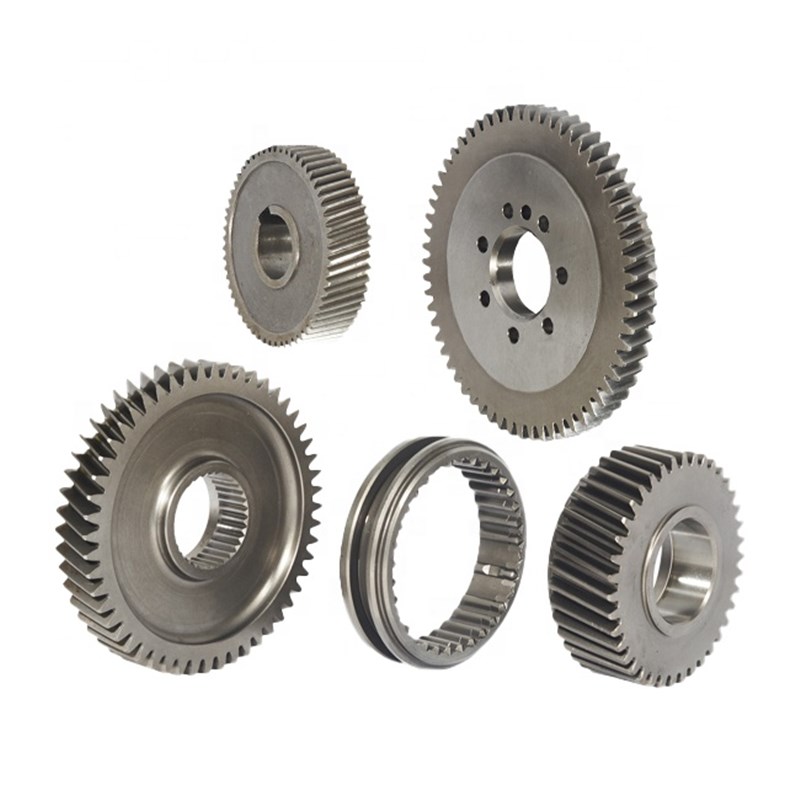
Gearseiko, a specialist in high-end precision gear manufacturing, has addressed these challenges by integrating an advanced active learning reliability method known as AK-SSIS (Active Learning Kriging combined with Subset Simulation). This algorithm is specifically tailored for gear systems exhibiting nonlinear backlash and bending-torsional coupling vibrations. The AK-SSIS method offers three distinct advantages:
-
Adaptive sample selection – Instead of pre-defining a fixed set of experimental design points, the Kriging model actively identifies the next best sample point by balancing prediction uncertainty and proximity to the estimated failure boundary. This ensures that computational resources are spent only where they matter most, significantly reducing the total number of expensive simulations.
-
Small failure probability capability – By coupling active learning Kriging with subset simulation, the method efficiently handles failure probabilities as low as 10⁻⁶ or smaller. The subset simulation framework breaks down the rare event into a sequence of more frequent intermediate events, while the Kriging model provides a fast-to-evaluate surrogate for each conditional level. The active learning criterion ensures that the surrogate is accurate precisely around the intermediate failure thresholds.
-
Robustness to high dimensionality – Many gear vibration problems involve multiple random parameters, including geometric tolerances (tooth profile deviation, pitch error, backlash), material properties (elastic modulus, damping coefficients), and operating conditions (torque, speed). The AK-SSIS method maintains high efficiency and accuracy even as the number of random variables increases, unlike some surrogate methods that suffer from the curse of dimensionality.
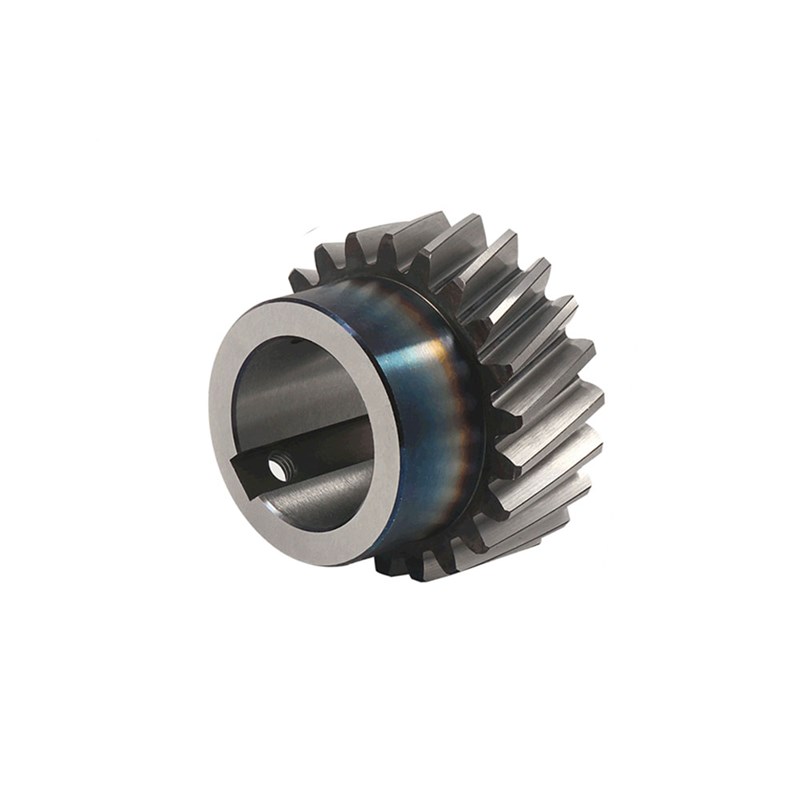
In practice, Gearseiko applies this methodology to a typical gear pair with nonlinear clearance in bending-torsional vibration. The limit state is defined based on the allowable amplitude of transmission error fluctuation: if the fluctuation exceeds a design threshold, the system is considered to have failed in terms of vibration reliability. Using AK-SSIS, the following achievements have been demonstrated:
-
Computational efficiency – Compared to direct Monte Carlo with subset simulation, the active learning Kriging approach reduces the required number of high-fidelity simulations by 70–90%, while maintaining comparable accuracy. This enables reliability analysis to be performed within hours instead of days.
-
High prediction accuracy – Cross-validation studies show that the failure probability estimated by AK-SSIS agrees closely with benchmark Monte Carlo results (using millions of samples), whereas traditional FORM or quadratic response surfaces can deviate by orders of magnitude for highly nonlinear gear vibration problems.
-
Reliability sensitivity analysis – The method also provides sensitivity information, i.e., the partial derivatives of failure probability with respect to each random parameter’s distribution parameters (mean, standard deviation). This allows Gearseiko’s engineers to identify which design variables most strongly influence vibration reliability. For example, sensitivity analysis may reveal that tooth profile error has a far greater impact than damping coefficient, guiding designers to tighten tolerances on profile error while allowing more flexibility on less critical parameters.
These insights are directly translated into practical design improvements. By understanding how different random parameters affect vibration reliability, Gearseiko can optimize gear geometry, material selection, and manufacturing processes to achieve a robust, low-vibration design without over-engineering. The result is a product that not only meets nominal performance targets but also maintains high reliability under real-world variability in loads, speeds, and manufacturing deviations.
For global customers seeking quiet, reliable, and durable gear drives — whether in electric vehicles, industrial robotics, aerospace actuators, or high-speed turbomachinery — Gearseiko offers a science-based approach to vibration reliability. Our combination of advanced simulation methods (AK-SSIS) with precision manufacturing ensures that every gear pair is designed not just for performance, but for predictable, quantifiable reliability.
About Gearseiko
Gearseiko specializes in the research, development, and manufacturing of high-end precision gears. We bridge the gap between cutting-edge numerical reliability algorithms and practical engineering applications. From concept design to production, our commitment is to provide gear transmission solutions that excel in accuracy, durability, and vibration performance. Visit our website or contact our technical team to learn more about how we can support your next-generation drivetrain projects.
Reliability Analysis of Gear Random Vibration Based on Process Transcendence Theory
Reliability Analysis of Gear Contact Strength Based on Response Surface and MCMC Method
Related Article