Comprehensive Guide to Gear Shaper Classifications Choose the Right Solution for Your Gear Machining
author: Cash
2026-06-29
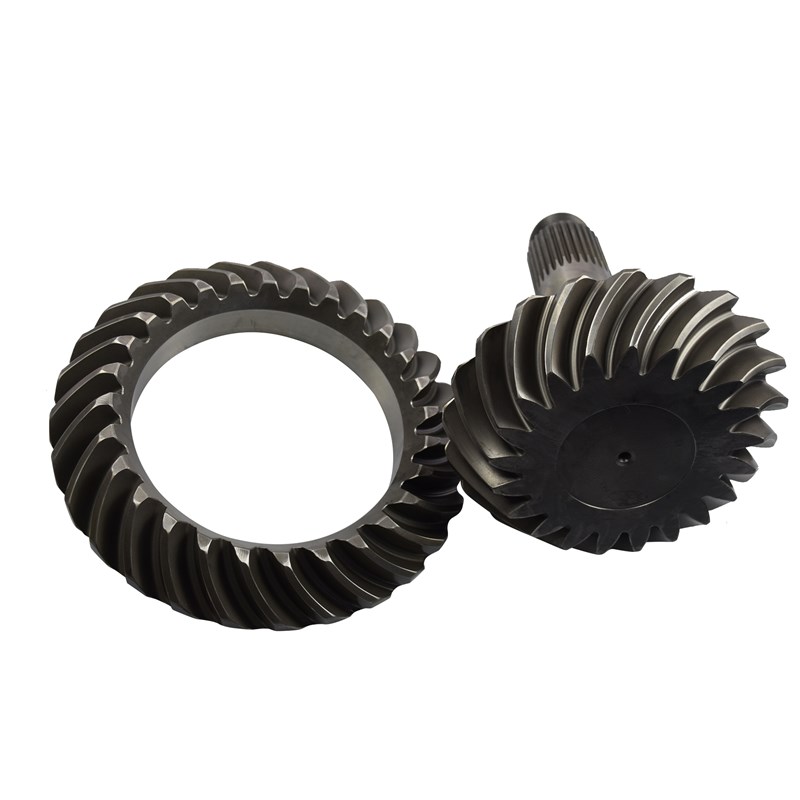
Comprehensive Guide to Gear Shaper Classifications: Choose the Right Solution for Your Gear Machining | Gearseiko
Precision gear shaping is an indispensable core process in modern gear manufacturing, widely applied in automotive transmission systems, industrial automation equipment, aerospace power components and precision instrumentation. As a core generating machine tool, the gear shaper features unique processing advantages that hobbing machines cannot replace, especially suitable for internal gears, multi-step special-shaped gears, racks and non-circular gear machining. The rational selection of gear shaper types directly determines machining accuracy, production efficiency and manufacturing cost.
As a professional manufacturer focusing on high-end precision gear customization and mass production, Gearseiko has in-depth research on the performance characteristics and application boundaries of various gear shapers. Based on national industry standards and years of production practice, we systematically sort out the complete classification system of gear shapers and their applicable working scenarios, providing targeted equipment selection and processing scheme guidance for precision gear manufacturing enterprises.
1. General-Purpose Gear Shaper (Basic Series): Standard Foundation for Universal Machining
The basic general-purpose gear shaper is the foundational model of the entire gear shaper product line, serving as the most widely used standard equipment in mechanical gear processing. It adapts to single-piece, small-batch and medium-batch production scenarios, capable of stably machining internal and external meshing cylindrical gears, covering most conventional gear processing demands of general machinery manufacturing.
In terms of precision standards, the basic series strictly complies with GB/T4686-2008 machining specifications and reaches Class V machine tool precision per JB/T9871-1999, stably processing gear products of accuracy grade 6–7. Equipped with mature core configurations, it can automatically adjust cutting parameters according to roughing and finishing procedures to optimize cutting efficiency and surface quality. The standard hydraulic workpiece clamping device ensures stable positioning, effectively avoiding machining deviation caused by workpiece vibration.
To expand application flexibility, the basic gear shaper supports optional customized accessories, including helical guide rails for helical gear machining, professional rack processing attachments, tailstock centers for shaft gear machining, and cutter-up stop protection devices, realizing multi-functional expansion on the basis of standard machining.
2. Special Variant Gear Shaper Series: Targeted Solutions for Differentiated Needs
On the basis of the basic general-purpose gear shaper, a variety of specialized variant models have been derived to solve personalized processing pain points such as large-size workpieces, high-volume mass production, high-precision machining and complex profile processing. Each variant has independent structural optimization and precise scenario positioning.
2.1 Light-Duty Gear Shaper
Optimized and upgraded based on the basic model, the light-duty gear shaper adopts an enlarged worktable diameter and extended bed structure. It breaks through the size limitation of basic equipment, focusing on the machining of large-diameter conventional cylindrical gears. It retains all core functions and precision standards of the basic series, with stable operation and high cost performance, suitable for conventional processing of large-size gear workpieces in medium and small batches.
2.2 High-Speed Gear Shaper
A mass-production-oriented optimized model, which greatly improves the spindle cutting speed on the basis of the basic structure. It is specially designed for high-volume batch production of internal and external cylindrical gears in the machinery industry. While maintaining stable machining accuracy, it significantly shortens single-piece processing cycle, improves overall production efficiency, and is the preferred equipment for standardized gear mass production lines.
2.3 Automatic Gear Shaper
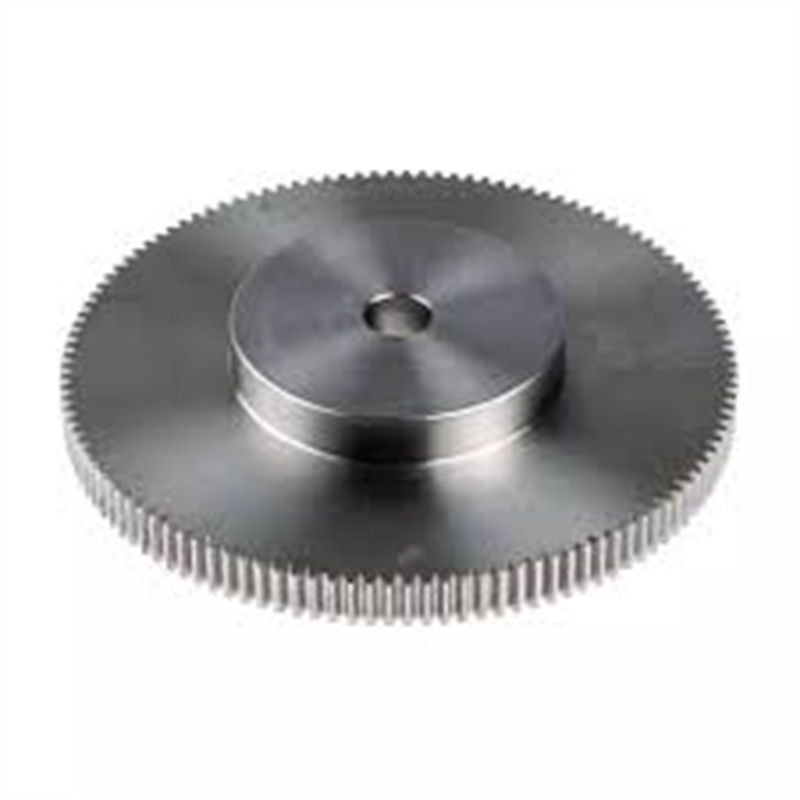
Equipped with a fully automatic loading and unloading linkage mechanism, this model realizes unmanned continuous machining. It can operate independently as an automatic single machine or be integrated into a full-automatic gear production line to realize streamlined operation. It effectively reduces manual intervention, lowers labor costs, and ensures consistent product dimensional consistency, perfectly adapting to large-scale, standardized gear batch production.
2.4 Precision Gear Shaper
A high-precision upgraded model for high-end manufacturing scenarios, adopting optimized spindle assembly, high-precision guide rail matching and error compensation structure. Its precision complies with JB/T8358.2-2006 standard and reaches Class IV machine tool precision per JB/T9871-1999, capable of stably processing high-precision gears of grade 5–6. Classic models such as YM5132 and YM5150 are widely used in aerospace, precision instrumentation and high-end transmission equipment fields with strict precision requirements.
2.5 Rack Gear Shaper
Professional special equipment for rack machining, which replaces the conventional worktable with a customized rack special fixture table. It is suitable for single-piece, small-batch and batch production of various standard and non-standard racks, with the classic model Y58125. Different from basic models, it takes the maximum workpiece length as the processing size index and cancels the hydraulic clamping device. The precision complies with JB/T6343.1-2006 standard and reaches Class V precision, with all other processing performances consistent with the basic series.
2.6 CNC Gear Shaper
Equipped with a full-function numerical control system, the CNC gear shaper realizes intelligent multi-axis linkage machining. It supports not only conventional internal and external cylindrical gears, but also complex special-shaped workpieces such as non-circular gears and cams. It realizes independent control and coordinated motion of multiple axes through numerical control programming, with flexible and adjustable processing trajectories. In line with JB/T6342.1-2006 standard and Class V precision, it processes grade 6–7 gears stably, and the classic model YK51125 is widely used in customized processing of complex special-shaped gears.
2.7 Taper Gear Shaper
It adopts a customizable tiltable worktable structure based on the basic model. By adjusting the table inclination angle, it realizes precise machining of tapered gears that cannot be completed by conventional equipment, filling the processing gap of special bevel and tapered gear workpieces, and meeting the personalized processing needs of special transmission components.
2.8 Extra-Height & Extended-Stroke Gear Shaper
The extra-height gear shaper optimizes the column height structure to adapt to gear workpieces with larger axial dimensions. The extended-stroke gear shaper enlarges the cutter stroke on the basis of increasing column height, realizing processing of workpieces with larger tooth width and longer stroke. Except for the optimized column and stroke structure, all other components and performance parameters are completely consistent with the basic series, with strong versatility and stable reliability.
3. Gearseiko’s Professional Gear Machining Strength & Solution Advantages
Different types of gear shapers have clear positioning and distinct application boundaries. Blind selection of equipment will easily lead to insufficient precision, low production efficiency or wasted equipment cost. Relying on years of high-end precision gear manufacturing experience, Gearseiko accurately grasps the performance advantages and applicable scenarios of all gear shaper series.
We can flexibly match processing schemes according to customer demands: select precision gear shapers for high-precision grade 5–6 gear products, high-speed automatic gear shapers for mass standardized production, CNC gear shapers for complex non-standard special-shaped gears, and professional rack/taper special shapers for personalized customized workpieces. We fully balance precision, efficiency and cost to provide customers with the most cost-effective gear shaping processing solutions.
Adhering to the manufacturing concept of "precision first, quality supreme", Gearseiko relies on complete processing equipment, mature process technology and strict quality inspection system to provide global customers with one-stop services from equipment scheme selection, process optimization to finished product customization.
Full-series gear shaper process matching, precise scenario-based scheme customization, high-standard precision gear manufacturing — Gearseiko empowers high-efficiency and high-quality gear production.
FAQ | Gear Shaper Classification & Selection
Q1: What is the basic precision grade of general-purpose gear shapers?
A1: The general-purpose basic gear shaper is Class V precision per JB/T9871-1999, complies with GB/T4686-2008 standard, and is suitable for machining grade 6–7 precision gears.
Q2: What is the difference between precision gear shapers and basic models?
A2: Precision gear shapers reach Class IV machine tool precision, comply with JB/T8358.2-2006 standard, and can process higher-precision grade 5–6 gears, suitable for high-end precision transmission scenarios.
Q3: What workpieces can CNC gear shapers process that conventional models cannot?
A3: CNC gear shapers support multi-axis linkage machining, capable of processing complex special-shaped workpieces such as non-circular gears and cams, which cannot be completed by ordinary manual gear shapers.
Q4: What scenarios are high-speed and automatic gear shapers suitable for?
A4: High-speed models are for high-efficiency batch production of standard gears; automatic models support unmanned loading and unloading, suitable for large-scale assembly line standardized production.
Q5: What are the characteristics of rack gear shapers?
A5: It adopts a special rack worktable, takes workpiece length as the size index, has no hydraulic clamping device, and is specially used for batch and customized production of various racks.
Q6: How to select a suitable gear shaper for customized gear processing?
A6: Match according to gear precision grade, workpiece size, batch quantity and profile complexity: basic models for conventional standard gears, precision models for high-precision products, CNC models for special-shaped gears, and special variants for large-size/tapered/rack workpieces.
A Guide to Chinese Standards
A Technical Insight for High-Precision Manufacturing
Related Article