A Precision Solution for Enhanced Tooth Strength
author: Cash
2026-06-12

Short-Tooth Gear Hobbing: A Precision Solution for Enhanced Tooth Strength | Gearseiko
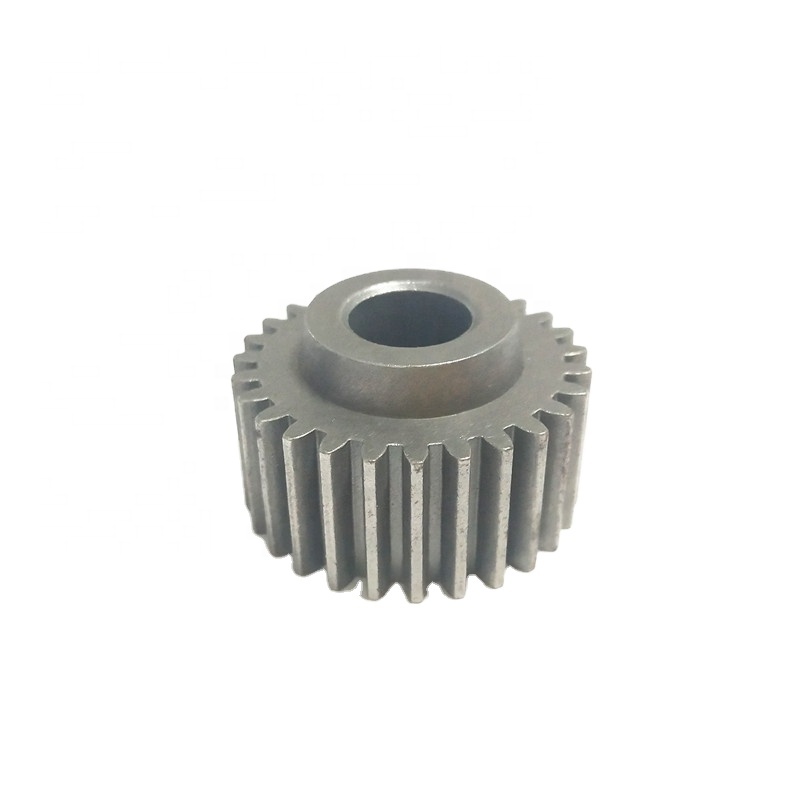
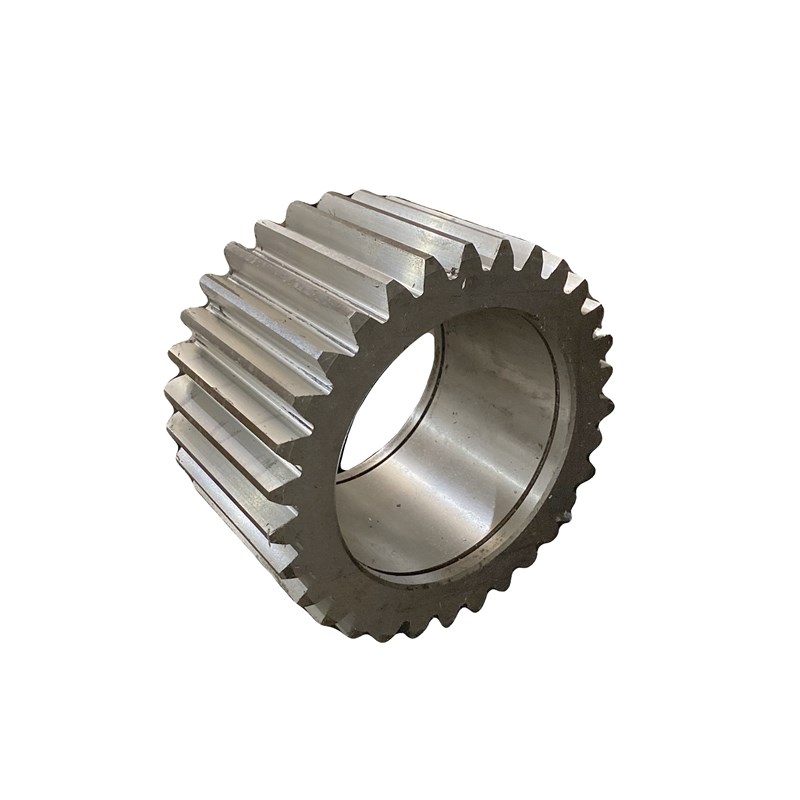
In heavy-load transmission systems, mining machinery, aerospace equipment and other high-strength working scenarios, tooth strength directly decides overall operational reliability. Compared with conventional spur gears, short-tooth gears deliver remarkable improvement in root bending strength while retaining the original pitch diameter, which makes them an ideal option for high-performance drive systems.
What Is a Short-Tooth Gear?
A short-tooth gear features an addendum coefficient \(h^*=0.8\) and a clearance coefficient \(c^*=0.3\), with the dedendum coefficient reaching 1.1. Its total tooth height is 1.9m (1.9 times the module), while the total tooth height of a standard gear is 2.25m (addendum coefficient 1.0, clearance coefficient 0.25).
This structural design brings multiple superiorities:
- The pitch diameter stays unchanged, ensuring full interchangeability with standard gears.
- Consistent tooth thickness and tooth space width maintain smooth transmission performance.
- Addendum circle and dedendum circle move closer to the pitch circle; the thickened tooth root greatly boosts bending strength.
- Larger radial clearance optimizes lubrication and heat dissipation effect.
Practical Hobbing Methods for Short-Tooth Gears
Gearseiko has developed two mature hobbing processes for short-tooth gear production on conventional gear hobbing machines.
Method 1: Direct Hobbing with Special Short-Tooth Hob
Using dedicated short-tooth hobs is the most straightforward process. The hob profile matches the tooth form of short-tooth gears perfectly, enabling one-pass full-depth cutting. This method features high efficiency and stable machining accuracy, perfectly suited for mass production.
Method 2: Modified Hobbing with Standard Hob

When dedicated short-tooth hobs are unavailable, standard hobs can be adopted with parameter adjustment. Set the radial cutting depth to 1.9m instead of the standard 2.25m. Since the standard hob tends to produce over-thick teeth at the pitch circle, four precision compensation methods are applied to correct tooth thickness deviation:
-
Hob axial shift method After cutting to the depth of 1.9m, retract the hob vertically without disconnecting the indexing system. Shift the hob axially by a calculated distance Δ to machine one tooth flank, then reverse the axial direction to finish the other flank. This method is easy to operate and widely used for on-site adjustment.
-
Hob rotation method Keep the radial cutting depth constant. Disengage the indexing chain without losing indexing position, then rotate the hob by a specific angle θ to cut one flank. Turn the hob by 2θ in the opposite direction to machine the other flank. It requires angular measuring devices but delivers excellent precision.
-
Hob setting angle adjustment method The addendum of a standard hob is larger than the dedendum of a short-tooth gear. At full cutting depth, the hob pitch line will disengage from the gear pitch circle and form positive profile shift. Fine-tune the hob setting angle to re-align the hob pitch line with the gear pitch circle, so both flanks can be machined simultaneously at 1.9m depth.
-
Other compensation techniques According to machine tool configurations, CNC tooth thickness compensation or professional tool setting devices can also be adopted for correction.
Gearseiko’s Core Advantages in Short-Tooth Gear Hobbing
As a professional manufacturer of high-precision and high-load gears, Gearseiko owns rich practical experience in short-tooth gear processing:
- Complete equipment: Equipped with multiple high-precision CNC hobbing machines, compatible with both special short-tooth hobs and standard hobs.
- Flexible processes: Proficient in axial shift, hob rotation, setting angle adjustment and other tooth thickness compensation methods.
- Strict quality control: Every finished gear undergoes tooth profile and lead inspection to guarantee qualified tooth thickness.
- Optimized material & treatment: Adopt high-strength alloy steel, combined with case hardening, shot peening and other post-processing technologies to extend tooth root fatigue life.
Application Guidance for Short-Tooth Gears
Short-tooth gears are highly recommended if your drive system meets the following conditions:
- Tooth root bending fatigue is the main failure mode.
- Limited installation space makes it impossible to use gears with larger modules.
- Severe impact loads require higher safety factors.
- Poor lubrication conditions demand enlarged radial clearance.

Conclusion
Short-tooth gears are professional strength-optimized components rather than simple alternatives to standard gears. Gearseiko provides one-stop services covering gear design, hobbing, heat treatment and precision inspection. Whether for heavy-duty reducers, wind turbine gearboxes or special vehicle transmissions, we can work out the optimal machining process and tooth thickness compensation solution based on your actual operating conditions.
Feel free to contact our technical team for quotation and engineering support for your short-tooth gear projects.
Gearseiko – Precision Short-Tooth Gears, Built for Strength.
FAQ | Short-Tooth Gear Hobbing Technology
Q1: What are the core parameter features of a short-tooth gear?
A1: Addendum coefficient 0.8, clearance coefficient 0.3, total tooth height 1.9m.
Q2: What are the key advantages of short-tooth gears?
A2: Higher tooth root bending strength, good interchangeability, better lubrication and heat dissipation.
Q3: What are the two main hobbing methods for short-tooth gears?
A3: Direct cutting with dedicated short-tooth hobs, and modified cutting with standard hobs.
Q4: Why do we need compensation when using a standard hob?
A4: A standard hob will produce over-thick teeth at the pitch circle, so compensation is required to correct tooth thickness.
Q5: In which scenarios are short-tooth gears most suitable?
A5: Heavy-load, impact-resistant, space-limited equipment with root bending fatigue risks.
A Critical Step in Precision Gear Manufacturing
Proper Installation of Gear Blanks and Fixtures
Related Article