Understanding Dynamic Excitation of Gear Mesh Stiffness The Key to Enhancing Precision Transmission Performance
author: Cash
2026-04-28

2026 Understanding Dynamic Excitation of Gear Mesh Stiffness: The Key to Enhancing Precision Transmission Performance | Gearseiko
In high-end precision gear transmission systems, dynamic performance directly affects operational stability, noise levels, and service life. The dynamic excitation of gear mesh stiffness is a core factor determining these performance metrics.
As a factory specializing in high-end precision gear manufacturing, Gearseiko is deeply committed to understanding and optimizing stiffness excitation in gear transmission, providing customers with low-vibration, high-efficiency drive solutions. Explore Gearseiko’s simulation-driven gear mesh stiffness analysis solutions here.
What Is Dynamic Excitation of Gear Mesh Stiffness? (Gear Mesh Stiffness Excitation)
When gears transmit external loads, tooth elastic deformation occurs, causing mesh stiffness to change periodically with the meshing position. This periodic variation excites system vibration and noise — known as "stiffness excitation".
Accurately determining system stiffness excitation is essential for studying vibration characteristics and improving dynamic performance. Since 1929, when R.V. Band and R.E. Peterson first modeled a gear tooth as a cantilever beam, researchers have never stopped exploring tooth elastic deformation.
From Classical Theory to Numerical Methods (Gear Mesh Stiffness Research Evolution)
The study of gear mesh stiffness has evolved from classical theoretical derivations to modern numerical simulations, with key milestones shaping the current understanding of stiffness excitation:
Classical Theoretical Foundations
-
H. Walker (1938–1940): Combined experiments with theoretical derivations to calculate tooth deformation, laying the groundwork for subsequent research.
-
C. Weber (1949): Subdivided deformation into shear, bending, and compression components, with theoretical results that aligned closely with Walker’s experimental data.
-
Subsequent advancements: A.Y. Attia considered edge deformation; T. Tobe et al. (1973) examined the effect of tooth misalignment on stiffness.
-
R.W. Cornell (1981): Systematically summarized bending, shear, contact, and tooth foundation elastic deformations, noting that different fillet radii at the tooth root produce different deformation patterns.
Mathematical Elasticity Methods
Mathematical elasticity methods, such as conformal mapping, were applied to transform curved tooth boundaries into straight lines, enabling complex function solutions for displacement fields. Cheng Naishi et al. further converted approximate solutions into exact ones, improving the accuracy of stiffness calculations.
Numerical Methods: Finite Element Method (FEM)
With the widespread application of computers, numerical methods advanced rapidly, with the finite element method (FEM) becoming a typical and reliable approach:
-
Early 1970s: FEM effectively solved tooth root stress and elastic deformation problems, initially using single-tooth models.
-
Wei Renzhi et al.: Derived approximate formulas for single-tooth deformation via regression analysis, simplifying initial stiffness calculations.
-
J.J. Coy et al.: Refined FEM models by adjusting element sizes near contact zones, improving simulation accuracy.
-
Li Runfang et al.: Pioneered contact FEM to study multi-tooth simultaneous meshing, closely representing real operating conditions of gear systems.
However, FEM requires fine mesh and long computation times for mesh stiffness calculations. In contrast, analytical methods offer significant time savings and remain irreplaceable. Thus, many researchers have revisited analytical methods, improving their accuracy for practical engineering applications. Learn more about Gearseiko’s advanced gear reliability and stiffness analysis methods here.
Revival and Refinement of Analytical Methods (Gear Mesh Stiffness Calculation)
In recent decades, analytical methods have been revived and refined, combining the efficiency of classical theory with the accuracy of modern research:
-
P. Sainsot et al.: Derived tooth foundation stiffness models, enhancing the accuracy of overall mesh stiffness calculations.
-
F. Chaari et al.: Considered bending, contact, and foundation deformations in spur gear pairs, providing a more comprehensive analytical framework.
-
Z.G. Chen et al.: Used the energy method to combine bending, shear, radial compression, foundation, and Hertzian contact stiffness, validating results against FEM for reliability.
-
Ma Hui et al.: Noted that modeling teeth as cantilevers on the base circle can cause significant errors (especially for gears with many teeth); the tooth-root circle should be used instead for more accurate deformation calculations.
-
Z.G. Chen et al.: Established deformation compatibility equations to analyze mesh stiffness with tooth profile errors, ensuring analytical results align with real-world conditions.
Today, the energy method provides more realistic and accurate stiffness calculations, balancing efficiency and precision for engineering applications.
Gearseiko’s Innovative Practice: Turning Theory into Precision Manufacturing
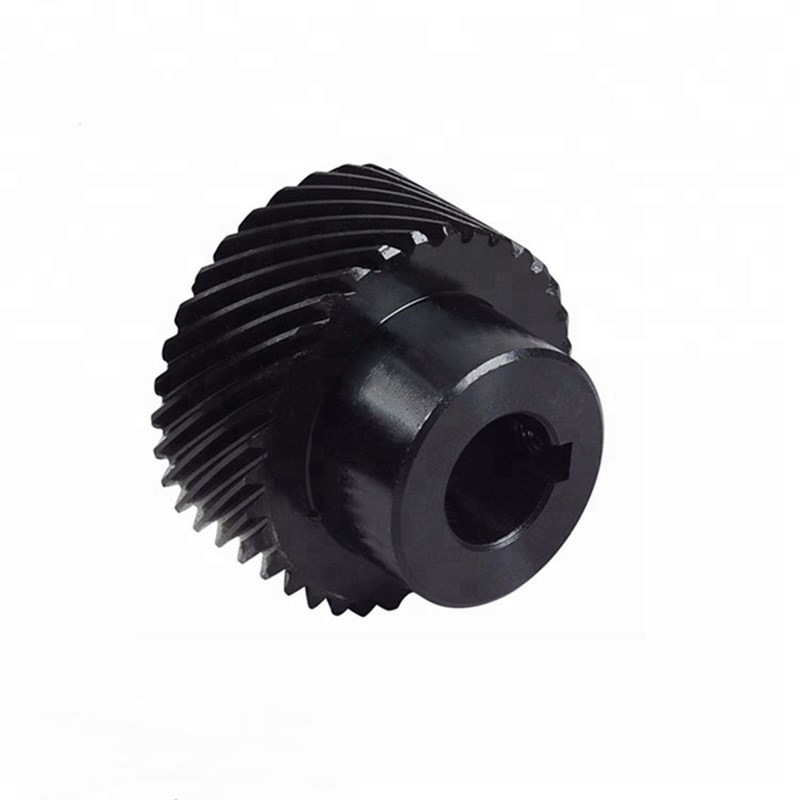
At Gearseiko, we fully recognize the decisive impact of dynamic stiffness excitation on product performance. Based on classical theories and modern research, we have established a high-precision mesh stiffness dynamic analysis workflow:
1. Multi‑method Simulation: Balancing Accuracy and Efficiency
We use FEM for precise validation of critical designs, while a modified energy method enables fast iteration — striking the perfect balance between accuracy and efficiency. Special attention is paid to stiffness deviations caused by non‑coincidence of the base circle and root circle, optimizing tooth profile modification strategies to minimize stiffness excitation.
2. Minimizing Dynamic Excitation: Suppressing NVH
By accurately calculating the combined effects of bending, shear, radial compression, foundation, and Hertzian contact stiffness, we predict and suppress NVH (Noise, Vibration, Harshness). For cases with tooth profile errors, deformation compatibility equations are applied to compensate and ensure smooth meshing, reducing vibration and noise.
3. Case Validation: Proven Results in Real Applications
In new energy gearboxes and aerospace transmissions, Gearseiko’s precision gears, optimized using the above methods, have achieved over 15% reduction in transmission error and more than 20% drop in vibration amplitude at meshing frequencies — significantly improving operational quietness and durability.
FAQ: Gear Mesh Stiffness Dynamic Excitation
Q1: What is dynamic excitation of gear mesh stiffness?
A1: It refers to the periodic variation of gear mesh stiffness (caused by tooth elastic deformation during load transmission), which excites system vibration and noise, directly affecting gear transmission performance.
Q2: What are the advantages of FEM and analytical methods in gear mesh stiffness calculation?
A2: FEM offers high accuracy for complex models but requires long computation times; analytical methods (e.g., energy method) are efficient, time-saving, and irreplaceable for fast design iteration.
Q3: How does Gearseiko optimize gear mesh stiffness to reduce vibration and noise?
A3: We combine FEM validation and modified energy method iteration, optimize tooth profile modification, and apply deformation compatibility equations to compensate for errors, minimizing dynamic excitation and NVH.
Q4: What applications benefit from Gearseiko’s mesh stiffness optimization solutions?
A4: Our solutions are ideal for high-precision scenarios such as new energy gearboxes, aerospace transmissions, and other low-vibration, high-efficiency transmission systems.
Committed to High-end Precision, Driving the Future
From Weber’s classical theory to modern energy methods, the study of dynamic excitation of gear mesh stiffness has never stopped. Gearseiko not only inherits nearly one hundred years of wisdom in this field but also transforms it into practical manufacturing processes and inspection standards.
We believe that only by understanding the microscopic deformation of every tooth under load can we produce truly superior gears. If you are facing challenges such as excessive vibration, high noise, or short service life in your gear transmissions, contact Gearseiko today.
Let us bring smoothness and efficiency to your power systems through precision analysis and high-end manufacturing. For more information about Gearseiko’s gear mesh stiffness optimization and precision manufacturing capabilities, visit our official website //www.gearseiko.com and feel free to contact us for professional consultation.
Reliability Analysis of Gear Contact Strength Based on RSM and MCMC
2026 Gear Reliability Research From Classical Theory to Simulation-Driven Design
Related Article