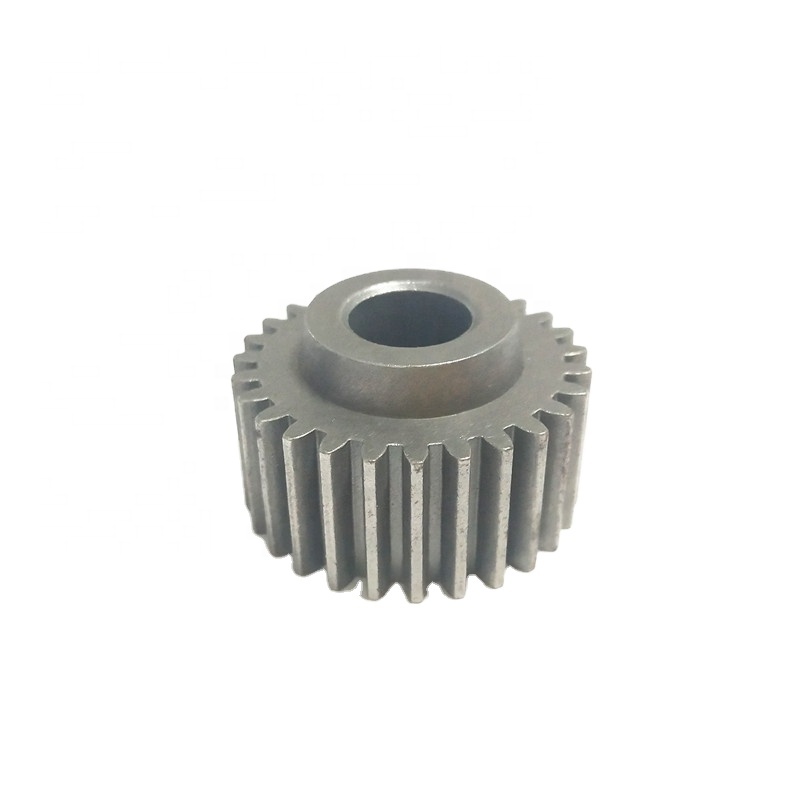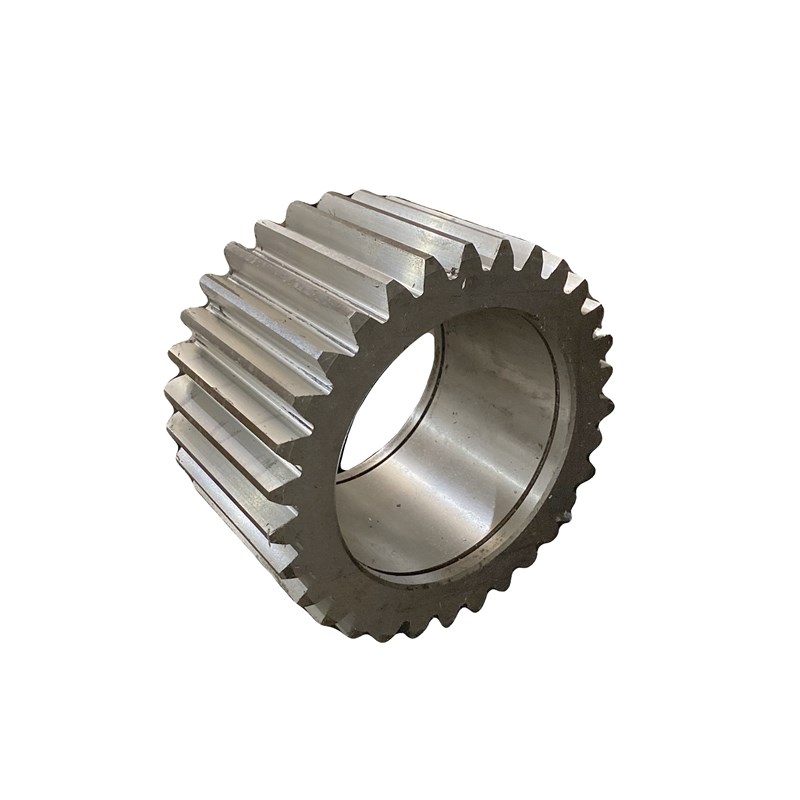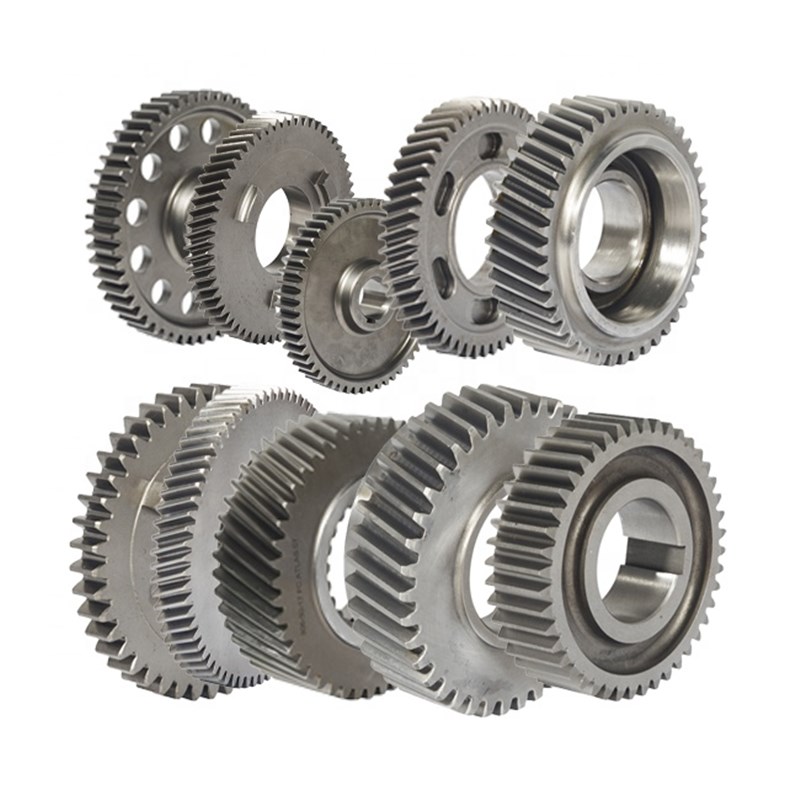
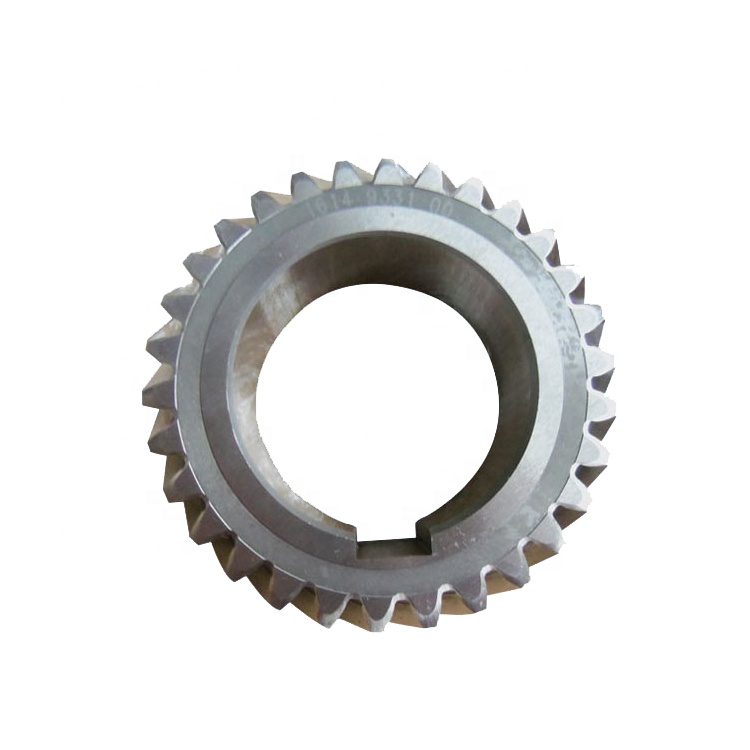
The tooth surface of the gear has flaked off.
Understanding and Preventing Tooth Flaking in High-Precision Gears: Insights from Gearseiko
In the world of high-performance power transmission, gear reliability is non-negotiable. Among the various failure modes that can compromise a gearbox, tooth flaking (also known as spalling) stands out as one of the most destructive. At Gearseiko, we specialize in manufacturing premium precision gears engineered to resist such failures. This article explains what tooth flaking is, why it occurs, and how our advanced metallurgical and design practices ensure longer, more reliable gear life.
What Is Tooth Flaking?
Flaking refers to the detachment of relatively large metal pieces from the tooth contact surface, leaving behind deep, irregular craters. Unlike micropitting, which creates fine surface roughness, flaking produces substantial cavities that severely reduce a gear’s load-carrying capacity. These craters act as stress risers, becoming initiation sites for other failure mechanisms such as tooth bending fatigue or even fracture. Furthermore, the loose metallic debris can circulate through the lubrication system, damaging bearings, seals, and other components – a cascade effect that often leads to premature system breakdown.
The Root Causes of Flaking
Based on extensive research and field experience, two primary mechanisms drive tooth flaking:
1. Progressive Growth of Pitting
Under cyclic contact stresses, small pits may initially form on the tooth surface. If left unchecked or if the operating loads exceed the material’s endurance limit, these pits can propagate deeper into the subsurface. Cracks grow at an inclined angle, eventually intersecting and causing a large chunk of metal to break away. This type of flaking is typically associated with insufficient surface hardness or inadequate lubrication film thickness.
2. Subsurface Fatigue in Case‑Hardened Gears
For gears that have undergone surface hardening (e.g., carburizing, induction hardening), flaking often originates deep beneath the surface. The transition zone between the hard case and the softer core is metallurgically critical. Any inclusions, microvoids, or abrupt hardness gradients in this region become weak points. Under repeated rolling–sliding contact, cracks initiate deep inside, then propagate outward. When the flakes finally detach, the resulting craters are notably large and deep – a signature of subsurface-origin spalling.
This second mechanism is particularly insidious because the cracks cannot be detected by routine surface inspection until the damage is already extensive. The primary drivers are:
-
A mismatch in mechanical properties between the hardened case and the core.
-
Inadequate case depth relative to the maximum shear stress location.
-
Poor hardness gradient control.
How Gearseiko Prevents Tooth Flaking
At Gearseiko, we design and manufacture gears that consistently outperform industry standards. Our approach to preventing flaking is rooted in rigorous material science and process control.
Optimized Material Selection
We select alloy steels with high hardenability and cleanliness. By specifying steels with low non‑metallic inclusion content and controlled grain size, we minimize the internal defects that could serve as crack nucleation sites deep in the subsurface.

Precision Heat Treatment
Our heat treatment protocols are tailored to achieve the ideal balance between case hardness, core hardness, and case depth. We use advanced carburizing and quenching processes with real‑time monitoring to ensure:
-
Uniform case depth across the tooth flank and root.
-
A smooth hardness transition from the case to the core, eliminating abrupt gradients that concentrate stress.
-
Core hardness sufficiently high to support the case and resist plastic deformation at depth.
Controlled Hardness Gradient
As the original text notes, the hardness gradient along the depth direction is a critical control parameter. At Gearseiko, we define and verify the entire hardness profile – not just surface hardness. Using microhardness testing on every production batch, we confirm that the depth at which the maximum shear stress occurs (typically 0.1–0.3 mm below the surface for many gear designs) falls well within the hardened case, not in the transition zone. This effectively moves the weak interface away from the highest stressed region.
Advanced Simulation and Quality Assurance
Before a gear design enters production, we perform finite element analysis (FEA) to predict subsurface stress distributions. We then match those stresses with the intended hardness profile. Every finished gear undergoes non‑destructive testing (magnetic particle or eddy current) and sample destructive testing (microsectioning) to validate case depth and microstructure.
Why Choose Gearseiko?
Tooth flaking is not an inevitable fate – it is a preventable failure mode. By focusing on the three pillars of contact fatigue strength – surface hardness, core hardness, and case depth with an optimized gradient – Gearseiko delivers gears that endure higher loads, longer service intervals, and harsher operating conditions.
Whether your application involves wind turbines, electric vehicle drivetrains, industrial gearboxes, or aerospace actuation systems, our precision gears provide the reliability you need. We combine German‑inspired engineering discipline with Japanese manufacturing excellence to produce components that resist flaking, pitting, and other contact fatigue failures.
Conclusion
Understanding the root causes of tooth flaking empowers engineers to specify gears that last. The two primary mechanisms – progressive pitting growth and subsurface fatigue from case‑core property mismatch – can both be controlled through deliberate material and heat treatment choices. At Gearseiko, we don’t just make gears; we engineer contact fatigue resistance into every tooth.
Contact us today to learn how our precision gears can upgrade your power transmission systems and eliminate unexpected downtime caused by flaking.
Gearseiko – Precision that lasts.
Bending fatigue failure and contact fatigue failure of the gear teeth
Rolling contact fatigue of gears
Related Article