The Key Factor Determining Precision Gear Performance and Life
author: Cash
2026-05-19
Surface Roughness: The Key Factor Determining Precision Gear Performance and Life – Insights from Gearseiko | Gearseiko
In the field of high-end precision power transmission, surface roughness is no longer just an auxiliary parameter on engineering drawings. It has become a core quality characteristic that directly determines the operational performance, service life of gears, shafts, and the entire transmission system.
As a professional manufacturer specializing in high-end precision gears, Gearseiko deeply understands that every micrometer of surface irregularity can significantly affect transmission efficiency, noise levels, service life, and even system operational safety. This article explores ten critical ways surface roughness impacts gear component functions, helping design and procurement engineers truly grasp the core value behind surface “smoothness”.Explore Gearseiko’s precision gear surface roughness control and high-performance gear manufacturing solutions here.
1. Fit Stability: Higher Precision Demands Lower Surface Roughness
The stability of interference fits, clearance fits, and bearing-housing assemblies relies heavily on the microscopic topography of mating surfaces. For static fits requiring high load capacity and secure connections, as well as dynamic fits with extremely small clearances, the surface roughness (Ra) must be strictly controlled at a low level.
The smaller the dimensional tolerance and the higher the accuracy grade (especially IT1–IT3), the stricter the Ra requirement. Notably, for the same tolerance grade, smaller parts require lower Ra than larger ones, and shafts generally need smoother surfaces than holes. When machining miniature high-precision gears, Gearseiko strictly controls Ra below 0.2 μm, ensuring that even the most delicate fits are neither loose nor seized.
2. Friction and Wear: Optimizing Every Gear Contact Surface
Surface roughness directly affects the wear rate of gear components. Rolling friction surfaces are more sensitive to roughness than sliding ones; high-speed surfaces are more sensitive than low-speed ones; and heavily loaded surfaces are more sensitive than lightly loaded ones.
For high-speed gear tooth flanks, excessive roughness can cause asperity shearing and abrasive wear. However, overly smooth surfaces (Ra < 0.05 μm) will prevent the formation of a stable lubricant film, leading to increased friction. Through precision grinding and superfinishing processes, Gearseiko controls the Ra of working tooth flanks in the ideal range of 0.4–0.8 μm, reducing friction while ensuring effective lubrication.
3. Fatigue Strength: Surface Roughness Is the “Lifeline” at Stress Concentrations
Locations subjected to cyclic loading, such as gear tooth roots, shaft fillets, and keyway grooves, are where fatigue cracks most easily initiate. Rougher surfaces mean deeper microscopic notches, higher stress concentration factors, and significantly shorter fatigue life.
Studies show that reducing Ra from 1.6 μm to 0.2 μm can increase the bending fatigue strength of gears by 30–50%. Material sensitivity varies: high-strength alloy steels are greatly affected by surface roughness, while cast iron is less so. For demanding applications such as aerospace and wind power, Gearseiko combines shot peening with mirror-finish polishing, lowering surface roughness while introducing compressive residual stress to multiply the fatigue life of gears.

4. Contact Stiffness & Impact Strength: Stability Under Dynamic Loads
When two rough surfaces come into contact, the real contact area is only a tiny fraction of the nominal area. Under external force, the surface asperities undergo elastic and plastic deformation, reducing contact stiffness. Lowering surface roughness significantly improves contact stiffness, reducing assembly looseness and displacement under load.
For gear drives subject to impact loads (e.g., construction machinery transmissions), a lower Ra also improves impact strength, especially at low temperatures. Gearseiko gears designed for heavy-duty impact applications have mating end-face roughness strictly controlled below Ra 0.4 μm, ensuring that every impact is transmitted uniformly.
5. Corrosion Resistance: Rough Surfaces Are Havens for Corrosion
Corrosive gases or liquids easily accumulate in the valleys of rough surfaces and gradually penetrate into the material, accelerating electrochemical corrosion. For gears and shafts operating in marine environments, chemical plants, or humid conditions, a smoother surface leaves less room for corrosive media to dwell.
For customers with high corrosion-resistance requirements, Gearseiko offers mirror-grade polishing (Ra ≤ 0.1 μm) plus DLC coatings, making components not only smooth but also chemically inert, dramatically extending their service life under harsh conditions.
6. Sealing Performance: Micro-Texture Determines Leakage vs. Lubrication
For static sealing joints, a rougher surface creates more leakage paths, affecting sealing performance. For dynamic seals with relative motion (e.g., rotary shaft lip seals), the situation is more nuanced. A moderate degree of microscopic unevenness (typically Ra = 4–5 μm) can store lubricant, forming microscopic oil reservoirs that actually improve lubrication and sealing.
However, if the surface is too smooth (Ra < 0.2 μm), no lubricant can be retained, leading to increased dry friction and rapid wear of the seal lip due to lack of lubrication. Furthermore, the direction of machining texture matters greatly. Gearseiko selects honing, polishing, or lapping processes based on the seal type, and precisely controls the texture direction to achieve the optimal balance between minimal leakage and maximal lubrication.
7. Vibration & Noise: Smoothness Is the Prerequisite for Quiet Operation
High-speed kinematic pairs such as gear meshes, rolling bearings, engine crankshafts, and camshafts – their microscopic surface unevenness excites high-frequency vibration and noise. For NVH-sensitive applications such as electric vehicle transmissions and precision machine tool spindles, reducing gear tooth flank roughness by one grade typically lowers overall system noise by 1–3 dB(A).
Using ultra-precision grinding and forced honing processes, Gearseiko mass-produces quiet gears with tooth flank Ra ≤ 0.2 μm, which are widely used in premium EVs and robotic joints.
8. Skin Effect & Coating Quality: Surface Roughness Affects Post-Processing Performance
In high-frequency current transmission scenarios (e.g., wireless charging rotors, eddy-current sensors), current flows mainly in a thin layer about 1 μm deep near the conductor surface. Surface roughness increases the actual resistance above the theoretical value, impairing power transmission efficiency.
Additionally, roughness significantly affects electroplating and spray coating quality: after zinc, chromium, or copper plating, the micro-unevenness depth doubles; after nickel plating, it halves. Interestingly, a controlled degree of roughness is beneficial for spray-metal coatings – it absorbs tensile stresses that develop during cooling, preventing cracks. Gearseiko provides custom-tailored initial surface roughness solutions for different post-processing requirements, ensuring optimal coating adhesion and uniformity.Learn more about Gearseiko’s gear surface treatment and roughness optimization technology here.
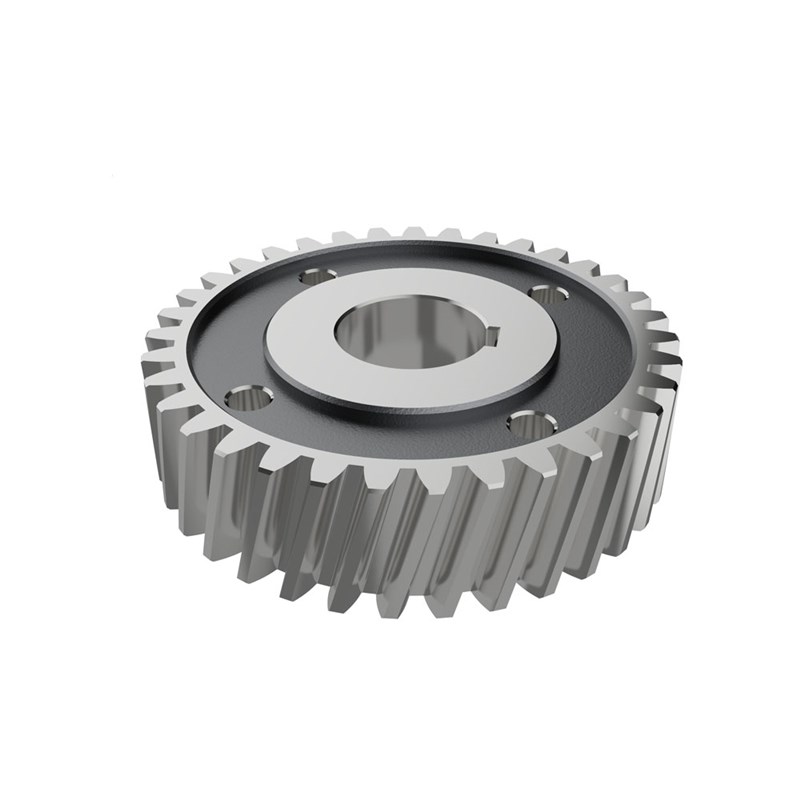
Conclusion: Gearseiko – Defining Transmission Performance at the Micron Level
From fit stability and friction to fatigue strength, corrosion resistance, sealing performance, and noise control, surface roughness influences every stage of a gear component’s life cycle. As a professional manufacturer of high-end precision gears, Gearseiko not only operates German-imported ultra-precision grinding machines, CNC gear measurement centers, and proprietary surface-integrity control processes but also recommends the most economical roughness range based on customers’ specific operating conditions (load, speed, temperature, media, fit type).
Because true precision is not blindly chasing “the smoothest possible” surface, but finding the optimal balance between performance, service life, and manufacturing cost.
If you are looking for a gear partner who fully understands your design intent and can precisely achieve the required surface quality, contact Gearseiko. We will deliver smoother, stronger, and more reliable power transmission – one finely textured tooth flank at a time.
Gearseiko – Precision Gear Solutions for a Smoother World.
FAQ: Surface Roughness for Precision Gears
Q1: How does surface roughness affect gear fit stability?
A1: Higher precision fits (smaller tolerance, higher accuracy grade like IT1–IT3) require lower Ra; smaller parts and shafts need smoother surfaces than larger parts and holes to avoid loose or seized fits.
Q2: What is the ideal Ra range for gear tooth flanks, and why?
A2: The ideal range is 0.4–0.8 μm. Excessive roughness causes wear, while overly smooth surfaces (Ra < 0.05 μm) prevent stable lubricant film formation, increasing friction.
Q3: Can reducing surface roughness improve gear fatigue life?
A3: Yes. Reducing Ra from 1.6 μm to 0.2 μm can increase gear bending fatigue strength by 30–50%; combining with shot peening and mirror polishing can further extend fatigue life.
Q4: How does surface roughness affect gear sealing performance?
A4: Static seals require smooth surfaces to reduce leakage; dynamic seals need moderate roughness (Ra = 4–5 μm) to store lubricant; overly smooth surfaces cause dry friction and seal wear.
How to Choose Surface Roughness Parameters for Precision Gears
Geometric Tolerancing with General Tolerances
Related Article