The Evolution of Grinding Machine Transmission Systems and Gearseikos Precision Approach
author: Cash
2026-07-22
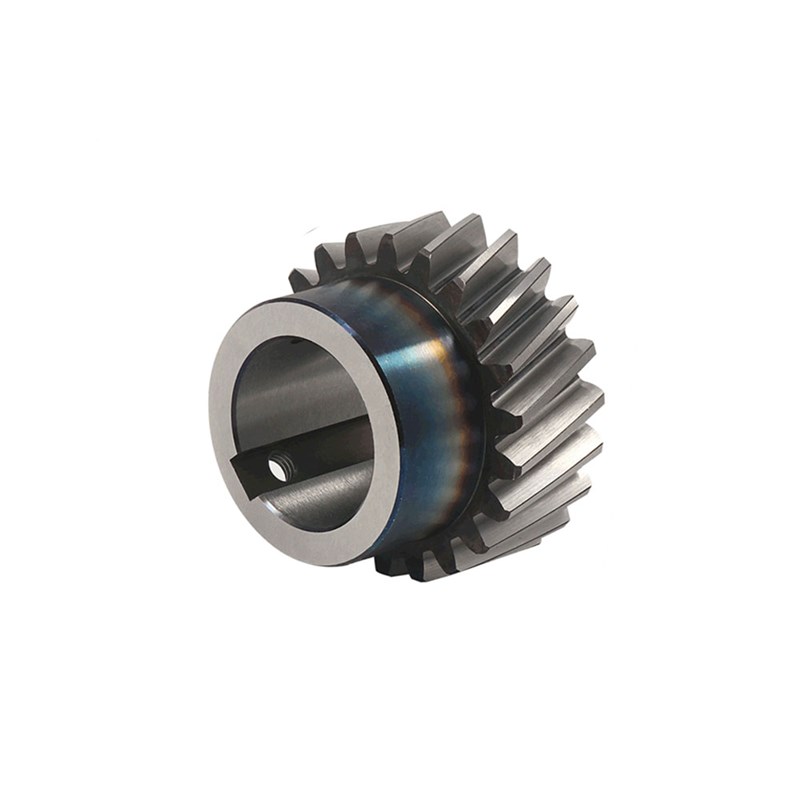
From Steel Bands to Servo Direct Drive: The Evolution of Grinding Machine Transmission Systems and Gearseiko’s Precision Approach | Gearseiko
Introduction
In precision gear manufacturing, the grinding machine’s transmission system directly determines the final dimensional accuracy and tooth flank surface quality of finished gears. The development history of grinding machine drive technology marks a clear evolutionary path: from complex mechanical transmission structures to modern servo control systems. The trend consistently points toward shorter transmission chains, superior positioning precision and greater process flexibility.
As a manufacturer focused on high-end precision gear production, Gearseiko keeps pace with advancements in drive technology. We continuously optimise machining processes based on updated equipment architecture, to deliver more accurate, stable and reliable gear manufacturing solutions for global customers.
1. The Mechanical Transmission Era: Generating Motion via Steel Bands and Rolling Discs
Mechanical gear grinders rely on pure mechanical structures to realise generating motion. The Y7432 large-plane wheel gear grinding machine is a well-known classic model in this category.
This machine adopts rolling disc and steel band assemblies to complete generating motion. A rolling disc is mounted coaxially with the workpiece gear. Two steel bands wrap around the outer circumference of the disc; one end of each steel band is fixed onto the disc, and the other end connects to a band holder with horizontal tension adjustment. During grinding, the band holders remain stationary. When the rolling disc and workpiece spindle move horizontally, tensioned steel bands drive the disc to rotate. This creates pure rolling motion matching the relationship between the gear pitch circle and rack pitch line.
The Y7432 is equipped with an 800 mm diameter grinding wheel. Its processing range covers modules from 1 mm to 12 mm, tooth numbers 12–120, workpiece diameters 50–320 mm, helix angles 0° to ±45°, and the wheelhead supports angle adjustment between 6° and 23°. Thanks to its relatively short transmission chain and simple mechanical layout, the machine can achieve gear accuracy up to ISO Grade 3. It is widely applied for ultra-precision gear finishing and the production of gear cutting tools such as shaving cutters.
Even so, mechanical transmission designs carry inherent limitations. Steel bands have physical thickness. When wrapped around the rolling disc, the outer layer stretches while the inner layer compresses; only the middle layer maintains a constant effective length. Band manufacturing tolerances, tension fluctuation and long-term wear inevitably introduce geometric errors. Additionally, traditional mechanical machines require worm gear sets, lead screws and other components for indexing. Every extra link in the transmission chain accumulates backlash and deformation errors, restricting further improvement of machining precision.
2. Servo Drive Revolution: Transition from Mechanical Transmission Chains to Electronic Transmission Chains
Modern gear grinding equipment is rapidly shifting toward simplified servo-driven architectures. Indexing worm gear assemblies on large grinders are gradually replaced by high-precision servo torque motors. All machine movements can be programmed, and multiple axes support full synchronous interpolation.
The core breakthrough lies in the widespread application of direct drive technology. Direct drive removes intermediate transmission parts including gearboxes, ball screws and couplings. Torque motors or linear motors drive the load directly, bringing three decisive advantages:
-
Higher precision through shortened transmission chains Direct drive achieves near-zero intermediate transmission. It eliminates backlash, elastic deformation, friction and reversal errors generated by mechanical connecting components. Position sensors are installed directly on the terminal moving components, enabling full closed-loop servo control and significantly improving motion accuracy.
-
Excellent dynamic response Direct-drive motors deliver high drive stiffness and fast dynamic response during acceleration, deceleration and direction reversal. This is vital for the frequent reciprocating generating motion required in gear grinding. It effectively suppresses grinding chatter and avoids tooth profile defects caused by unstable transmission.
-
Enhanced flexibility and intelligence The CNC system centrally controls all motion axes. Generating movement, indexing and wheel dressing can be synchronously interpolated. The transmission chain evolves from mechanical hardware to an electronic control system. Operators no longer need to replace mechanical parts to adjust process parameters, greatly expanding the machine’s adaptability for diverse gear specifications.
3. Gearseiko’s Precision-Oriented Equipment & Process Strategy
As a professional high-precision gear manufacturer, Gearseiko fully recognises how transmission system performance shapes final gear quality. When selecting processing equipment and developing manufacturing workflows, we prioritise servo direct-drive architecture.
For generating motion: We utilise high-precision torque motors to directly drive workpiece spindles, replacing conventional steel-band rolling disc structures and worm gear indexing systems. Our torque motors provide continuous torque up to 630 N·m. Optimised slot-pole design and precision manufacturing deliver outstanding low-speed high-torque characteristics. Combined with full closed-loop servo control, generating motion achieves micron-level trajectory accuracy and excellent repeatability.
For multi-axis coordination: Our grinding equipment adopts 10-axis closed-loop servo control, supporting simultaneous interpolation across all motion axes. Wheel dressing, gear grinding and in-process measurement can be completed within a single clamping setup, stabilising precision consistency and boosting overall production efficiency.
For systematic digital control: Gearseiko integrates advanced direct-drive hardware with intelligent grinding technology. Supported by digital twin simulation and adaptive grinding algorithms, we realise full digital control spanning gear design through to precision grinding.
Conclusion
From the classic steel band and rolling disc mechanism of the Y7432 grinder to modern servo direct-drive systems, the evolution of grinding machine transmission technology represents an ongoing pursuit of higher precision, shorter transmission paths and stronger controllability. Mechanical transmission is limited by accumulated mechanical errors and component wear, while servo direct drive eliminates intermediate links and opens new boundaries for ultra-precision gear machining.
Gearseiko persists in precision-driven manufacturing. By adopting state-of-the-art direct-drive transmission technology and optimised grinding processes, we deliver consistent high-precision gears to meet stringent requirements from global industrial customers.
FAQ | Grinding Machine Transmission System Evolution & Precision Gear Machining
Q1: What generating principle does the Y7432 gear grinder adopt?
A1: It uses rolling discs and tensioned steel bands to realise pure rolling generating motion, simulating the meshing relationship between gear pitch circle and rack pitch line.
Q2: What are the main drawbacks of steel band and rolling disc transmission?
A2: Steel band thickness causes uneven tension deformation during operation. Band tolerances, tension variation and wear introduce errors. Additional mechanical links further accumulate indexing and motion deviations.
Q3: What is the core advantage of servo direct drive compared with traditional mechanical transmission?
A3: Direct drive removes intermediate mechanical components such as gearboxes and couplings, eliminating backlash and elastic deformation. Closed-loop control provides faster dynamic response and higher repeat positioning accuracy.
Q4: Why is fast dynamic response important for gear generating grinding?
A4: Generating grinding involves frequent acceleration, deceleration and direction reversal. Poor dynamic stability causes vibration and chatter marks, leading to tooth profile deviation and poor surface finish.
Q5: What configuration does Gearseiko adopt for workpiece spindle drive in grinding processes?
A5: We use high-torque servo direct-drive torque motors to drive spindles directly, replacing traditional worm gear indexing and steel-band rolling disc generating structures, supported by full closed-loop multi-axis control.
Q6: How does direct drive improve production flexibility for gear manufacturing?
A6: All motion parameters are adjusted via CNC programs without mechanical part replacement. The electronic transmission chain easily adapts to varied modules, tooth counts and modified gear profiles.
A Comprehensive Guide by Gearseiko
A Complete Guide to High Precision Gear Finishing
Related Article