The Economic Revolution in Gear Manufacturing
author: Cash
2026-06-01

Laser Quenching vs. Conventional Heat Treatment: The Economic Revolution in Gear Manufacturing | Gearseiko
In high-precision gear manufacturing, heat treatment processes directly determine product performance, service life and overall production costs. For many years, carburizing and quenching, induction hardening and plasma nitriding have dominated surface hardening applications. As laser surface quenching technology matures rapidly — especially with the popularization of multi-axis CNC equipment — it is reshaping the cost structure and development trend of the gear industry.
As a professional manufacturer of high-end precision gears, Gearseiko has adopted laser surface quenching for a long time and built up abundant engineering data and on-site experience. Below we analyze the substantial economic benefits this advanced technology brings to global clients.Discover cost-effective laser quenching solutions and high-performance precision gears from Gearseiko.
Industrial-grade Maturity for Large-scale Application
Laser surface quenching is no longer limited to laboratory trials. Continuous technical optimization has boosted its process stability, controllability and repeatability to fully meet industrial production requirements. Equipped with multi-axis CNC machines, we can perform uniform quenching on gear tooth flanks, tooth roots and complex-shaped components efficiently.
In actual production, laser quenching has replaced traditional processes in numerous scenarios, such as thin-walled gears and special/non-standard parts that cannot be ground after heat treatment. It delivers remarkable value for sectors with strict demands on gear precision and reliability, including aerospace, robotics and high-end automotive.
Superior Comprehensive Performance
- Hardened layer depth: The effective case depth of laser quenching ranges from 0.3 mm to 2.0 mm, exceeding that of plasma nitriding and carbonitriding. Meanwhile, it features far better quality stability than flame hardening and induction hardening, effectively cutting scrap rates and ensuring consistent product quality.
- Surface hardness: For medium-carbon steel gears, laser quenching delivers surface hardness 1–3 HRC higher than induction hardening, alongside much finer quenched microstructures. This leads to prominent improvements in wear resistance and fatigue strength.
- Material cost optimization: For quenched and tempered medium-carbon alloy steels like CrMo, CrMnMo, CrNi and CrNiMo, laser quenching achieves surface hardness comparable to carburized and quenched low-carbon alloy steels. To meet the same hardness standards, manufacturers can select more cost-effective base materials and lower material expenses.
Economic Comparison: Real Production Case Data
We take industrial robot gears as an example to compare three mainstream heat treatment processes:
| Process | Energy consumption (kWh/piece) | Cycle time | Post-treatment | Scrap rate | Relative unit cost |
|---|---|---|---|---|---|
| Carburizing + quenching | 12.5 | 8–10 hours | Grinding required | 3–5% | Baseline 100% |
| Induction hardening | 5.2 | 15–20 min | Grinding may be needed | 4–6% | Baseline 78% |
| Laser quenching | 3.8 | 5–8 min | No grinding required | <1% | Baseline 62% |
Key conclusions:
- The overall cost of laser quenching is only 62% of carburizing and quenching.
- It reduces total costs by around 20% compared with induction hardening.
- The elimination of grinding procedures saves investment on equipment and labor costs.
- A scrap rate below 1% creates considerable profit margins for mass production.
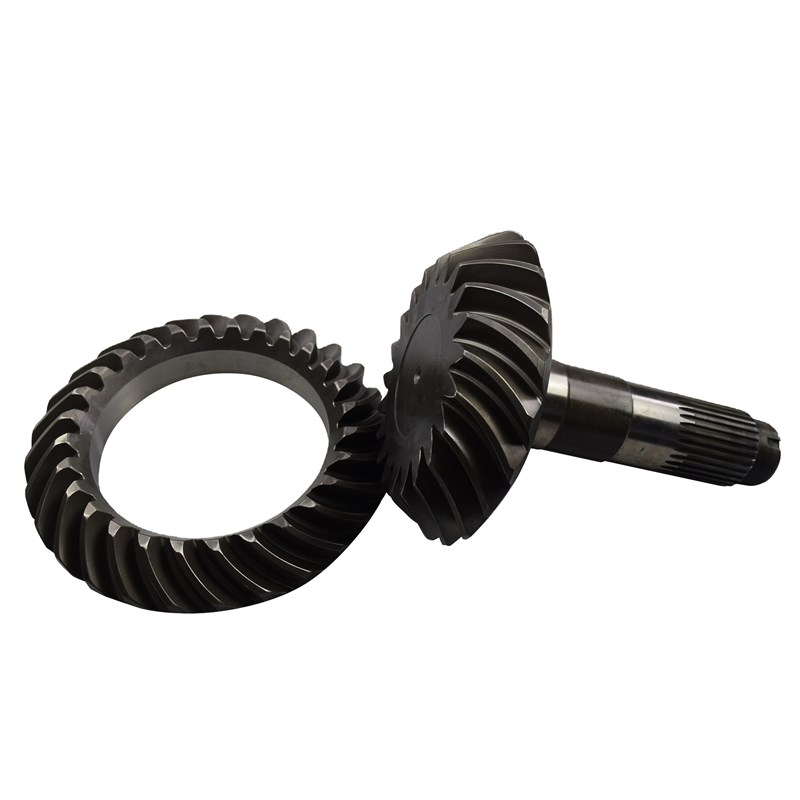
Gearseiko’s Production Practice & Commitment
We have realized mass production of laser surface quenching for a wide range of high-end precision gears. The technology shows excellent technical stability and economic advantages when applied to thin-walled gears for new energy vehicle drivetrains and special transmission parts for industrial robot joints.
We believe process selection should be based on objective data and engineering economy, rather than outdated conventions. Laser surface quenching is fully mature, cost-efficient and ready for full-scale mass production.
If you are seeking a heat treatment solution to upgrade gear performance while slashing manufacturing costs, feel free to contact our team for in-depth communication.
This article is compiled based on actual process test data. Gearseiko retains the right of final interpretation for relevant technical parameters. Please visit our official website to obtain detailed technical white papers or apply for sample testing.
FAQ: Laser Quenching & Traditional Heat Treatment
Q1: Is laser surface quenching suitable for industrial mass production?
A1: Yes. Its stability and repeatability have reached industrial standards, and multi-axis CNC equipment enables efficient processing of various gears.
Q2: What are the performance advantages of laser quenching?
A2: It offers proper hardened layer depth, higher surface hardness, finer microstructure, lower scrap rate and better overall consistency.
Q3: How does laser quenching perform in terms of cost control?
A3: It consumes less energy and time, removes grinding steps and keeps scrap rate below 1%, delivering obvious cost advantages.
Q4: What types of gears fit laser quenching best?
A4: It is ideal for thin-walled gears, special-shaped parts and components with strict precision requirements for robotics, automotive and aerospace industries.
Q5: Can laser quenching help save material costs?
A5: Yes. It allows adopting more economical medium-carbon alloy steels to replace high-cost low-carbon carburizing steels under equal hardness requirements.
How Gearseiko Masters Key Parameters for Superior Tooth Surface Performance
How Gearseiko Defines High-End Manufacturing Standards Through Rigorous Inspection
Related Article