The Cornerstone of Precision Machinery and a Complete Guide to Gear Symbols
author: Cash
2026-05-20

Gear Drives: The Cornerstone of Precision Machinery and a Complete Guide to Gear Symbols | Gearseiko
In the field of mechanical power transmission, gear drives occupy an irreplaceable core position. Featuring precise transmission ratio, high operating efficiency, long service life, compact structure and stable reliable performance, gear drives have become one of the most mainstream transmission forms in modern machinery industry.
As essential basic mechanical components, gears are widely applied across countless fields. Whether it is automotive transmission systems, aero engine power units, industrial robot joints or high-precision measuring instruments, almost all rotating mechanical equipment depends on gear drives to transmit power and maintain accurate running posture.Discover Gearseiko full-series precision gear manufacturing and standardized parameter design solutions here.
Advantages and Limitations of Traditional Gear Drives
Every seasoned mechanical engineer clearly knows that gear drives own prominent strengths as well as inevitable application limitations.
In terms of advantages, high-precision gear drives deliver accurate speed ratio output, outstanding transmission efficiency, stable long-term operation and compact installation space, perfectly matching high-standard precision mechanical operation demands.
When it comes to limitations, high-end precision gears require complicated manufacturing procedures, strict raw material selection, professional heat treatment technology and sophisticated finishing equipment, leading to relatively higher production costs.
Different from belt drives, pure gear meshing structures lack built-in overload self-protection function. Meanwhile, gear drive center distance is fixed with poor adjustability, narrower application scope than belt and chain transmission, and cannot realize stepless speed change independently. Besides, gear drives put forward higher requirements for daily operation and regular maintenance.
Even so, these minor shortcomings cannot replace the core advantages of gear transmission. Through reasonable type selection, optimized structural design and standardized assembly matching, gear drives remain the most reliable, cost-effective and widely applicable power transmission solution in the industry.
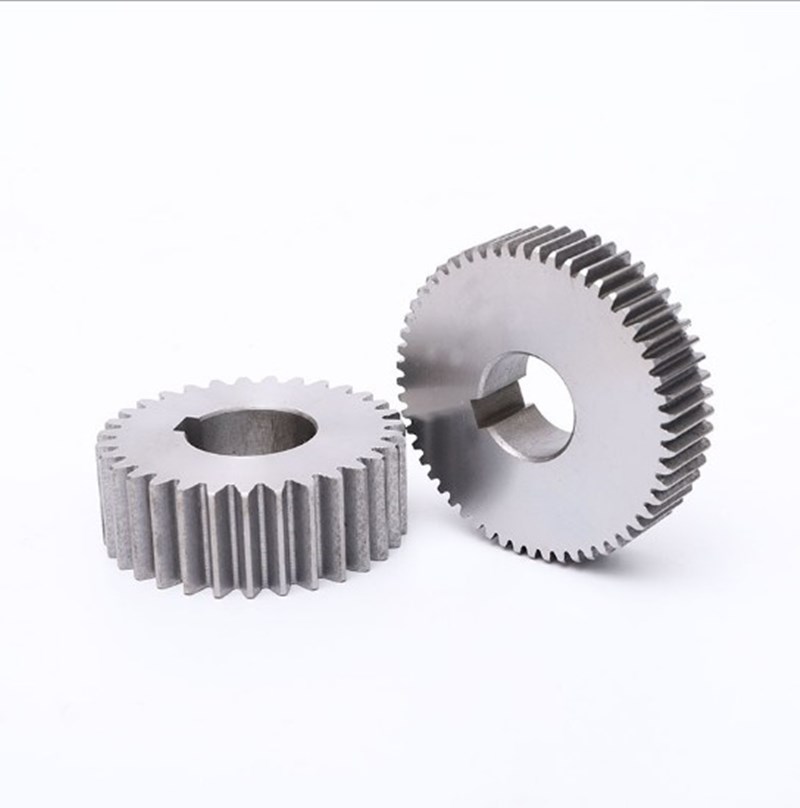
Unified Gear Symbol System: Universal Technical Language for Global Industry
In international gear design, manufacturing, technical communication and cross-border trade, unified standard gear parameter symbols are the foundation of efficient barrier-free cooperation. As a professional high-end precision gear manufacturer, Gearseiko strictly implements international general gear symbol standards, ensuring accurate implementation from drawing design, process formulation to finished product delivery.
Below are the most commonly used core gear parameters and standard symbols:
- Module (m): The basic parameter defining gear tooth size, unit mm. Larger module equals bigger tooth profile and stronger load-bearing capacity.
- Number of teeth (z): Total effective teeth of the gear, directly determining transmission ratio and outer circle dimension.
- Pressure angle (α): Common standard values 20° and 14.5°, affecting gear tooth root strength and meshing stationarity.
- Pitch circle diameter (d): Core design reference diameter, calculated by formula d = m × z.
- Addendum circle diameter (da) & Dedendum circle diameter (df): Define overall gear outline dimension and tooth root structural strength.
- Face width (b): Axial meshing width of gear teeth, closely related to load capacity and contact fatigue service life.
- Helix angle (β): Exclusive parameter for helical gears, usually ranging from 8° to 20°, effectively improving meshing smoothness and reducing running noise.
- Accuracy grade: Implemented in accordance with ISO 1328 and AGMA 2000 standards. High-precision gears above ISO Grade 5 are widely used in high-speed, heavy-load and ultra-precision transmission scenarios.
Apart from the above basic parameters, engineering drawings and production documents also cover profile shift coefficient (x), center distance (a), meshing backlash (j) and other professional symbolic parameters. All technical engineers at Gearseiko are fully proficient in standardized gear symbol specifications, accurately converting customer design requirements into qualified high-precision finished gear products.Learn more about Gearseiko ISO & AGMA dual-standard gear parameter calibration technology here.
Gearseiko Professional High-End Precision Gear System Solutions
Small-sized as gears are, they decide the overall operating performance of complete mechanical equipment. Given the complex production process and strict precision requirements of high-grade gears, it is particularly important to select a reliable manufacturer with solid technical strength and mature production capacity.
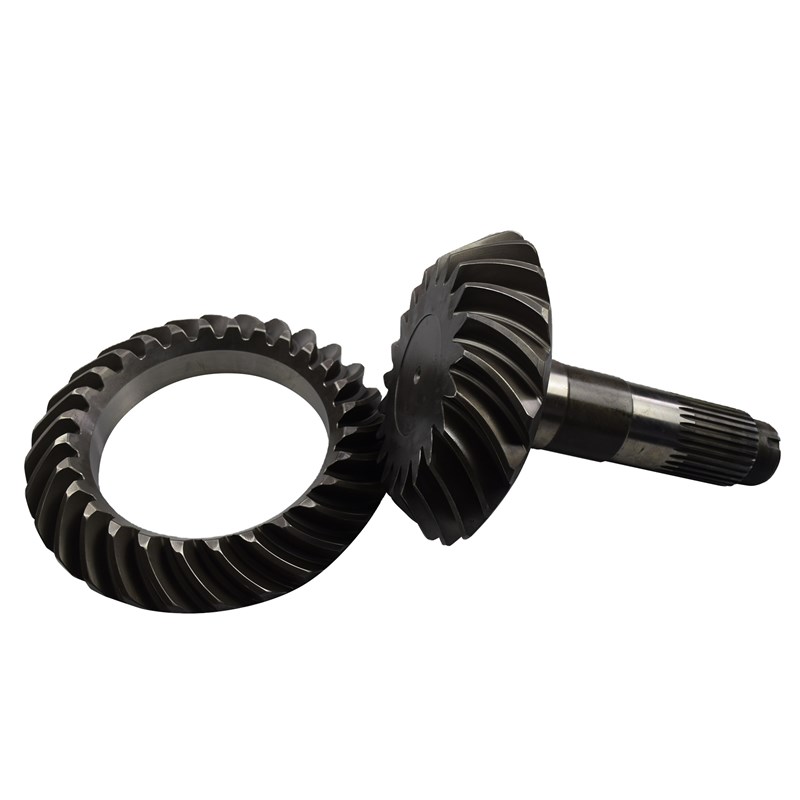
Gearseiko focuses on R&D, design and mass production of high-end precision gears, supplying full-range products including spur gears, helical gears, internal gears, gear shafts and worm gears. Our products are widely adopted in new energy vehicles, precision machine tools, industrial robots, aerospace equipment and other high-end fields.
We firmly regard gears as customized engineering transmission components rather than simple standard spare parts. Throughout the whole production flow, Gearseiko strictly follows ISO and AGMA dual international standards, covering raw material screening, professional heat treatment, tooth profile optimization design and ultra-precision grinding finishing.
We can provide complete official gear inspection reports, including tooth profile deviation, lead deviation, radial runout, cumulative pitch deviation and all core dimensional data. Aiming at special customized demands such as stepless speed change, center distance fine adjustment and equipment overload protection, we also launch integrated hybrid drive schemes combining gears with friction parts, hydraulic systems and servo control structures to meet diversified complex working condition needs.
Choosing Gearseiko means you will obtain not only high-quality standard and custom gears, but also a full set of mature, stable and reliable precision transmission overall solutions.
FAQ: Gear Drive Knowledge & Standard Gear Symbols
Q1: What are the core advantages of gear drives?
A1: Accurate transmission ratio, high transmission efficiency, compact structure, stable operation and long service life, suitable for most precision mechanical power transmission occasions.
Q2: What are the main limitations of gear transmission?
A2: High manufacturing cost for high-precision gears, no independent overload protection, fixed center distance, unable to realize pure gear stepless speed change, and higher maintenance requirements.
Q3: What does gear module m stand for?
A3: Module is the basic parameter to determine gear tooth size; the larger the module, the thicker the gear teeth and the stronger the load-bearing capacity.
Q4: What mainstream standards does Gearseiko follow for gear accuracy?
A4: Strictly implement ISO 1328 and AGMA 2000 dual international standards, supporting all grades of precision gear customization and inspection.
Conclusion
As the indispensable cornerstone of modern precision machinery, gear drives play an irreplaceable role in power transmission and precision operation. Mastering standard gear symbolic parameters and selecting scientific and reasonable gear transmission schemes are the key to improving mechanical equipment overall performance.
Gearseiko always adheres to strict international manufacturing standards, focuses on high-end precision gear research and production, and keeps optimizing product performance and matching schemes. We strive to deliver stable, efficient and long-service-life gear transmission products and one-stop technical services for global industrial customers.
Visit our official website //www.gearseiko.com/ to download gear technical manuals, view industry application cases and get exclusive custom gear solutions.
Gearseiko – Precision that drives the industrial future.
How to Choose the Best Fit for Your Drive System
How to Choose Surface Roughness Parameters for Precision Gears
Related Article