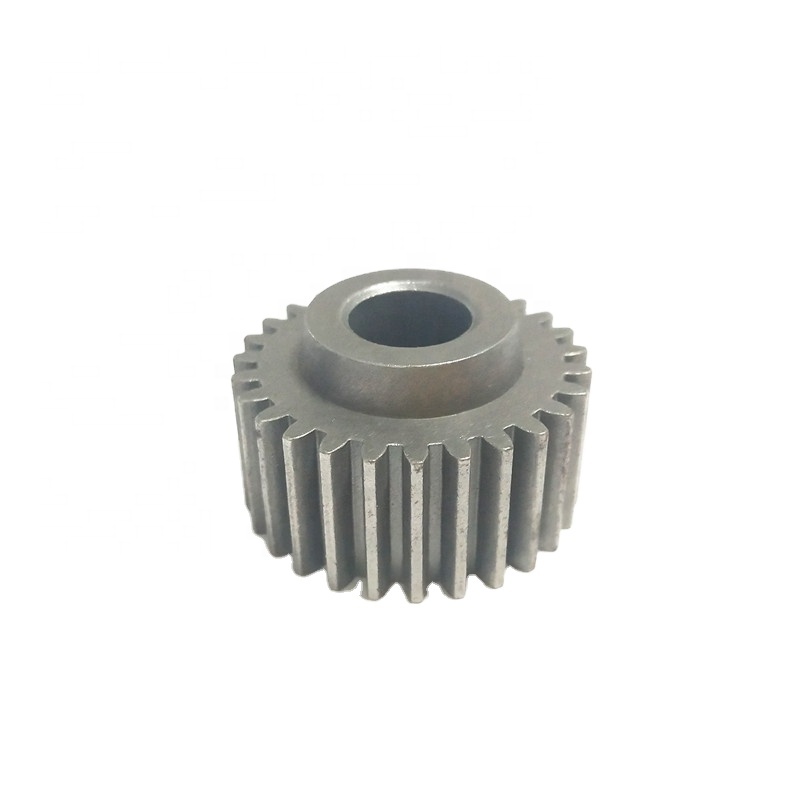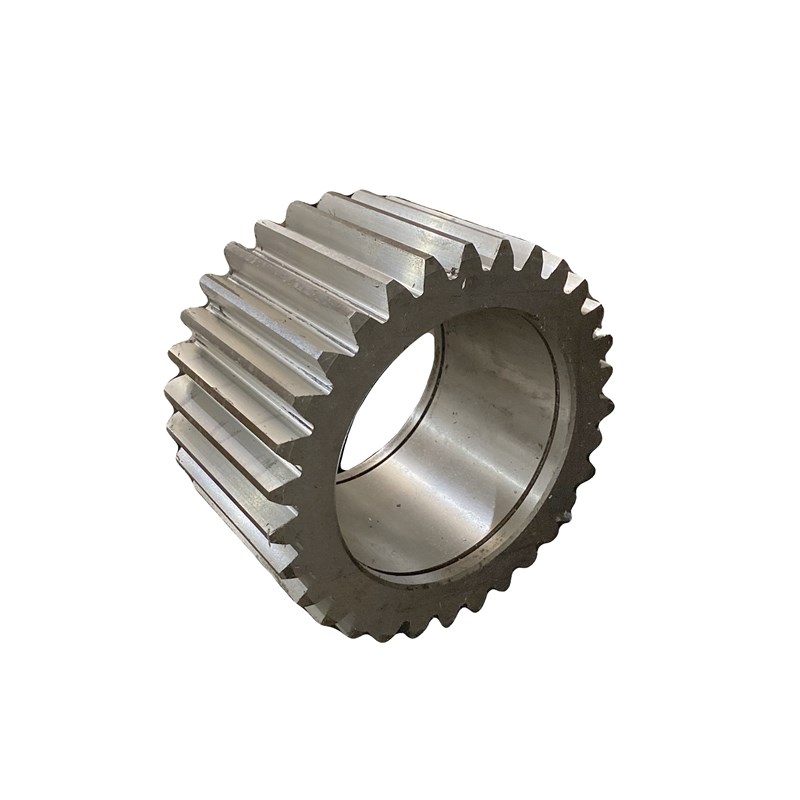
Steel Shaft Custom Precision Machine Wheel smart robot joint Spur Gears
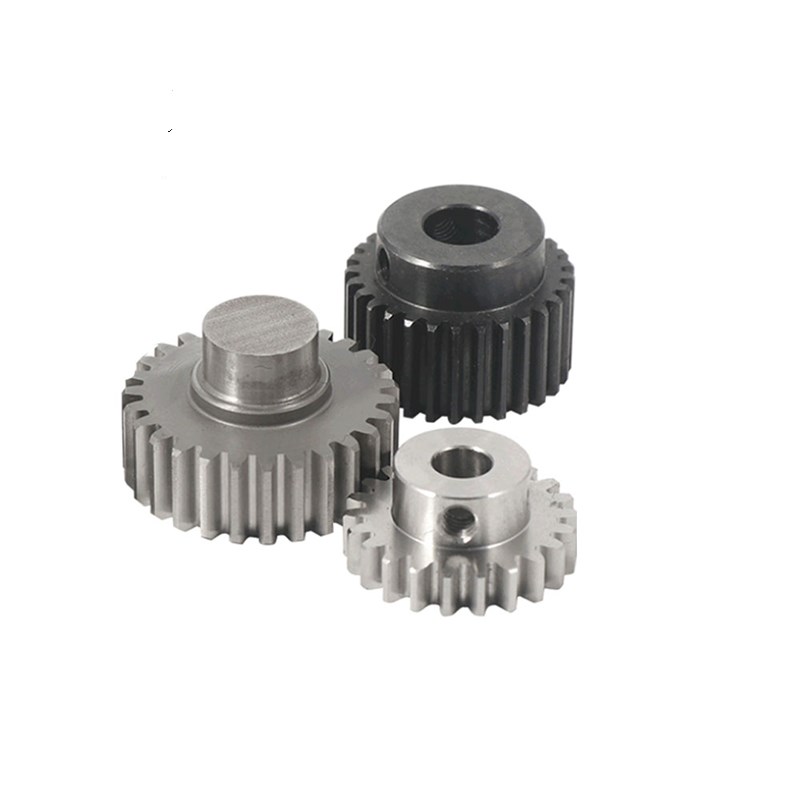
High-Strength Low-Carbon Steel Spur Gears – The Precision Drive Core for Intelligent Robotic Joints
In the rapidly evolving field of intelligent robotics, where higher precision, greater power density, and longer service life are the benchmarks, every component in the joint transmission system determines the machine’s ultimate performance. As one of the most common and critical transmission elements in robotic joints, spur gears directly affect positioning accuracy, dynamic response, and operational lifespan. Leveraging years of expertise in high-end precision gearing, Gearseiko has developed custom high-strength low-carbon steel spur gears for a leading smart robot manufacturer in Europe, and these gears have demonstrated outstanding transmission performance and reliability in real-world applications.
1. Why High-Strength Low-Carbon Steel?
Low-carbon steel has long been widely used in general mechanical transmissions due to its excellent formability, toughness, and machinability. However, conventional low-carbon steel lacks sufficient surface hardness and wear resistance to meet the demanding requirements of robotic joints—frequent start-stops, reversing rotations, and impact loads. Gearseiko’s high-strength low-carbon steel, through precise control of alloying elements (manganese, chromium, molybdenum) combined with an advanced carburizing + quenching + low-temperature tempering process, achieves an ideal combination of high surface hardness and a tough core:
-
Surface hardness up to 58–62 HRC – effectively resists tooth surface wear, pitting, and scoring.
-
Core impact toughness ≥40 J/cm² – absorbs instantaneous shocks from joint starts, stops, and collisions.
-
Fatigue limit increased by more than 30% – meets multi‑million stress cycle life requirements.
This “hard outside, tough inside” material property makes high-strength low-carbon steel spur gears particularly suitable for robotic joint scenarios demanding compact size, high load capacity, and fast response, such as collaborative robots, medical robots, and service robots.
2. Key Uses and Advantages of Spur Gears in Robotic Joints
In robotic joints, spur gears are typically used for speed reduction or multiplication between the servo motor and output shaft, converting motor speed and torque into the required joint motion. Compared with helical gears, spur gears offer several irreplaceable advantages:
-
No axial thrust – simplifies joint design
Spur gears generate no axial forces, eliminating the need for thrust bearings or complex axial positioning structures. This reduces joint weight and inertia, improving the robot’s dynamic response. -
High transmission accuracy and low backlash
With precision grinding, cumulative pitch error of spur gears can be controlled within 5 μm, providing a constant instantaneous transmission ratio without the additional errors caused by axial movement inherent in helical gears. This results in minimal backlash during forward/reverse switching, making spur gears ideal for high-precision tasks such as assembly, gluing, and precision welding. -
Easy miniaturization and modularization
The simple tooth geometry of spur gears allows high-precision, small-module (m0.3–m1.5) manufacturing, enabling easy integration into compact joint modules. Gearseiko has supplied micro spur gears as small as 8 mm outer diameter for finger joints and micro‑manipulators. -
Predictable cost and maintenance
Spur gear manufacturing processes are mature and provide excellent batch consistency. Their wear patterns are well understood, allowing robot manufacturers to schedule preventive maintenance based on operating hours and avoid unexpected downtime.
Take the spur gears developed by Gearseiko for a European smart robot company as an example. These gears are used in the elbow and wrist joints of a six‑axis collaborative robot. Operating conditions: ±180° reciprocating rotation, load 3–8 N·m, maximum speed 80 rpm, target life ≥8,000 hours. Independent tests show that after more than 6,000 hours of operation, the high-strength low-carbon steel spur gears exhibit tooth wear less than 0.02 mm and a backlash increase of no more than 2 arc‑minutes. This far outperforms the customer’s previously used standard carbon steel gears, which showed visible pitting after 3,000 hours. To date, more than 50,000 sets of these gears have been delivered with a defect rate below 50 ppm.
3. Gearseiko’s Precision Manufacturing Assurance

Achieving the above performance from high-strength low-carbon steel spur gears depends not only on the material but also on end‑to‑end precision control from blank to finished gear. Gearseiko has established a complete process chain:
-
Precision cold forging + hobbing – initial tooth profile accuracy to ISO grade 7 with uniform grinding stock.
-
Controlled‑atmosphere carburizing – case depth precisely controlled between 0.3–0.6 mm, with a difference between tooth tip and root of ≤0.05 mm to avoid brittleness.
-
CNC form grinding – tooth surface roughness Ra ≤0.32 μm, profile error ff ≤3 μm, lead error fβ ≤4 μm.
-
100% inspection and non‑destructive testing – each gear undergoes tooth profile scanning, magnetic particle inspection, and surface hardness gradient sampling, accompanied by a traceable inspection report.
Furthermore, Gearseiko optimizes tooth surface micro‑topography for the special lubrication conditions of robotic joints (grease rather than oil) using a micro‑textured grinding process, enhancing oil film retention and further reducing wear.
4. Conclusion
As intelligent robots move toward higher power density and longer maintenance‑free intervals, high-strength low-carbon steel spur gears are becoming the ideal choice for precision joint transmissions. With their excellent mechanical match, machining accuracy, and cost‑effectiveness, they deliver reliable performance. Gearseiko not only provides high‑quality gears conforming to international standards (DIN, ISO, AGMA) but also offers custom designs based on your joint load spectrum, lubrication method, and installation space.
If you are seeking a spur gear solution that combines precision, strength, durability, and economy for your robotic joints, please contact Gearseiko for white papers, samples, or test reports. Together, let’s build every reliable “joint” for intelligent robots.
Gearseiko – Precision Gears, Driving the Future.
Custom Precision Machine Wheel Transmission motorcycle engine Spur Gear
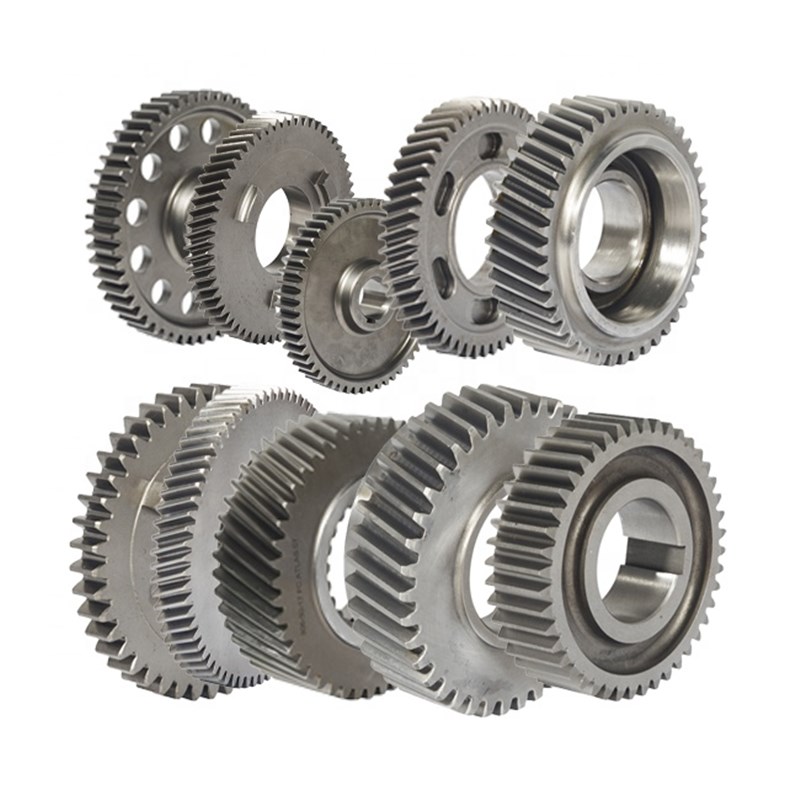
Metal Reduction Planetary Starter Drive Machine Precision Involute Transmission Helical Gear
Related Article