Research Status of Gear Analysis Methods Based on Proxy Models for Reliability Analysis
Surrogate Model‑Based Reliability Analysis for Gears: How Gearseiko Overcomes Implicit Functions and Computational Bottlenecks
In modern high‑precision gear manufacturing, reliability analysis is critical for ensuring product performance and service life. However, the structural response of gear systems often involves complex nonlinear behavior, and the corresponding state functions are typically implicit – they cannot be expressed analytically. Traditional Monte Carlo simulation, while capable of delivering high‑accuracy reliability estimates, requires calling time‑consuming finite element or finite difference simulations for every sample. This computational burden severely limits efficiency in engineering practice.
To address this challenge, Gearseiko has introduced a surrogate model‑based reliability analysis technique. By deeply integrating surrogate models – such as polynomial response surfaces, neural networks, and Kriging models – with virtual numerical simulations, we provide an efficient and accurate path for reliability analysis under implicit state functions.
Core Idea: Replace Simulation with Surrogates, Drive Innovation with Efficiency
The core idea of the surrogate model approach is to assume that a functional relationship (or mapping) exists between the structural response of a gear system and its input random variables (e.g., material properties, loads, geometric tolerances). By fitting or interpolating data obtained from a limited number of virtual numerical simulations, we construct an analytical expression that relates the system outputs (stress, deformation, fatigue life, etc.) to the input variables. This expression – the surrogate model – can then efficiently replace the original simulation model for subsequent Monte Carlo simulations.
Because evaluating an analytical function is orders of magnitude faster than running a full finite element simulation, surrogate modeling can shorten reliability analyses that used to take days or even weeks down to a few hours. For Gearseiko, this means we can perform more frequent and faster reliability validations during gear design iterations, accelerating time‑to‑market while ensuring that our high‑end gears perform reliably under extreme conditions.
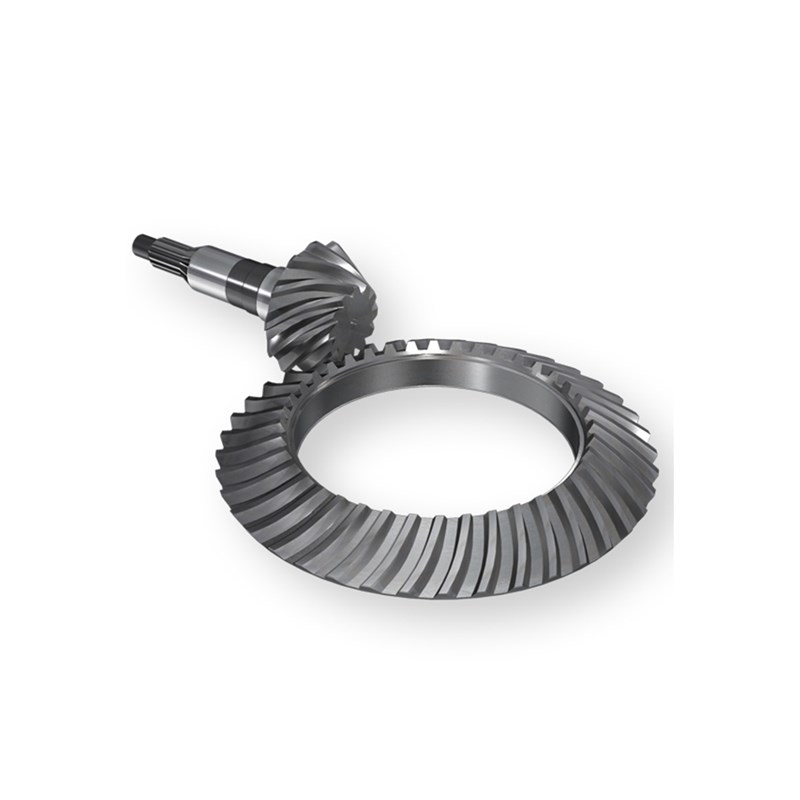
Three Major Surrogate Models and Their Application in Gear Analysis
Depending on the construction method, surrogate models fall into three main categories:
1. Polynomial Response Surface Method
This method approximates the input‑output relationship using low‑order polynomials (e.g., quadratic polynomials). It is simple and computationally efficient. For gear contact stress and root bending stress responses – especially when the variation range of random variables is small – polynomial response surfaces provide adequate accuracy and are suitable for rapid assessments during early design stages.
2. Neural Network Models
Neural networks excel at capturing complex nonlinear mappings and are ideal for strongly coupled multi‑input multi‑output systems. Gearseiko uses neural network models in the reliability analysis of high‑speed heavy‑load gears to fit the nonlinear relationships among tooth surface contact temperature, lubricant film thickness, and load fluctuations, significantly improving prediction accuracy.
3. Kriging Model
Kriging not only provides predicted values but also gives prediction variance, offering the dual advantages of interpolation and uncertainty quantification. For responses such as gear fatigue life – which exhibit strong randomness and spatial correlation – Kriging builds high‑accuracy approximations with relatively few sample points, making it ideal for high‑reliability analysis under small sample conditions.
Gearseiko’s Engineering Practice: Building Accurate Mappings to Improve Gear Reliability
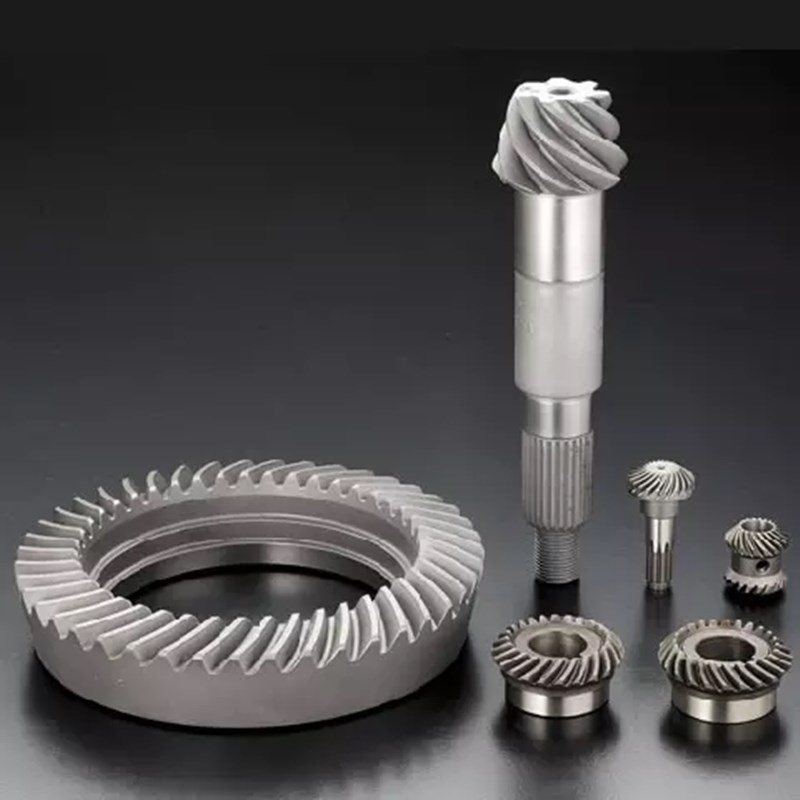
In practice, building an accurate mapping between structural response and input random variables is the key to successful surrogate model implementation. Gearseiko ensures high‑quality surrogate model construction through the following strategies:
-
Using Latin hypercube or uniform design methods to efficiently select sample points in the random variable space;
-
Performing virtual simulations on these sample points using finite element tools such as Abaqus and ANSYS to create training datasets;
-
Cross‑validating and ensemble‑learning different surrogate models to select the optimal model structure;
-
Finally, using the validated surrogate model for million‑scale Monte Carlo simulations to accurately compute gear failure probabilities and reliability levels.
Conclusion: Surrogate Modeling Empowers High‑End Gear Manufacturing
Surrogate model‑based reliability analysis effectively solves the two major problems of implicit state functions (difficult to express analytically) and excessive computational cost of traditional reliability analysis. Gearseiko has taken the lead in applying this technology framework to the R&D and manufacturing of precision gears, greatly improving the efficiency and accuracy of reliability analysis. This provides more competitive gear products for high‑end applications such as aerospace, new energy vehicles, and industrial robotics.
In the future, Gearseiko will continue to advance the integration of surrogate models and numerical simulation, driving the gear industry from experience‑based design to digital‑driven design – serving global customers with greater efficiency and reliability. To learn more about our gear reliability analysis services or technical collaboration opportunities, please visit our website or contact our technical team.
Gearseiko – Precision Gears, Reliable Drive for the Future.
Gear polynomial response surface
Current Status of Gear Reliability Research
Related Article