Reliability Analysis of Gear Contact Strength Based on RSM and MCMC
author: Cash
2026-04-28
2026 Reliability Analysis of Gear Contact Strength Based on RSM and MCMC: Gearseiko’s Innovative Practice for High-Precision Gears
In high-performance transmission systems, gear contact strength directly determines load capacity, service life, and operational stability. Tooth surface pitting, one of the most common failure modes, originates from the initiation and propagation of microscopic fatigue cracks under alternating contact stress.
This eventually leads to material peeling off the tooth surface, destruction of the tooth profile, increased vibration, and elevated noise. For demanding applications that demand extreme reliability—such as aerospace, new energy vehicles, and precision machine tools—reliability analysis of gear contact strength is no longer an option but a core technical requirement. Explore Gearseiko’s gear contact strength reliability solutionshere.
Limitations of Traditional Gear Contact Strength Analysis Methods
Real-world operating conditions introduce numerous random factors that affect gear contact strength, including:
-
Manufacturing errors (tooth profile deviation, helix deviation, radial runout)
-
Assembly deviations (mounting eccentricity, mounting clearance)
-
Load fluctuations (torque fluctuation, variable operating load)
Traditional gear design often simplifies these variables as fixed constants or introduces empirical load factors. This approach heavily relies on engineer experience and cannot accurately quantify failure probabilities, let alone meet the stringent demands of modern high-end equipment for high reliability, long life, and low noise.
Breaking Through Traditional Limitations: From Physical Testing to Intelligent Simulation
Obtaining reliable statistical data is the foundation of gear contact strength reliability analysis. However, relying solely on physical testing has significant drawbacks:
-
High cost and long cycle time for large-scale testing;
-
Destructive testing is impractical for large, high-precision gears;
-
Difficulty in covering all random operating conditions.
In recent years, virtual numerical simulation (e.g., finite element analysis) combined with Monte Carlo sampling has become the mainstream alternative. However, even with high simulation accuracy, a single contact stress calculation can take tens of minutes or even hours, and the Monte Carlo method requires thousands of samples to converge—which remains difficult to achieve in engineering practice.
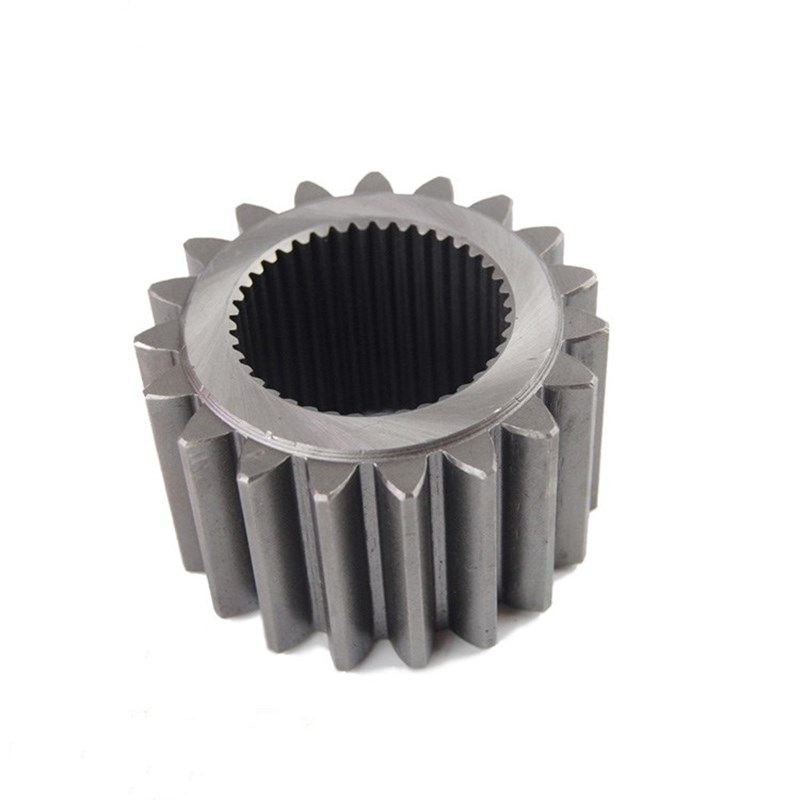
Response Surface Method (RSM): Balancing Accuracy and Efficiency
The Response Surface Method (RSM) provides an elegant solution to the efficiency-accuracy dilemma. Its core idea is to fit an implicit true limit-state function with an explicit polynomial (usually quadratic), thereby converting complex finite element calculations into algebraic operations that take seconds or even milliseconds.
By carefully designed experimental points (e.g., central composite design or Box-Behnken design), the response surface model can accurately approximate the mapping between input random variables (tooth profile error, mounting eccentricity, load fluctuation, etc.) and output contact stress. Learn more about Gearseiko’s simulation-driven gear analysis technologyhere.
The MCMC Method: Efficient Calculation of Posterior Failure Probability
Once the response surface surrogate model is obtained, the key challenge is to quickly and accurately calculate the contact strength reliability. Traditional Monte Carlo methods still require large numbers of samples, which is inefficient.
Here, the Markov Chain Monte Carlo (MCMC) method demonstrates significant advantages. MCMC constructs a Markov chain whose stationary distribution is the target distribution, allowing it to sample preferentially in high-probability-density regions (i.e., near the failure boundary), thereby greatly improving sampling efficiency.
Commonly used algorithms such as Metropolis‑Hastings or Gibbs sampling can reduce the required sample size to 1/10 or even less of traditional methods while maintaining accuracy.
Practical Implementation Process of RSM-MCMC Method
In engineering practice, Gearseiko follows a standardized workflow to apply the RSM-MCMC combination for gear contact strength reliability analysis:
-
Construct a performance function: $$g(X)=\sigma_{lim}-\sigma_{max}(X)$$, where $$X$$ includes all random variables affecting gear contact strength (e.g., tooth profile error, torque fluctuation).
-
Establish a surrogate model: Use RSM to fit the performance function and obtain $$\hat{g}(X)$$, the explicit approximation of the true limit-state function.
-
Calculate failure probability: Apply MCMC to efficiently sample within the failure region where $$\hat{g}(X)\leq0$$, and compute the failure probability $$P_f=\int I(\hat{g}\leq0)\cdot\pi(X)dX$$.
-
Determine reliability: The contact strength reliability is$$R=1-P_f$$, providing a quantifiable indicator of gear performance.
Gearseiko’s Engineering Practice: Translating Advanced Methods into Product Advantages
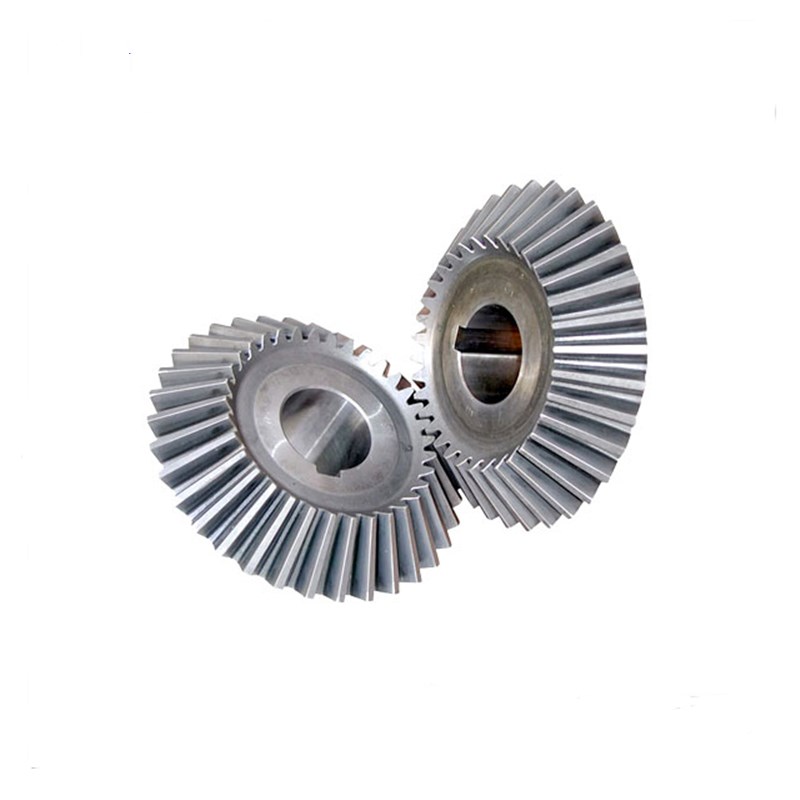
As a factory dedicated to high-end precision gear manufacturing, Gearseiko has systematically integrated the RSM‑MCMC combination into our product development process, achieving breakthroughs in efficiency and accuracy:
1. Comprehensive Random Parameter Database
We have built a statistical database covering twelve key random parameters, including total tooth profile deviation, helix deviation, radial runout, mounting clearance, and torque fluctuation. The probability distribution of each parameter is calibrated based on millions of actual measurements, ensuring alignment with real-world manufacturing and operating conditions.
2. Efficient Reliability Assessment Workflow
For each new product, we first construct a high‑fidelity surrogate model using RSM, then perform reliability assessment with MCMC. The entire process can be completed in just a few hours—compared to weeks or months using traditional physical testing and Monte Carlo methods.
3. Tangible Product Performance Improvements
The direct benefits of this approach are clear for Gearseiko’s high-precision gears:
-
Precisely quantified contact strength reliability, eliminating guesswork in design;
-
Scientifically reduced design margins, enabling more compact and lighter tooth designs without sacrificing safety;
-
Identified key failure-causing random factors, allowing targeted optimization of tolerance allocation and assembly guidelines;
-
Significantly reduced the probability of tooth surface pitting in actual service.
FAQ: Gear Contact Strength Reliability Analysis (RSM & MCMC)
Q1: What is the core advantage of the RSM-MCMC combination in gear contact strength analysis?
A1: It solves the dilemma of “compromising between accuracy and efficiency”—RSM converts complex finite element calculations into fast algebraic operations, while MCMC reduces sampling size by 90% compared to traditional Monte Carlo methods, enabling efficient, accurate reliability assessment.
Q2: What random factors does Gearseiko consider in contact strength reliability analysis?
A2: We cover twelve key random parameters, including tooth profile deviation, helix deviation, radial runout, mounting clearance, torque fluctuation, and more, calibrated by millions of actual measurements.
Q3: How does Gearseiko’s RSM-MCMC practice improve gear product performance?
A3: It enables quantified reliability, compact design, targeted optimization of tolerances/assembly, and reduced tooth surface pitting risk, enhancing gear load capacity, service life, and operational stability.
Q4: Which applications benefit from Gearseiko’s contact strength reliability solutions?
A4: Our solutions are ideal for high-demand scenarios such as aerospace, new energy vehicle drivetrains, high-speed compressors, precision machine tools, and robotic joints.
Conclusion: Reliability-Driven High-End Manufacturing
As gear transmissions move toward higher power density and lower noise levels, reliability analysis of contact strength has evolved from academic research to practical engineering. By deeply integrating the Response Surface Method with the MCMC method, Gearseiko has solved the long-standing dilemma of “compromising between accuracy and efficiency”.
This provides reliable, traceable, and optimizable gear solutions for demanding applications such as electric vehicle drivetrains, high-speed compressors, and robotic joints. If you are seeking gear reliability and transmission performance that surpass industry standards, we invite you to contact the Gearseiko technical team to explore new frontiers in precision transmission.
For more information about Gearseiko’s gear contact strength reliability analysis and high-precision gear manufacturing capabilities, visit our official website //www.gearseiko.com/ and feel free to contact us for professional consultation.
Gearseiko – Precision Gears, Reliably Driving the Future
How Kriging Model and Subset Simulation Drive High-Performance Transmission Systems
Understanding Dynamic Excitation of Gear Mesh Stiffness The Key to Enhancing Precision Transmission Performance
Related Article