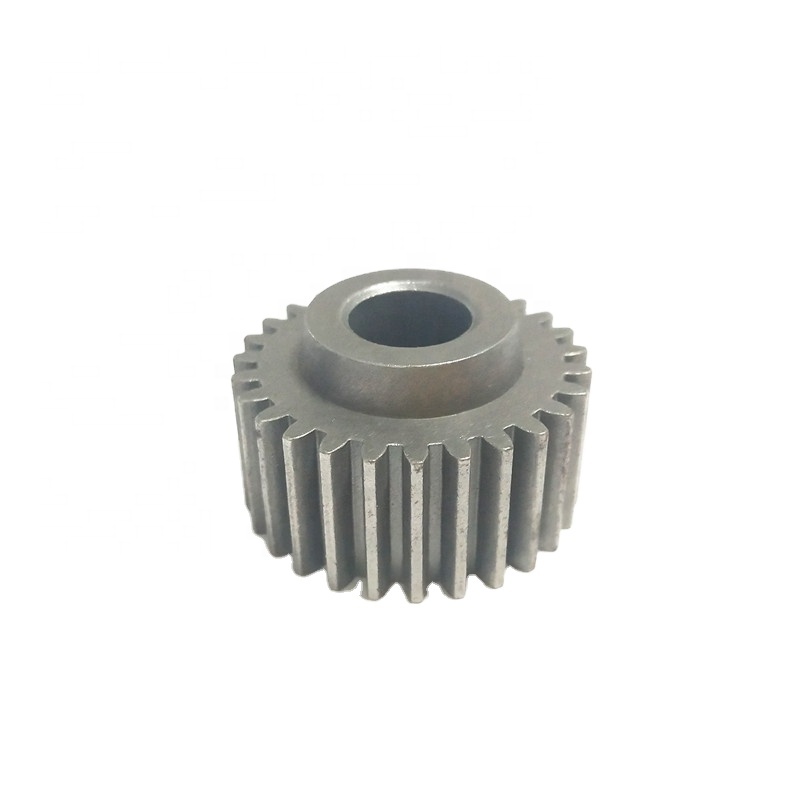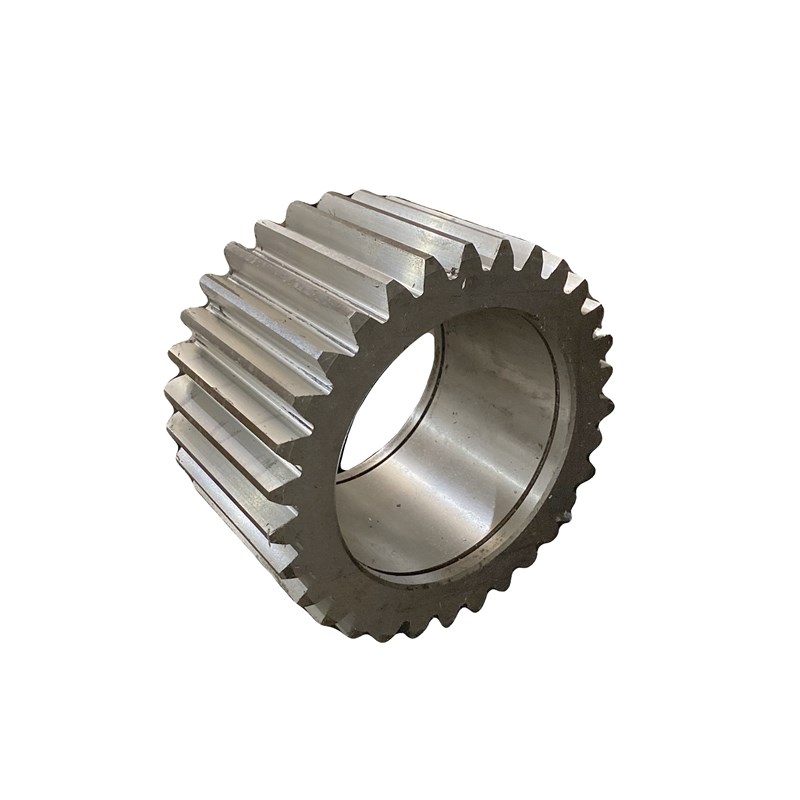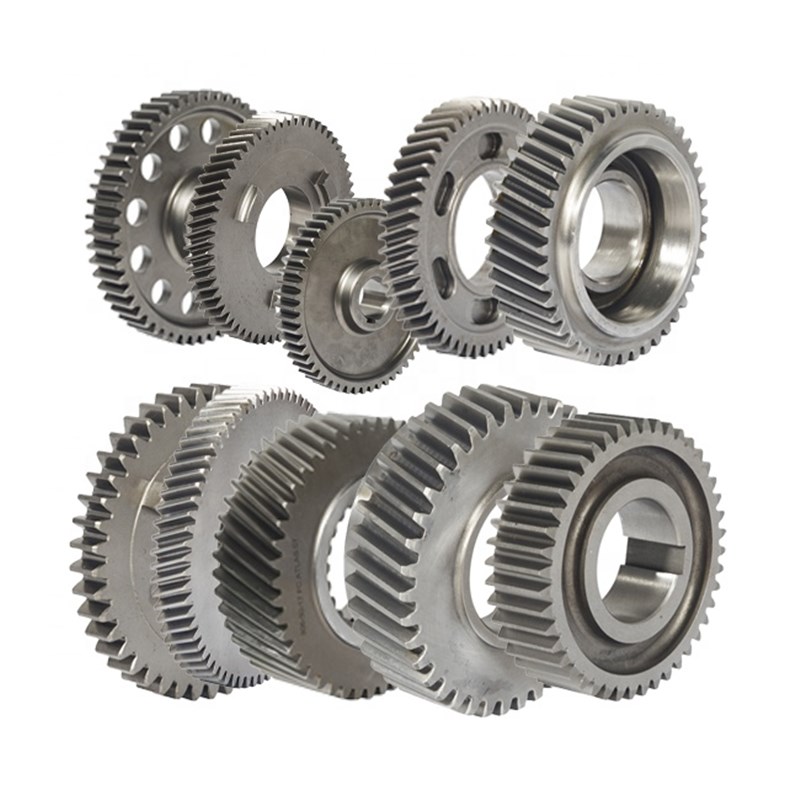
Reduction Planetary Robot Drive Precision Pinion helical gear
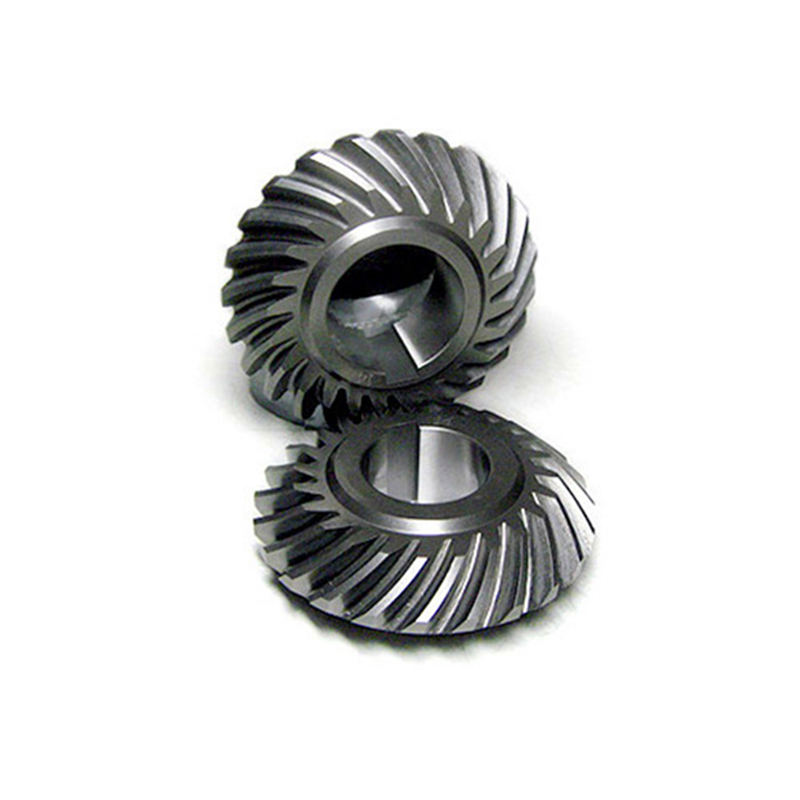
Precision Stainless Steel Helical Gears – The Ultimate Choice for Smart Robot Joint Drives
Introduction
In the world of intelligent robotics, every microsecond and every micron matters. A robot’s ability to perform delicate surgical procedures, handle semiconductor wafers, or navigate unpredictable environments depends heavily on the quality of its drivetrain components. Among these, helical gears play a decisive role in converting motor torque into smooth, precise motion. However, not all helical gears are created equal. Material selection, tooth geometry, heat treatment, and finishing processes directly impact a robot’s repeatability, noise level, and service life.
Gearseiko – a specialist in high‑end precision gears – has been supplying custom‑engineered stainless steel helical gears to a leading European smart robot manufacturer. These gears are not off‑the‑shelf components; they are the result of intensive co‑engineering, aimed at solving real‑world challenges in robotic joint actuation. Below, we explain why stainless steel is the superior material, how helical gears enhance robotic performance, and what makes Gearseiko’s manufacturing approach unique.
1. Why Stainless Steel? More Than Just Corrosion Resistance
Many robotic systems operate in challenging environments: food production lines (frequent washdowns), medical labs (chemical disinfectants), outdoor inspection robots (rain and humidity), or even marine applications (salt spray). Conventional alloy steels, even with black oxide or zinc plating, eventually succumb to rust. Rust leads to pitting, increased friction, backlash growth, and ultimately, joint failure.
Stainless steel solves this fundamentally. The chromium content (typically 16–20% in grades 304, 316, 17‑4PH) forms a passive oxide layer that self‑repairs when scratched. For robotic applications, this provides three critical benefits:
-
Long‑term corrosion protection – No need for additional surface coatings that could peel or alter tolerances.
-
High fatigue strength – Properly processed stainless steel (especially precipitation‑hardening grades like 17‑4PH) offers excellent resistance to cyclic loading, a must for robots performing millions of repetitive movements.
-
Non‑magnetic options – Certain stainless steel grades remain non‑magnetic even after cold working, making them ideal for MRI‑guided robots, electron microscopes, and wafer handling systems where magnetic interference is unacceptable.
At Gearseiko, we primarily use 17‑4PH stainless steel (precipitation hardened) and 316L for gears requiring extreme corrosion resistance. Each bar is ultrasonically tested for internal soundness before forging, ensuring zero hidden defects.
2. The Helical Advantage in Smart Robot Joints
Why helical instead of spur or planetary? In robotic joints, smoothness and accuracy are paramount. Helical gears have teeth that are cut at an angle (typically 15–30°) to the gear axis. This creates a gradual, overlapping engagement between teeth, unlike the abrupt, line‑contact engagement of spur gears.
Key benefits for robots:
-
Higher contact ratio – Helical gears typically have 1.5–2.0 teeth in contact at any time, versus 1.0–1.2 for spur gears. Load is distributed, reducing peak stress and preventing micro‑impact vibrations.
-
Ultra‑low noise & vibration – The sliding‑rolling action of helical teeth dramatically reduces transmission error harmonics. For collaborative robots (cobots) working alongside humans, low noise is a safety and comfort requirement.
-
Smooth torque transfer at low speeds – Many robots operate at very low angular velocities (e.g., 1–10 rpm for positioning). Spur gears can exhibit “stick‑slip” (cogging), causing jerky motion. Helical gears glide continuously, enabling micron‑level positioning.
Specific robotic applications where Gearseiko stainless steel helical gears excel:
-
Collaborative robot elbow & shoulder joints – Our gears handle combined radial and axial loads, working seamlessly with cross‑roller bearings.
-
AGV/AMR drive wheels – The helical angle produces an axial thrust that, when properly managed, actually stabilises the wheel assembly under shock loads.
-
Surgical robot wrists – Miniature helical gears (module 0.3–0.8 mm) made from 316L stainless steel provide the sterilisability and backlash‑free motion required for precision tissue manipulation.
3. Real‑World Operational Advantages
Compared to standard spur gears, plastic gears, or even case‑hardened steel gears, Gearseiko’s stainless steel helical gears offer measurable improvements in three areas:
3.1 High Efficiency and Near‑Zero Backlash
Backlash – the lost motion between meshing teeth – is the enemy of repeatability. Through CNC form grinding and selective assembly, we achieve DIN class 5 or better (AGMA 13 equivalent). Backlash can be held as low as 0.015–0.025 mm for precision joints. This allows a robot to return to the exact position millions of times without accumulating error.
Efficiency remains above 96% per stage, even with the axial thrust properly absorbed by angular contact bearings. The low friction coefficient of ground stainless steel (Ra 0.2–0.4 μm) reduces motor current draw and heat generation.
3.2 Exceptional Wear Life Under High Loads
A common myth is that stainless steel is “soft” compared to hardened alloy steel. While annealed stainless is indeed softer, precipitation‑hardened 17‑4PH reaches HRC 40–45 in the H900 condition. For applications requiring even higher surface hardness, Gearseiko offers low‑temperature ion nitriding (case depth 0.1–0.2 mm, surface hardness HV 900–1100). This combination yields a gear that resists both abrasive wear and contact fatigue (pitting).
In endurance tests simulating a 15 kg‑payload collaborative robot performing 10,000 cycles per day, our stainless steel helical gears showed less than 2 μm wear after 10 million stress cycles – no pitting, no rust, no change in transmission error.
3.3 Thermal Stability Across a Wide Temperature Range
Robots may operate in freezers (-30°C) or near hot motors (up to 120°C). Stainless steel’s coefficient of thermal expansion (CTE) is about 80–90% that of carbon steel. This means the gear’s pitch diameter changes less with temperature, maintaining consistent backlash and avoiding thermal seizure. Gearseiko also performs finite element thermal analysis for each custom design, ensuring optimal clearances for the customer’s specific operating temperature window.
4. Gearseiko’s Precision Manufacturing Process – From Forging to Final Inspection
Our approach goes far beyond simple turning and hobbing. For the European smart robot project, every batch follows a strictly controlled process:
-
Material verification – Spectrochemical analysis and tensile testing of each heat.
-
Precision forging – Near‑net shape forging to align grain flow with tooth geometry, improving fatigue resistance.
-
Vacuum heat treatment / precipitation hardening – Distortion‑free hardening with uniform hardness profile.
-
CNC hard hobbing & gear grinding – Using Reishauer RZ 260 and KAPP KX 300 machines, achieving tooth profile deviation Fα ≤ 3 μm, helix deviation Fβ ≤ 3 μm, and runout Fr ≤ 4 μm.
-
Tooth micro‑geometry modification – Tip relief and crowning to compensate for housing deflection under load.
-
100% gear measurement – On Klingelnberg P65 gear measuring center, with full documentation.
-
Magnetic particle inspection – To ensure zero micro‑cracks.
-
Ultrasonic cleaning & anti‑corrosion packaging – Ready for direct assembly.
Every gear is traceable to its material batch and production date.
5. Co‑Engineering with a European Smart Robot Leader
The helical gears described here are not a generic product. They were developed together with a European company that produces high‑payload collaborative robots for automotive and logistics automation. Their initial challenge was premature wear and rust formation on standard carbon steel gears after only 8 months of operation in a humid, oil‑mist environment.
Gearseiko engineers worked alongside their design team to:
-
Optimise the helix angle (22°) to balance load sharing and axial force within the existing bearing layout.
-
Select 17‑4PH stainless steel with H900 treatment, plus a thin DLC coating on the tooth flanks for additional dry‑run safety.
-
Redesign the gear hub to improve stress distribution at the keyway.
-
Provide statistical process control (SPC) data for every shipment.
The result? After 18 months of field use, the robots are still running on their original Gearseiko gears – with no measurable backlash increase and zero corrosion. The customer has now standardised on our stainless steel helical gears across three new robot models.
6. Conclusion – Partner with Gearseiko for Long‑Term Reliability
If you are developing smart robots for demanding environments – food processing, medical surgery, outdoor logistics, or cleanroom manufacturing – do not compromise on the drivetrain. Standard gears may lower initial cost, but they will increase downtime, calibration efforts, and warranty claims.
Gearseiko provides:
✔ Custom stainless steel helical gears (module 0.3–5 mm)
✔ DIN 4–6 accuracy, backlash as low as 0.015 mm
✔ Full material traceability & dimensional inspection reports
✔ Engineering support for helix angle optimisation and tooth modification
✔ Proven track record with European robot OEMs
Let’s discuss your joint torque, speed, duty cycle, and environmental conditions. Our team will propose a stainless steel helical gear solution designed to run reliably for over 10 million cycles – because precision motion should never be a question mark.
Gearseiko – Precision in Every Tooth, Reliability for Every Motion.
[Contact us for a technical consultation or sample testing.]
Metal Reduction Planetary Starter Drive Machine Precision Involute Transmission Helical Gear
Steel Metal High-pressure helical gear pump
Related Article