Precision Forming Technologies for High Performance Drives
author: Cash
2026-06-02

The Future of Gear Manufacturing: Precision Forming Technologies for High-Performance Drives | Gearseiko
Meta Description: Discover how Gearseiko leverages advanced precision forming including cold, warm and hot forging to manufacture premium high-performance gears featuring near net-shape precision, intact continuous metal grain structure and outstanding cost advantages. Get your free forming feasibility evaluation now.
In power transmission industries, gears serve as the core invisible component determining overall drive reliability. Yet gear quality varies drastically across different production processes. Unlike conventional pure cutting-based production, Gearseiko specializes in precision forging to achieve refined gear geometry and inherent mechanical superiority. As an experienced product manager focusing on high-end precision gears, I have witnessed a profound industry transformation: the outdated production route of rough blank cutting → bulk heat treatment → heavy finish grinding is rapidly being replaced by eco-friendly, high-precision precision forming technology.
Definition of Precision Forming
Precision forming covers a full set of metal plastic deformation processes, including open & closed-die forging, forward/backward extrusion, rotary forming and flow forming. Raw steel billets are shaped into finished or near-finished gear components inside high-precision custom dies within limited forming cycles. The core development target is net-shape or near-net-shape production, minimizing or eliminating subsequent machining allowance entirely.
Global advanced manufacturing research consistently confirms net-shape & near-net-shape processing has become an irreversible industry trend. Every gram of saved raw material and every omitted machining procedure directly cuts comprehensive production costs and lifts clients’ core market competitiveness.
Three Core Precision Forging Processes Applied at Gearseiko
We independently develop and deploy hot, warm and cold precision forging techniques, selecting targeted forming routes based on target gear geometry, base material property and practical service working conditions.
1. Hot Precision Forging & Hot Extrusion
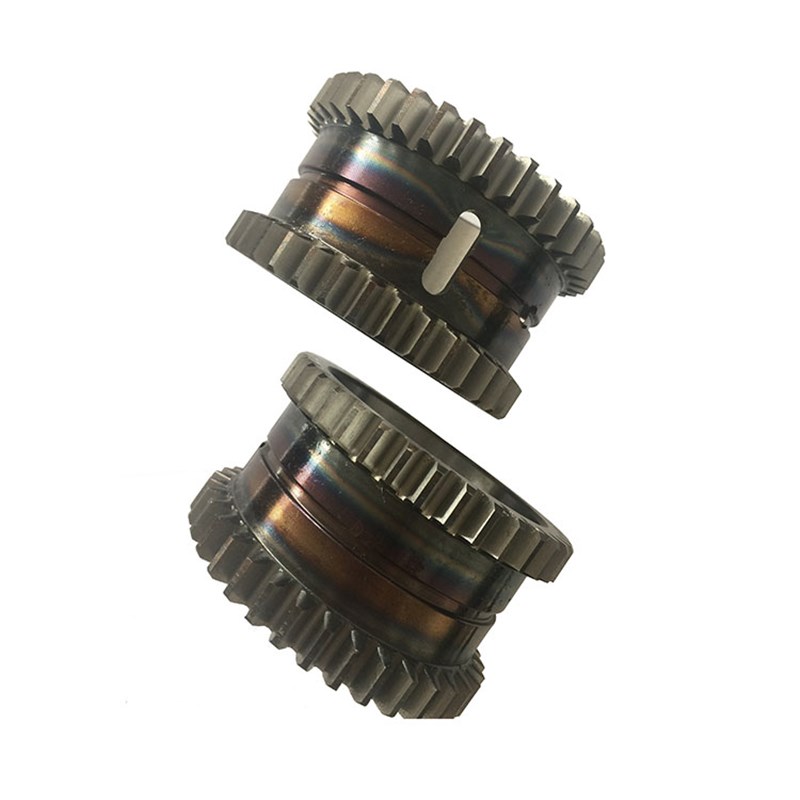
Hot forging is the preferred solution for oversized complex-profile gears and hardly deformable high-alloy components. Steel billets are heated above material recrystallization temperature to gain superior ductility for large single-stroke forming. This process excels in manufacturing bevel gears, differential housing gears and other intricate products with complete following grain flow lines along tooth contour. Though its dimensional tolerance is wider compared to cold forging, hot forging achieves massive single-pass material deformation impossible for other forming methods. Controlled programmed cooling after hot forming optimizes internal metallurgical microstructure before final minor finishing operations.
2. Warm Precision Forging & Warm Extrusion
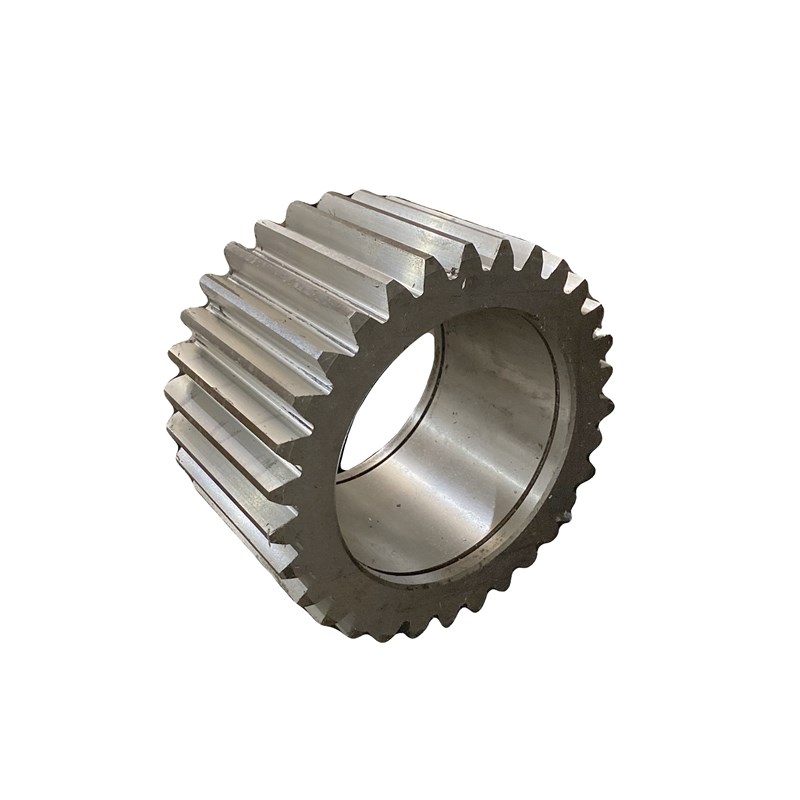
Steel warm forging is executed within 600–800°C, sitting between cold and hot forming in process characteristics. It requires lower forming tonnage than cold forging while delivering finer surface finish and tighter dimensional precision versus hot forging. Gearseiko applies warm forging mainly for medium-size automotive & industrial transmission gears balancing forming complexity and precision demands. Specially customized high-temperature resistant die steels and high-performance lubricants effectively restrain high-temperature oxidation scaling and stabilize uniform grain refinement during mass production.
3. Cold Precision Forging & Cold Extrusion (Core Advantage of Gearseiko)
Cold forging carried out under room temperature represents the top-tier net-shape production solution in our product line. Gear blanks are upset or extruded via high-tonnage precision dies to gain exceptional dimensional consistency, bringing prominent technical merits as below:
- Ultra-fine tooth surface roughness down to Ra 0.8 μm or below
- Work-hardened continuous metal grain, boosting component fatigue life by 30%–50%
- Up to 40% raw material saving against full machining from solid bar stock
- As-forged precision reaches DIN 7 standard without post-grinding correction
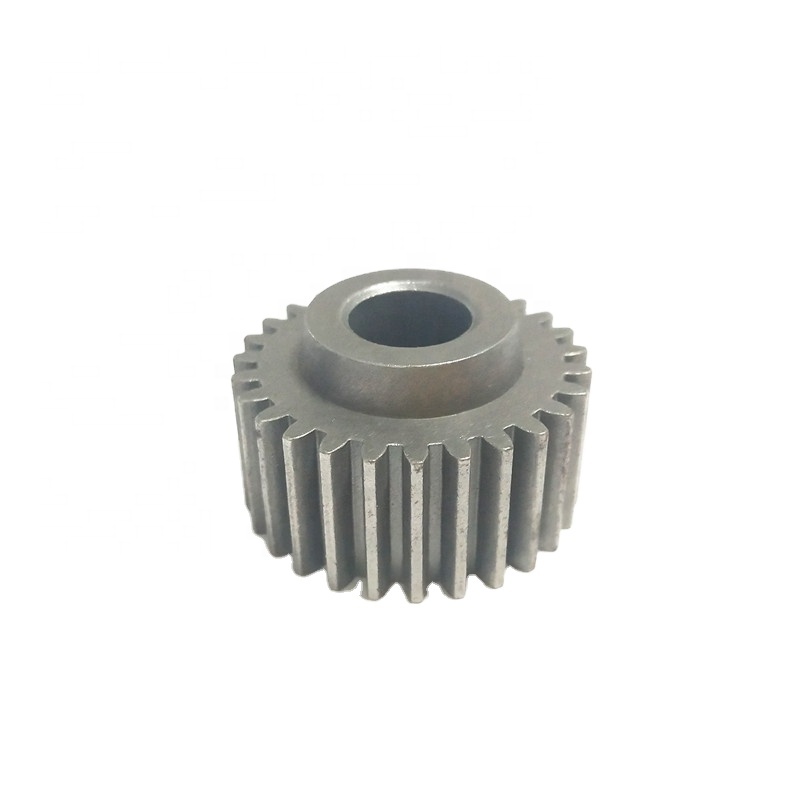
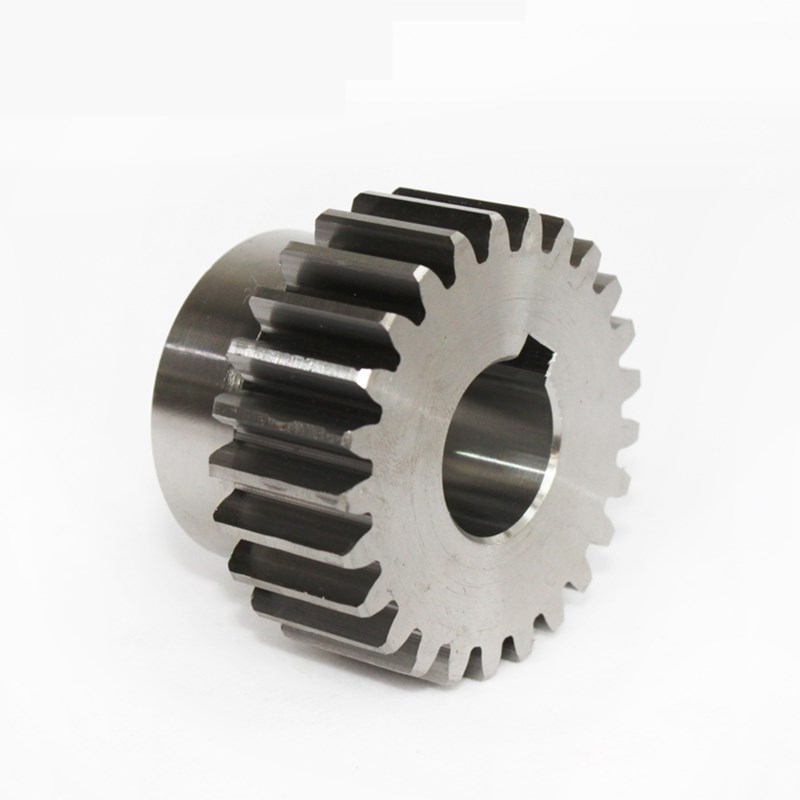
Our cold extruded helical gears and splined shafts are widely adopted in new energy vehicle powertrains, industrial robot joints and aerospace actuator assemblies where strict weight control and micron-level precision are mandatory.
Core Superiority of Precision Forming over Traditional Gear Machining
Traditional hobbing, shaping and broaching physically cut off original metal grain flow and break structural continuity. By contrast, precision forming drives base metal to flow synchronously following natural tooth outline to form intact uninterrupted grain layout. Such inherent structural feature endows finished gears with higher bending & contact fatigue resistance, smoother running performance and extended service lifespan.
Besides mechanical upgrades, precision forming supports sustainable green manufacturing. Chip-free production eliminates raw material waste and power-consuming repeated finishing steps, helping customers slash unit gear comprehensive cost by 20%–35% and lower overall carbon emissions.
Multidisciplinary Technical Support System for Stable Precision Forming
Qualified precision forming relies on cross-field integrated technologies rather than blind high-pressure stamping:
- Material Science: Accurate testing of flow stress and ductility of mainstream gear steels such as 20MnCr5 and 8620 for parameter setup
- Plastic Forming Mechanics: FEA simulation-based die cavity optimization to avoid folding, cracking and incomplete filling defects
- Advanced Tribology: Nano-coated specialty lubricants reducing die-workpiece friction and preventing surface galling during extrusion
- Automation & Full-Cycle NDT: Robotic automatic loading/unloading plus 100% inline eddy current & ultrasonic non-destructive inspection to zero out hidden internal flaws
Gearseiko: Your Reliable Custom Precision Forming Partner
With more than ten years of specialized experience in precision forged gear development, Gearseiko provides full-process customized forming solutions instead of only finished gear supply. No matter high-volume cold-forged sun gears for EV reducers or warm-forged ring gears for heavy industrial drives, our technical team optimizes every link from billet blanking to final precision dimensional inspection.
Key Cooperation Advantages
- One-stop service: In-house FEA simulation, custom die design, precision forming, professional heat treatment and precision metrology testing
- Flexible material matching: Develop tailor-made alloy grades or select existing optimal steel based on your design specification for better formability and mechanical performance
- Authorized certifications: ISO 9001, IATF 16949 & DIN 3962 compliant quality management
Future Trend: Precision Forming Becomes Standard Configuration
Net-shape and near-net-shape precision forming has evolved from optional premium solution to essential competitive advantage for modern gear manufacturers. If your production still fully relies on bar stock cutting and heavy grinding, it is time to upgrade your manufacturing route.
Contact Gearseiko right now to get a free custom gear forming feasibility analysis, and realize remarkable improvements on your gear products in service reliability, production cost and overall transmission efficiency. At Gearseiko, every high-performance gear is precisely shaped under controlled forming pressure.Apply free gear forming feasibility analysis via our official contact page
FAQ: Precision Gear Forming Technology
Q1: What are three mainstream precision forging processes at Gearseiko?
A1: Hot precision forging, warm precision forging and cold precision forging, selected by gear size, material and application requirements.
Q2: What outstanding benefits does cold forging bring to finished gears?
A2: Ultra-fine surface finish, work-hardened grain for longer fatigue life, great raw material saving and high as-forged precision up to DIN7.
Q3: Why is precision forming stronger than conventional cutting machining?
A3: It keeps complete continuous metal grain flow along tooth profile instead of severing grain structure, greatly improving mechanical strength and wear resistance.
Q4: What technical disciplines guarantee stable precision forming quality?
A4: Material science, plastic forming mechanics, advanced tribology, automated production and inline non-destructive testing.
Q5: What cost saving can clients obtain by switching to precision forming?
A5: Raw material saving up to 40% and overall unit gear cost reduction of 20%–35%.
How Gearseiko Sets a New Benchmark for High End Precision Gears
How Gearseiko Drives Innovation in Precision Transmission
Related Article