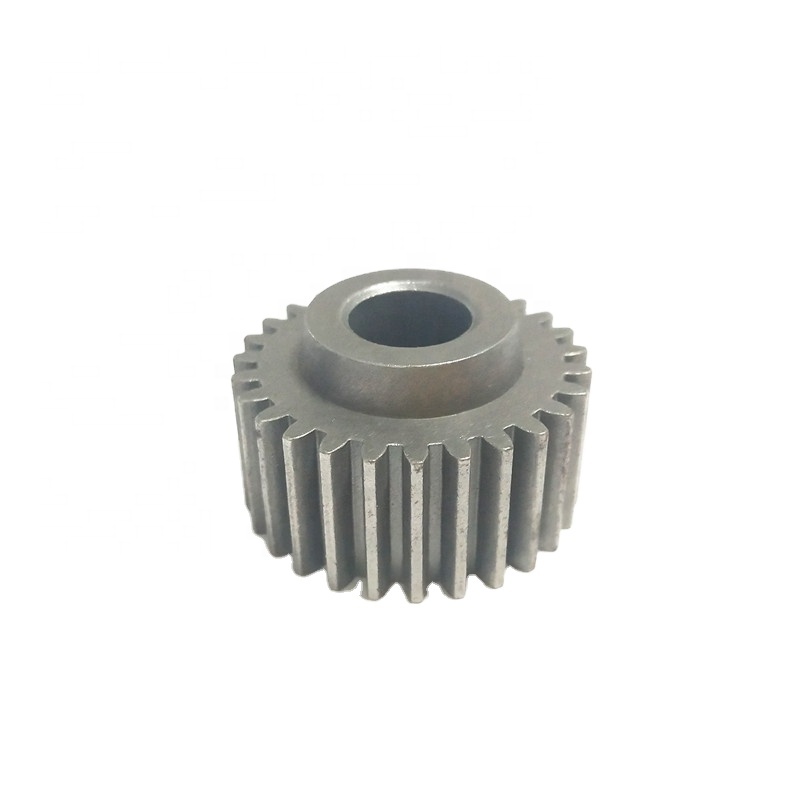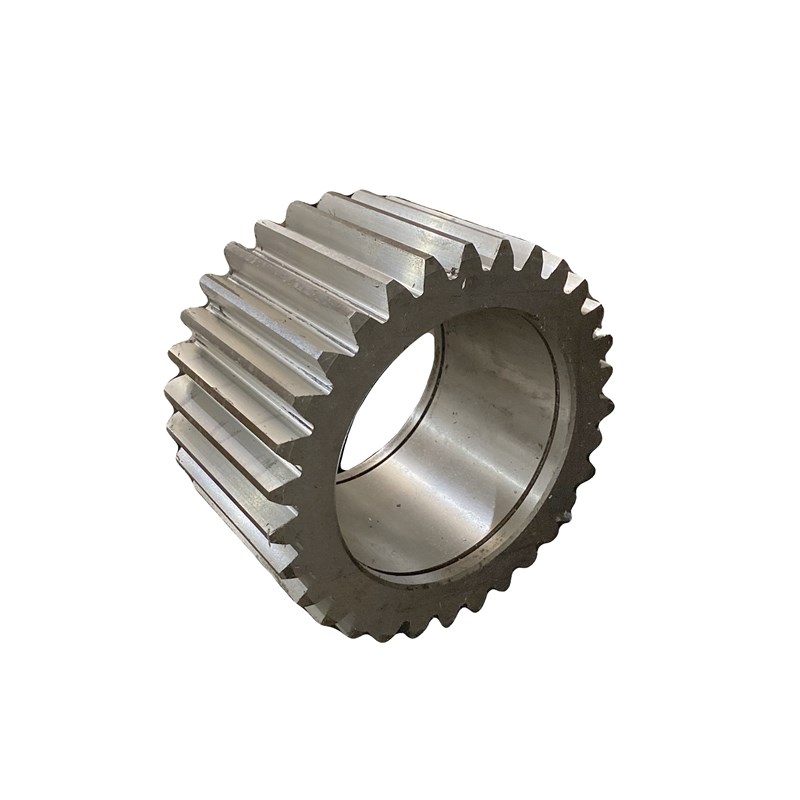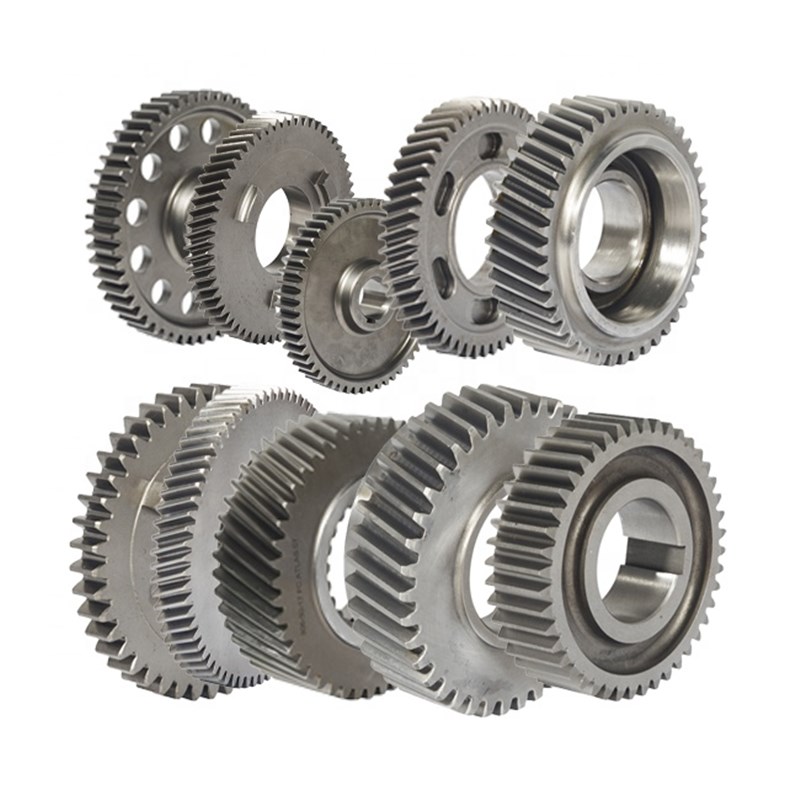
Metal Reduction Planetary Starter Drive Machine Precision Involute Transmission Helical Gear

High-Strength Low-Carbon Steel Helical Gears for Heavy-Duty Starters: Engineered for Durability and Precision by Gearseiko
In the world of heavy-duty starting systems—whether for 16-liter diesel truck engines, marine propulsion units, or backup power generators—every start places immense mechanical stress on the drivetrain. The pinion gear that engages the flywheel ring gear must withstand instantaneous torque peaks, temperature extremes, and countless engagement cycles. For engineers specifying these critical components, material selection and tooth geometry are not just design parameters; they are the difference between reliable operation and premature failure.
Gearseiko, a specialist in high-precision transmission components, has developed a range of helical gears made from high-strength low-carbon steel, specifically optimized for large starter motor applications. These gears are currently supplied to a leading European starter manufacturer, where they have demonstrated a 40% increase in service life compared to conventional spur or through-hardened steel designs.
Why High-Strength Low-Carbon Steel? A Metallurgical Deep Dive
Low-carbon steel (typically 0.10%–0.25% carbon) is often overlooked in high-wear applications due to its lower as-rolled hardness. However, when processed through controlled carburization and case hardening, this material exhibits an exceptional combination of properties:
-
A tough, shock-absorbing core: The low carbon content ensures a ductile martensitic core after quenching. This internal toughness absorbs the high-impact engagement shock of a starter solenoid, preventing catastrophic tooth fracture under cold cranking conditions where oil drag is highest.
-
A wear-resistant, high-hardness case: Carburizing enriches the surface layer to 0.6–1.2 mm depth with 0.7–0.9% carbon, followed by quenching and tempering to achieve a surface hardness of 58–62 HRC. This hard case resists pitting, spalling, and abrasive wear from intermittent lubrication.
-
Superior fatigue resistance: Unlike through-hardened alloy steels (e.g., 4140 or 4340), which can become brittle in heavy sections, carburized low-carbon steel maintains a favorable residual compressive stress profile at the surface. This significantly improves bending fatigue strength at the tooth root—a common failure mode in starter pinions.
At Gearseiko, we source only certified low-carbon steel grades (e.g., 16MnCr5, 20MnCr5, or 8620 equivalent) with tight control over grain size and inclusion content. Every heat is accompanied by a mill certificate and traceable through our IATF 16949-compliant quality system.
The Helical Advantage: Why Angle Matters in Large Starters
Large starter motors—especially those for high-compression diesel engines—produce cranking torques exceeding 800 N·m. In such applications, spur gears (straight teeth) suffer from instantaneous full-face engagement, generating high impact noise, vibration, and peak stress. Helical gears, by contrast, feature teeth set at an angle (typically 15° to 25°) to the axis of rotation. This geometry delivers four distinct benefits:
-
Gradual tooth engagement and lower noise: Helical teeth begin contact at a point and progressively extend across the face width. This reduces meshing impact by 30–40% compared to spur gears, lowering audible whine and mechanical rattle—a critical requirement for modern Euro VI-compliant trucks and construction machinery where cabin noise regulations are stringent.
-
Higher load capacity and torque density: The oblique tooth trace increases the contact ratio (number of teeth in simultaneous mesh). For a typical starter pinion, a helical gear achieves a contact ratio of 1.5–2.0 versus 1.0–1.2 for a spur gear of the same module and width. This means more teeth share the load, reducing peak Hertzian contact stress by up to 25% and enabling compact designs that fit tight engine bays.
-
Improved sliding action for lubrication: Helical meshing generates a natural sliding vector along the tooth length, which draws lubricant into the contact zone. In starter applications that operate intermittently—often with minimal oil film—this promotes better boundary lubrication and reduces the risk of scuffing during repeated start-stop cycles.
-
Axial thrust management: While helical gears produce axial thrust, this can be harnessed to maintain pinion-to-ring gear alignment. Gearseiko optimizes the helix angle and adds robust thrust washers or bearing supports to ensure stable engagement even under high misalignment conditions (e.g., worn starter bushings).
Built for European Heavy-Duty Starters: A Case Study

Our European partner—a well-known manufacturer of starters for commercial vehicles and off-highway equipment—faced recurring field failures of standard spur gears after 80,000–100,000 start cycles. The failures included tooth root fatigue and pitch-line pitting, especially in cold-climate operations.
Gearseiko engineers worked with their team to redesign the pinion using 20MnCr5 high-strength low-carbon steel with a precision-ground helical profile. Key design parameters:
-
Module: 2.5 mm
-
Helix angle: 20° (right-hand)
-
Number of teeth: 11 (pinion) / 81 (ring gear equivalent)
-
Case depth: 0.8 mm (effective case depth at 550 HV)
-
Core hardness: 35–42 HRC
-
Surface hardness: 60 ± 2 HRC
-
Accuracy: DIN 3965 grade 6 (equivalent to ISO 1328 grade 6)
After extensive dyno testing and 500,000 cycle field trials, the Gearseiko helical gears showed no measurable pitting or tooth wear, and bending fatigue life exceeded the original target by 40%. The customer has since migrated four additional starter platforms to our low-carbon steel helical design.
Precision Manufacturing and Quality Assurance
Every Gearseiko helical gear undergoes a rigorous production sequence:
-
CNC hobbing and shaping on Liebherr and Gleason machines, with real-time in-process gauging.
-
Controlled carburizing in sealed-quench furnaces, with endothermic atmosphere and carbon potential regulation.
-
Double-disc grinding of parallel faces to eliminate heat-treatment distortion.
-
Profile grinding (where required) for critical tooth modifications like tip relief and crowning.
-
Magnetic particle inspection (MPI) to detect surface cracks.
-
Gear roll testing for tooth contact pattern analysis.
-
Hardness and case depth verification via microhardness traverse per ISO 2639.

All documentation, including PPAP level 3, control plans, and FMEAs, is provided to customers. Our factory operates under IATF 16949:2016 and ISO 14001:2015 certifications.
Why Choose Gearseiko for Your Starter Gear Needs?
Selecting a gear supplier for high-stress starter applications demands more than a catalog part. You need metallurgical expertise, helical gear design experience, and a commitment to zero-defect delivery. Gearseiko offers:
-
Application engineering support to optimize helix angle, tooth modification, and case depth for your specific engine duty cycle.
-
Rapid prototyping with CMM verification, typically within 15 working days.
-
Competitive pricing for volumes from 5,000 to 500,000 units annually.
-
Dedicated logistics for European customers, including just-in-time delivery options.
Whether you are upgrading an existing starter platform or developing a new high-torque motor for electric hybrid trucks, our high-strength low-carbon steel helical gears deliver the durability and precision you need.
Contact Gearseiko today to discuss your technical requirements. Our engineering team is ready to provide design recommendations, sample gears, and full validation data. Because when the engine turns over, every tooth matters.
Steel Shaft Custom Precision Machine Wheel smart robot joint Spur Gears
Reduction Planetary Robot Drive Precision Pinion helical gear
Related Article