How Gearseiko Sets a New Benchmark for High End Precision Gears
author: Cash
2026-06-02
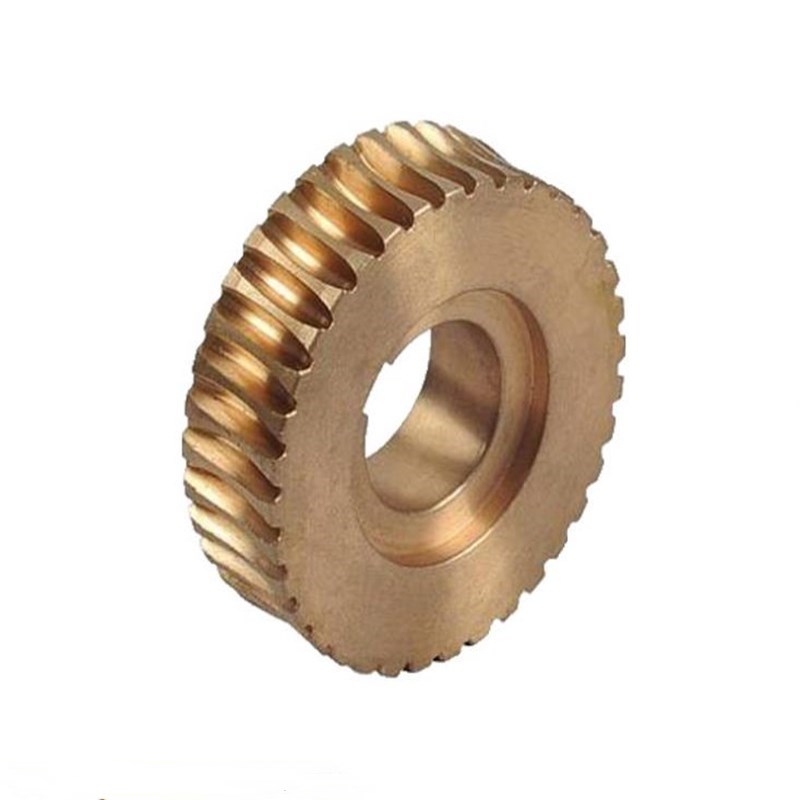
Cold Precision Forging: How Gearseiko Sets a New Benchmark for High-End Precision Gears | Gearseiko
In modern mechanical transmission systems, gear precision and mechanical strength directly govern overall equipment performance and service lifespan. For high-end segments including new energy vehicles, aerospace equipment and industrial robotics, conventionally machined gears gradually fail to satisfy strict requirements on material utilization rate, fatigue resistance and cost control. As a mature net-shape forming technology, cold precision forging reshapes the development standard of premium gear production. As a professional manufacturer focusing on cold precision forging, Gearseiko relies on accumulated core technology and advanced production facilities to fully release process advantages, delivering high-precision, dependable and cost-efficient custom gear solutions for global clients.Get free sample verification and cold forging technical evaluation from Gearseiko’s engineering team.
Definition & Unique Merits of Cold Precision Forging
Cold precision forging shapes metal blanks at ambient temperature without preheating procedures. Different from hot forging, it completely avoids surface oxidation and decarburization defects triggered by high-temperature heating. Though plastic deformation converts partial mechanical energy into frictional heat and raises local workpiece temperature above 200℃, such mild temperature increment never damages surface finish or dimensional precision. The finished gears feature smooth tooth surface and tight dimensional tolerance with minimal or zero follow-up cutting allowance, which is the core competitive edge of net-shape manufacturing.
Nevertheless, cold precision forging remains technically demanding. High room-temperature flow resistance of raw materials puts stringent requirements on die material selection, specialized lubrication system and press tonnage. Key technical bottlenecks include full die cavity filling, stable IT7-level precision realization and prolonged die service life under ultrahigh forming pressure. After years of focused R&D investment, Gearseiko has realized systematic technical breakthroughs targeting above pain points.
Seven Core Superiorities of Gearseiko Cold-Forged Gears

Supported by in-depth research on metal flow law, optimized die contour design and high-rigidity equipment configuration, our cold-forged products outperform conventional cut or hot-forged gears in seven key dimensions:
- 30%–50% higher material utilization rate Cold forging belongs to chip-free or micro-removal processing; metal flows along tooth outline integrally without breaking continuous grain streamline. Compared with hobbing, shaping and slotting, this technology drastically cuts raw material waste and brings prominent cost advantages especially for high-priced alloy steel gears.
- Boosted tensile & fatigue performance Cold plastic deformation refines internal grain structure and densifies metallographic texture with intact grain flow following full tooth profile. Meanwhile cold work hardening enhances surface hardness effectively. Practical test data verifies our cold-forged gears gain 25% higher tensile strength and 45% improved fatigue strength; tooth root bending resistance greatly surpasses machined counterparts.
- Precision over IT7, surface roughness Ra ≤0.8μm Free of high-temperature oxidation scale and thermal deformation, our finished tooth surface reaches Ra 0.2~0.8μm consistently and dimensional accuracy exceeds IT7 standard. Partial products skip post-grinding directly to shorten whole production workflow.
- High productivity & 30% lower unit cost Single forming cycle only takes several to tens of seconds to finish full tooth profile in one press stroke, far more efficient than single-tooth sequential cutting. Our automatic cold forging production lines support steady mass output and slash per-unit manufacturing cost by 30% vs traditional machining.
- Reduced investment on high-cost cutting machines Take straight bevel gear as typical example: its irregular curved tooth brings huge difficulties for precision measurement and needs expensive special gear planers/milling cutters in conventional routes. Our closed-die cold forging finalizes tooth geometry via prefabricated die cavity, removing costly post-tooth-cutting and lowering clients’ fixed equipment investment.
- Eco-friendly clean production No cutting fluid consumption, zero metal chip residue and free of harmful oil mist during whole cold forming process. Neat production workshop fully conforms to green manufacturing norms and improves onsite working environment for operators.
- Optimized tooth root structure with beneficial residual compressive stress Natural rounded fillet on tooth root eliminates sharp-corner stress concentration; cold-induced surface residual compressive stress plus work-hardened layer greatly upgrade product’s wear resistance, anti-corrosion capability and fatigue durability.
Gearseiko’s Solutions to Core Cold Forging Technical Difficulties
Short die lifespan and mandatory high-tonnage rigid presses have long blocked many manufacturers from deploying cold forging. We tackle such challenges via three systematic technical layouts:
1. Premium Die Material & Surface Coating Treatment
We adopt imported powder metallurgy high-speed steel and cemented carbide as core die blanks; deep cryogenic treatment plus PVD functional coatings (TiAlN, AlCrN etc.) extend die service life to 2–3 times industrial average level.
2. High-Rigidity Servo Precision Forging Press
Equipped with 1000T–2500T closed-loop servo cold forging machines with force-position dual-control system; slide bottom dead center repeatability keeps within ±0.02mm to guarantee stable forming force output.
3. Pre-production FEA Process Simulation
Prior to formal die fabrication, Deform & Simufact finite element software simulates real-time metal flowing trend and die stress distribution. Engineers optimize preform shape, lubrication parameter and relief slot layout to avoid incomplete cavity filling or premature die cracking.

Practical Case: Closed-Die Cold Forging for Automotive Straight Bevel Gears
Straight bevel gear fits cold forging perfectly for its regular geometric feature, whereas its traditional cutting process suffers low efficiency and high production cost. Original craft: blank turning → single-tooth cutting via special gear machine.
Our optimized full process: Precision blanking → Spheroidizing annealing → Phosphating & saponification surface lubrication → One-shot closed-die cold forging (full tooth forming) → Finish turning for positioning boss and mounting holes. The cold forging station completes all tooth profiles in single stroke without secondary tooth machining. Final products reach DIN7 tooth precision with over 70% tooth contact rate and 40% lower unit cost than conventional craft. Up to now Gearseiko supplies such bevel gears in bulk for multiple well-known domestic and overseas automotive transmission enterprises, total delivery quantity breaking 5 million pieces with stable zero-major-defect quality record.
Cooperate with Gearseiko for Premium Cold-Forged Gears
Cold precision forging is not an alternative option but an advanced high-performance production solution featuring better mechanical property, lower cost and superior batch consistency. Integrating material metallurgy, sophisticated die engineering, intelligent equipment control and digital simulation technology, Gearseiko provides full-chain service from customer drawing confirmation to finished gear delivery. Whether you need straight bevel gears, planetary gears or other special-profile tooth parts, feel free to discuss customized cold forging schemes with our technical team.
Visit our official website or contact engineers directly to arrange free sample test and professional technical assessment. Gearseiko – Trusted global supplier of high-performance cold precision forged gears.
FAQ | Cold Precision Gear Forging
Q1: What core benefits does cold precision forging bring compared with traditional gear cutting?
A1: Higher material utilization, improved fatigue & bending strength, superior dimensional precision, lower production cost and eco-friendly chip-free manufacturing.
Q2: What accuracy and surface roughness can Gearseiko’s cold-forged gears achieve?
A2: Dimensional precision above IT7, tooth surface roughness Ra ranging from 0.2μm to 0.8μm.
Q3: How does Gearseiko prolong cold forging die service life?
A3: High-grade powder metallurgy die steel, deep cryogenic treatment and TiAlN/AlCrN PVD surface coating.
Q4: What key equipment is equipped for cold forging production?
A4: 1000T~2500T high-rigidity servo cold forging presses with closed-loop force-position control.
Q5: What is the cost advantage of cold-forged automotive straight bevel gears?
A5: Unit production cost reduces by 40% compared with conventional cutting process, DIN7 precision with over70% tooth contact ratio.
Gearseikos Core Technology for High End Precision Gears
Precision Forming Technologies for High Performance Drives
Related Article