How Gearseiko Redefines Gear Performance with Precision Heat Treatmen
author: Cash
2026-05-29
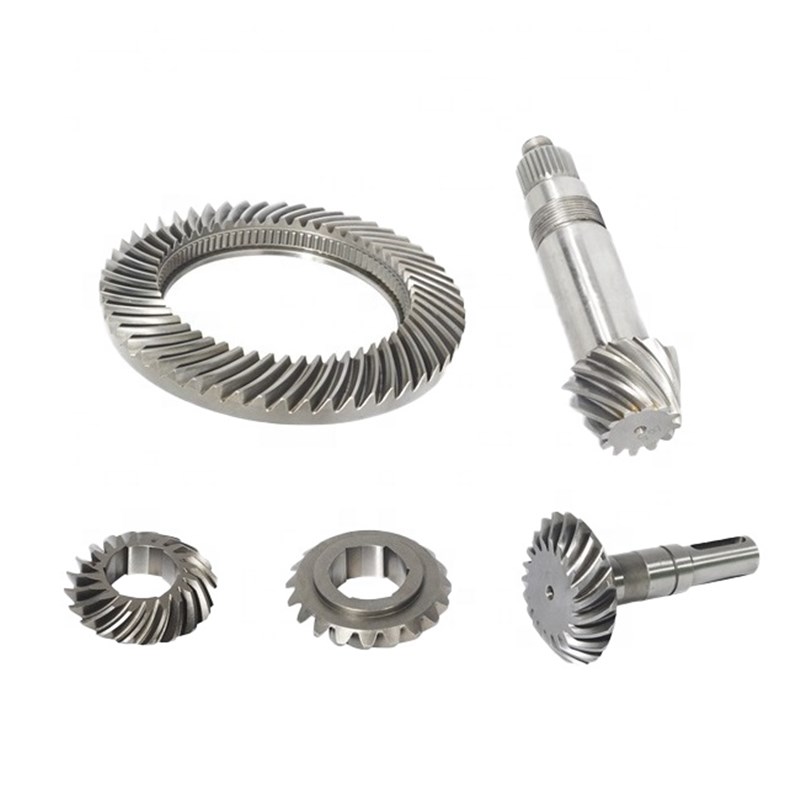
Gear Laser Surface Hardening: How Gearseiko Redefines Gear Performance with Precision Heat Treatment | Gearseiko
In high-end precision gear manufacturing, surface heat treatment is decisive for gear service life, transmission accuracy and operational reliability. Traditional processes including carburizing, induction hardening and flame hardening are widely adopted, yet they struggle to deliver both high hardness and superior precision simultaneously. This is especially true for thin-walled gears, parts requiring selective surface hardening, and scenarios with strict distortion control requirements. In recent years, laser surface hardening has become a mainstream process for premium gear production, thanks to its ultra-low distortion, high energy efficiency and environmental advantages. As a professional manufacturer of high-precision gears, Gearseiko has fully mastered and applied laser surface hardening technology to produce gears with excellent performance and stable dimensional accuracy.Learn more about laser surface hardening solutions and high-precision gears at Gearseiko.
What Is Laser Surface Hardening
Laser surface hardening is a mature and rapidly popularized laser heat treatment technology. A high-energy-density laser beam scans gear tooth surfaces or designated areas at high speed, heating the surface layer to phase transformation temperature within milliseconds. The workpiece core conducts heat outward to realize self-quenching, with no need for external cooling media. The heating zone can be precisely defined, and the heat-affected zone remains extremely narrow.
For gears, this technology brings prominent benefits: the surface hardness reaches 55–62 HRC (varies by material) for outstanding wear resistance; the core retains mechanical properties from prior quenching and tempering, achieving an ideal balance of toughness and strength. Tooth profile distortion is controlled within micron level, which often eliminates the need for post-process grinding.
Core Advantages of Gearseiko’s Laser Hardening Technology
Gearseiko adopts computer-controlled fiber laser equipment. We have optimized scanning paths and process parameters exclusively for gear machining. Compared with conventional heat treatment, our laser surface hardening features six major strengths:
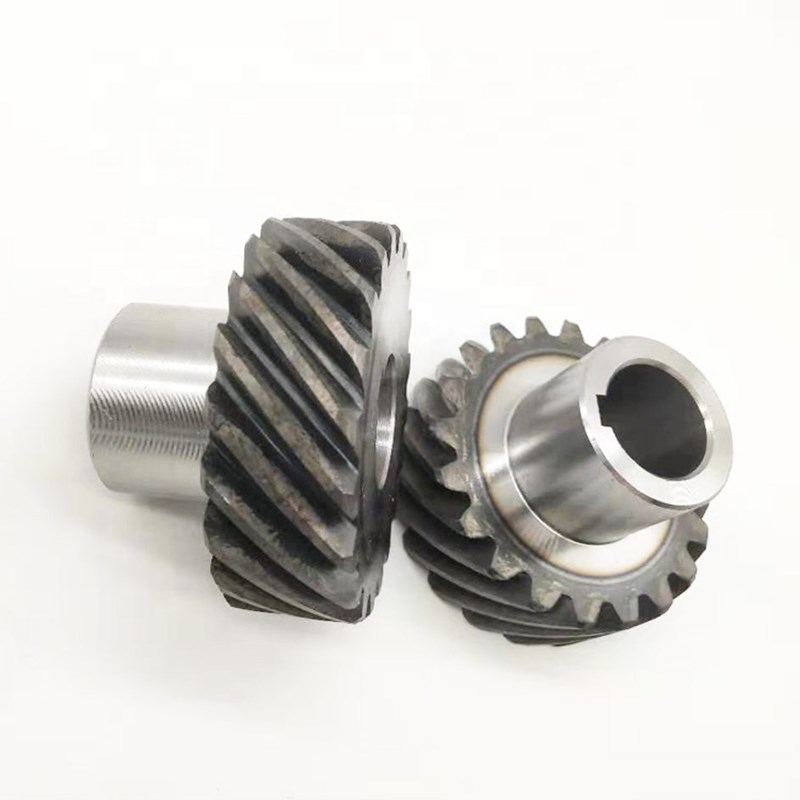
1. Ultra-Low Distortion, Guaranteed Gear Accuracy
The laser beam performs local rapid heating on tooth surfaces and roots. The total heat input is only 10–30% of that of induction hardening. For gears with a module ranging from 2 to 10, the overall distortion is generally below 0.02 mm, and most products can be directly assembled after hardening. It greatly reduces or even cancels post-hardening grinding procedures, making it ideal for high-precision transmission gears, harmonic drive gears and thin-walled ring gears.
2. Flexible Machining for Complex Tooth Profiles
The whole process is digitally controlled. Operators can adjust laser spot size, scanning path and power density via programming. We can realize selective surface strengthening for spur gears, helical gears, herringbone gears, internal gears and non-circular gears. For instance, targeted hardening can be applied only on the middle section of tooth flanks or fillet areas to match actual stress distribution. Such flexibility cannot be achieved by traditional overall hardening methods.
3. Self-Quenching, Energy-Saving & Eco-Friendly
No cooling water, quenching oil or polymer media are required. Cooling relies entirely on the gear’s own thermal conduction. It avoids waste liquid discharge, keeps the workshop clean, and produces scale-free and contamination-free tooth surfaces. The total energy consumption is around 40% lower than induction hardening, fully complying with green manufacturing standards.
4. Controllable Case Depth & High Interfacial Bonding Strength
The hardened layer depth is adjustable between 0.3 mm and 1.5 mm by tuning laser power and scanning speed. Extremely fast heating and cooling form a clear transition zone between the hardened layer and the substrate. The bonding strength is far higher than that of coating or electroplating layers, with zero risk of peeling, which is critical for heavy-load gears.
5. Broad Material Compatibility
This technology applies to most medium-carbon steels, alloy steels and cast irons for gear production, such as 1045 (C45), 40Cr, 42CrMo, pre-quenched and tempered 20MnCr5 and QT600. It can also be used for local re-hardening of gears previously processed by carburizing or nitriding.
6. Standardized Process & Reliable Quality
We strictly comply with the national standard GB/T 18683-2002 Laser Surface Hardening of Steel Parts. All operating parameters including laser power, scanning speed, lap ratio and temperature monitoring follow standardized workflows. Hardness testing, case depth measurement and metallographic inspection are conducted for every batch to ensure consistent quality.
Typical Application Scenarios
- Wind turbine pitch and yaw drive gears: High wear resistance and minimal distortion to maintain stable meshing clearance.
- RV reducer gears for robots: Ultra-precision thin-walled parts with nearly zero deformation after laser hardening.
- Automotive synchronizer hubs and engaging teeth: Selective hardening keeps core toughness to withstand impact loads.
- Construction machinery transmission gears: Improved contact fatigue resistance and wear resistance to extend maintenance cycles.
Why Partner with Gearseiko
Beyond standard laser hardening equipment, Gearseiko has accumulated massive proprietary process data for various gear specifications. According to your requirements on material, module, precision grade and working conditions, we can quickly formulate a complete process flow: pre-treatment (quenching & tempering) → laser hardening → post-tempering (if required) → final inspection.
We also provide sample trial production and small-batch verification services to confirm distortion and hardness distribution before mass production.
It is traditionally difficult to balance surface performance and geometric precision in gear manufacturing. Laser surface hardening breaks this limitation. By integrating this advanced technology into our production system, Gearseiko helps you get gears with both high hardness and high accuracy.
If you are seeking eco-friendly gear heat treatment solutions featuring excellent wear resistance and low distortion, feel free to contact our technical team. We offer process feasibility evaluation, free sample testing and performance verification, to enhance the overall strength of your transmission system starting from gear surfaces.
(This content is based on actual production processes and GB/T 18683-2002. Gearseiko reserves the right of final interpretation for relevant technical parameters.)
FAQ: Gear Laser Surface Hardening Technology
Q1: What is the working principle of laser surface hardening?
A1: A high-energy laser beam rapidly heats the gear surface to phase transformation temperature, and the workpiece core conducts heat to complete self-quenching, forming a hardened layer without external cooling media.
Q2: What is the biggest advantage of laser hardening compared with traditional processes?
A2: It brings extremely low distortion, enables selective local hardening, saves energy and causes no pollution, while maintaining high bonding strength of the hardened layer.
Q3: What is the distortion control level of Gearseiko’s laser hardening?
A3: For gears with module 2–10, the overall distortion is generally less than 0.02 mm, and follow-up grinding can be omitted for most products.
Q4: What materials are suitable for laser surface hardening?
A4: It fits common gear materials like 1045, 40Cr, 42CrMo, 20MnCr5 and QT600, and can also re-harden carburized or nitrided gears locally.
Q5: Which industries commonly adopt laser-hardened gears?
A5: Widely used in wind power equipment, robotic reducers, automotive transmissions and construction machinery.
How Gearseiko Redefines Hardness and Durability of Precision Gears
How Gearseiko Delivers High-Performance Power Transmission with Advanced Gas Carburizing Technology
Related Article