How Gearseiko Ensures Transmission Accuracy and Reliability
author: Cash
2026-05-22
Center Distance and Axis Parallelism in Precision Gear Manufacturing: How Gearseiko Ensures Transmission Accuracy and Reliability | Gearseiko
In precision gear drive systems, center distance and axis parallelism serve as pivotal geometric parameters. They exert direct influence on gear meshing condition, transmission efficiency and overall service life. For high-end fields including aerospace equipment, robot joints, electric vehicle drive assemblies and precision machine tools, tolerance control of these two indicators largely defines the performance ceiling of power transmission systems.
As a professional manufacturer dedicated to high-precision gear fabrication, Gearseiko has accumulated mature systematic design experience on center distance and parallelism deviation through long-term engineering practice. This article analyzes reasonable tolerance selection rules, as well as their impacts on gear backlash and longitudinal contact state.Get professional gear geometric tolerance design and high-stability transmission matching solutions here.
Center Distance Tolerance: Balancing Backlash Demand and Contact Ratio
Nominal center distance is not simply the sum of pitch radii of two mating gears. During design phase, Gearseiko confirms standard center distance based on minimum backlash requirement, meanwhile eliminating interference between gear tip and non-involute root profile of paired gears. 3D tooth contact analysis and tolerance superposition simulation are adopted to support accurate parameter confirmation.
Deviation of actual center distance is unavoidable in mass production, hence scientific tolerance setting becomes essential. Actual gear load characteristics act as the core judgment basis.
Unidirectional Load Gears with Rare Reversal
Such gears bear stable one-way load without frequent direction switching, including industrial fan and pump drive parts. Maximum backlash control is not the priority, since constant meshing flank effectively lowers impact noise caused by direction change.
Contact ratio stands as the main limiting factor. Excessive positive deviation reduces contact ratio and causes uneven power transmission; excessive negative deviation may trigger tooth tip interference under non-lubricated working state. Gearseiko takes 1.1 minimum contact ratio as the constraint condition to deduce applicable tolerance range. Matching ISO 7-9 loose tolerance standard effectively cuts down gear box machining cost.
Frequent Reversal & Motion Control Gears
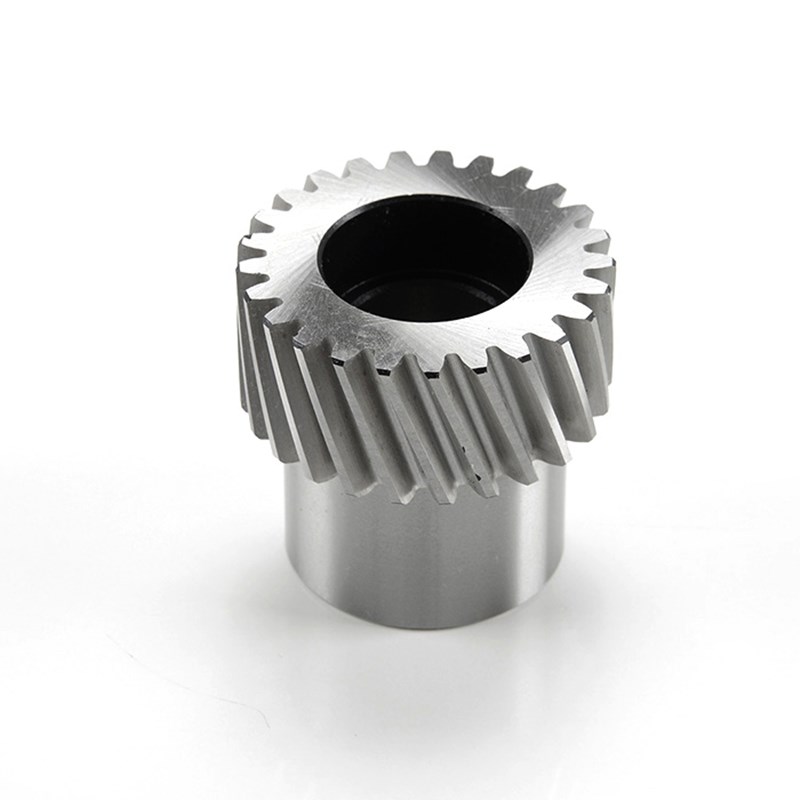
Typical applications cover servo manipulators, CNC rotary tables and EV main reducer gears. Strict backlash regulation is required. Excessive backlash leads to motion loss during direction switching, while insufficient backlash may result in jamming due to thermal expansion and assembly misalignment.
Gearseiko adopts refined error budget calculation, integrating multiple influential factors into tolerance model:
- Elastic deformation of shaft, housing and bearing, occupying 20% to 30% of total tolerance range, calculated via finite element analysis under actual load
- Axis deflection and displacement induced by housing machining error and bearing clearance
- Assembly errors including positioning surface flatness and pin mounting deviation
- Thermal expansion difference between aluminum housing and steel gears, bringing obvious center distance variation under temperature fluctuation
- Centrifugal expansion of gear components running above 10000 rpm, changing actual meshing spacing
- Lubricant particle size and non-metallic material swelling impact on reserved backlash
GB/Z 18620.3-2008 fails to offer unified recommended center distance tolerance values. Gearseiko references mature industry products to formulate practical standards. For high-precision reducer matched gears, tolerance is controlled within ±0.015 mm conforming to ISO 5-6 housing grade; common servo gears adopt ±0.025 mm tolerance, with final backlash calibrated via selective assembly. Our internal database stores over 200 practical cases covering diverse module, material and working conditions, supporting rapid parameter design.
Axis Parallelism: Core Guarantee of Uniform Longitudinal Tooth Contact
Center distance mainly affects tooth-height direction backlash, while axis parallelism determines contact uniformity along gear face width. Parallelism deviation falls into two categories: deflection on meshing plane causes single-end contact; vertical plane deflection leads to contact offset and edge load.
GB/Z 18620.3-2008 provides reference parallelism values, which are only used as negotiation basis for steel and cast iron gears instead of rigid inspection criteria. Gearseiko implements stricter internal control standards:
- Conventional precision transmission gears with 2-4 mm module and 20-40 mm face width: actual control value reaches 60% of standard reference limit, stably keeping 0.010 mm parallelism per 100 mm bearing span under ISO 7 grade
- Harmonic reducer flexspline gears with 0.5-1 mm miniature module: parallelism limited below 0.005 mm per 100 mm, preventing stress concentration and early pitting failure
Parallelism tolerance needs coordinated design with tooth crowning profile. Proper crowning compensation allows moderately relaxed parallelism requirement; spur and helical gears without modification are highly sensitive to axis deflection. Our design team verifies crowning scheme first, then calculates reasonable bearing hole parallelism standard, balancing manufacturing cost and operational stability.Learn more about Gearseiko gear meshing alignment optimization and tolerance matching technology here.
Gearseiko Integrated Precision Tolerance Solution
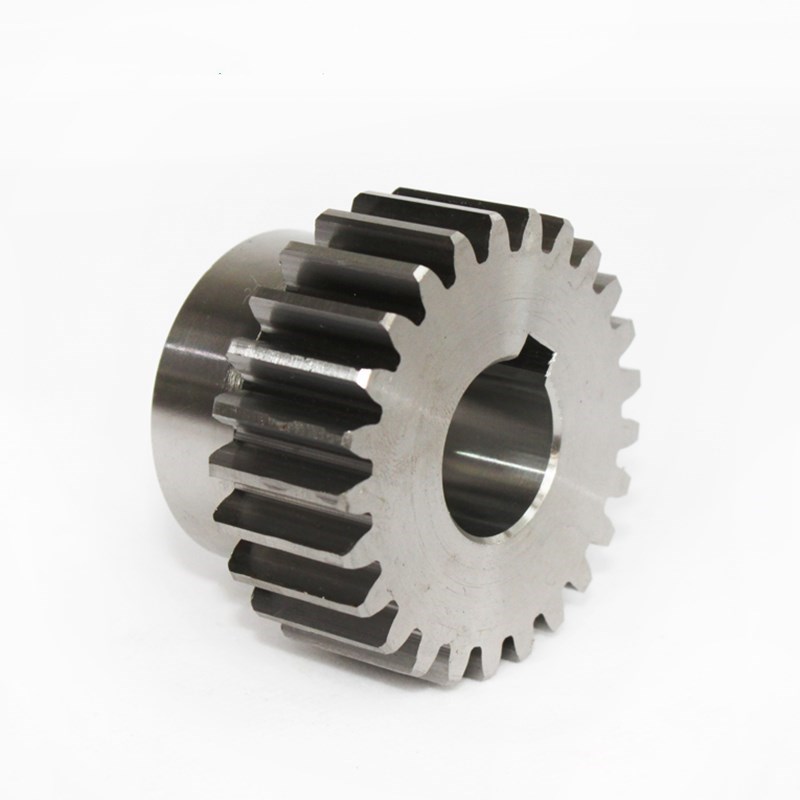
We convert theoretical tolerance standards into stable finished product quality via comprehensive supporting measures:
-
Advanced processing & testing equipmentEquipped with KAPP-NILES gear grinding machines and ZEISS coordinate measuring instruments. Axis parallelism detection resolution reaches 0.001 mm, and center distance measurement process capability Cp maintains above 1.33.
-
Thermal expansion compensation designCustomized standard center distance data table is provided for aluminum housing and steel gear assemblies, realizing optimal backlash state automatically when temperature rises to working level.
-
Rapid manufacturability evaluationCustomers submit working parameters including power, speed, temperature range and reversal frequency. Our team delivers matched center distance, parallelism tolerance and housing processing difficulty assessment within 48 hours.
Precision gear transmission relies on coordinated matching of geometric tolerance, material property and operating environment, rather than simple part assembly. Subtle deviation of center distance and axis parallelism easily triggers abnormal noise, abrasion and scuffing faults. Gearseiko tailors scientific, economical and measurable tolerance schemes for paired gears, helping drive systems achieve perfect balance between high precision and reasonable cost.
Visit our official website //www.gearseiko.com to obtain customized tolerance parameter table, and know more ISO 1328 & AGMA 2015 compliant non-standard precision gear services.
Gearseiko – The art of precise meshing, rooted in every micron of alignment and parallelism.
FAQ: Gear Center Distance & Axis Parallelism Control
Q1: What core factors decide center distance tolerance range?
A1: Gear load mode, contact ratio requirement, thermal deformation, assembly error and high-speed centrifugal expansion are key decisive elements.
Q2: What failures will poor axis parallelism cause?
A2: It leads to uneven face width contact, edge load, local stress concentration and early surface pitting damage.
Q3: How does Gearseiko handle thermal expansion impact?
A3: Offer thermal compensation parameters, set cold assembly size to ensure ideal backlash under actual operating temperature.
Q4: Will tooth crowning design change parallelism tolerance standard?
A4: Yes, reasonable crowning can offset minor deflection and properly relax parallelism control requirements.
The Key to Unlocking Gear Transmission Performance
How Precision Gear Surface Structure Determines Drivetrain Performance and Lifespan
Related Article