How Gearseiko Delivers High-Performance Solutions for Demanding Applications
author: Cash
2026-06-02
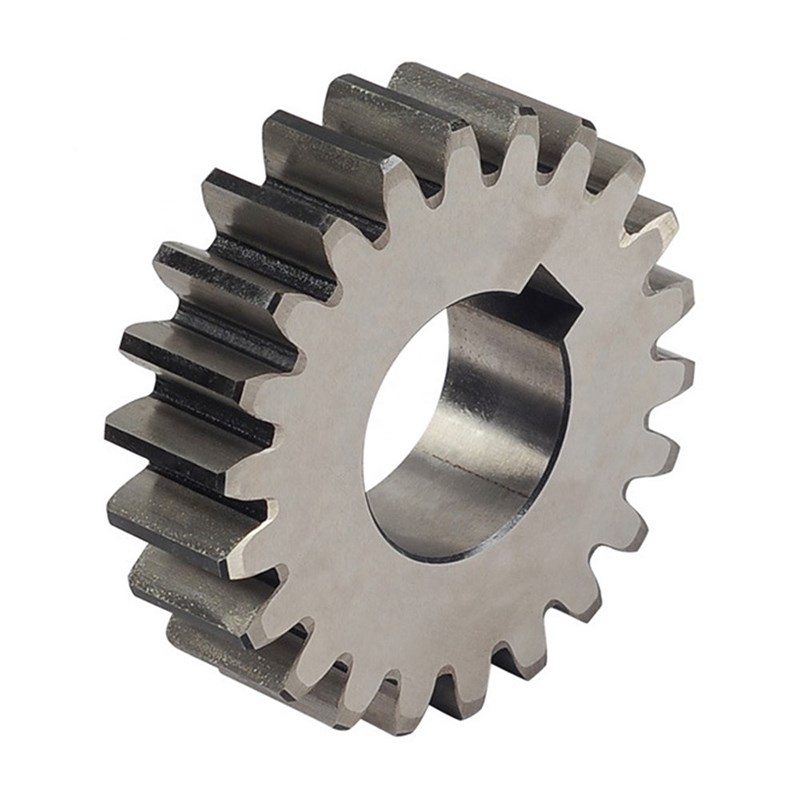
Hot Precision Forging of Gears: How Gearseiko Delivers High-Performance Solutions for Demanding Applications | Gearseiko
In the fiercely competitive precision gear manufacturing sector, balancing tight dimensional tolerance, high material yield and outstanding mechanical property has long been a core industrial difficulty. As a mature high-temperature forming technology, hot precision forging shapes preheated steel blanks above recrystallization temperature and becomes an ideal route to produce complex-profile gears. With years of targeted R&D and process iteration, Gearseiko overcomes native drawbacks of conventional hot forging and amplifies its inherent strengths to produce gears complying with stringent international industrial specifications.Consult Gearseiko’s technical team for custom hot forging spur gear solution and free feasibility evaluation.
Core Principles of Hot Precision Forging
Hot forging gains prominent forming merits thanks to high forming temperature above steel recrystallization threshold. Heated raw material owns excellent ductility and metal flow performance, enabling one-step integral forming of intricate tooth contours unavailable under room temperature. Different from cold forging limited by raw material ductility and ultrahigh tonnage equipment restriction, hot precision forging is compatible with full-range steel grades covering low-carbon alloy steel up to high-strength tool steel.
Nevertheless, traditional hot forging comes with inherent defects: high ambient temperature triggers severe surface oxidation and decarburization, generating oxide scale, poor surface finish and loose dimensional precision, which requires excessive post-forging machining allowance and raises overall production expense. Most manufacturers have to compromise between forming efficiency and finished part precision.
Breaking this industry compromise, Gearseiko adopts atmosphere-controlled heating furnace, optimized customized die structure and post-forging calibration sizing process to greatly cut oxidation-induced flaws and retain high throughput of hot forming. Our finished gears reach near-net-shape standard with minimum subsequent removal allowance, realizing remarkable raw material and processing-hour saving.
Technical Breakthrough on Straight Spur Gear Hot Forward Extrusion
Bevel gears have been widely produced via both cold and hot precision forging, while straight spur gears remain tough for cold forming. Sharp tooth corner plus narrow deep tooth space leads to insufficient cavity filling under cold condition, accompanied by extreme forming resistance and rigorous die precision requirement; accordingly, industrial mass cold forging of spur gears hasn’t achieved mature large-scale application yet.
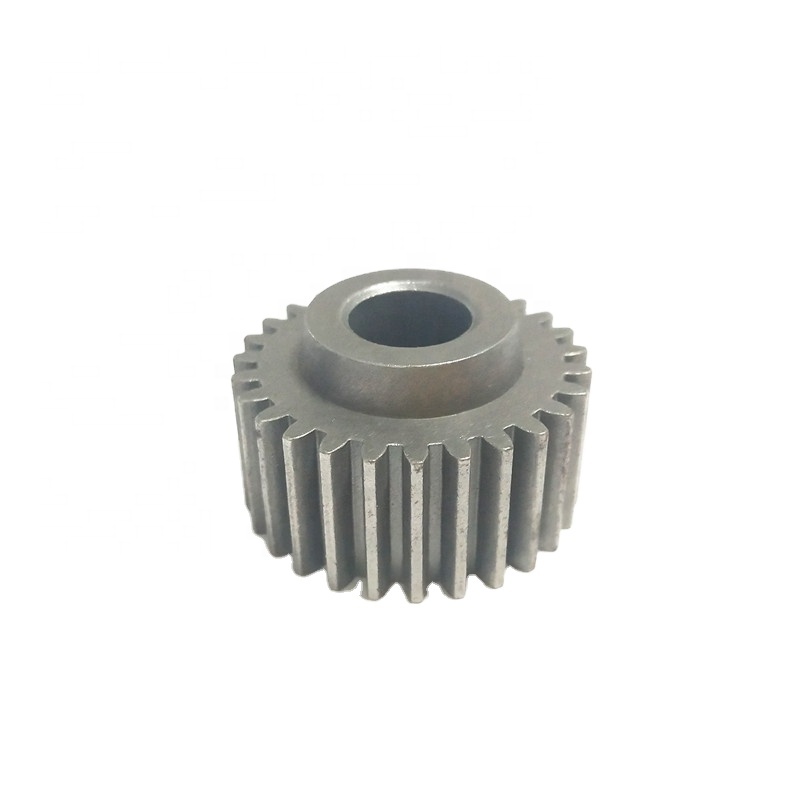
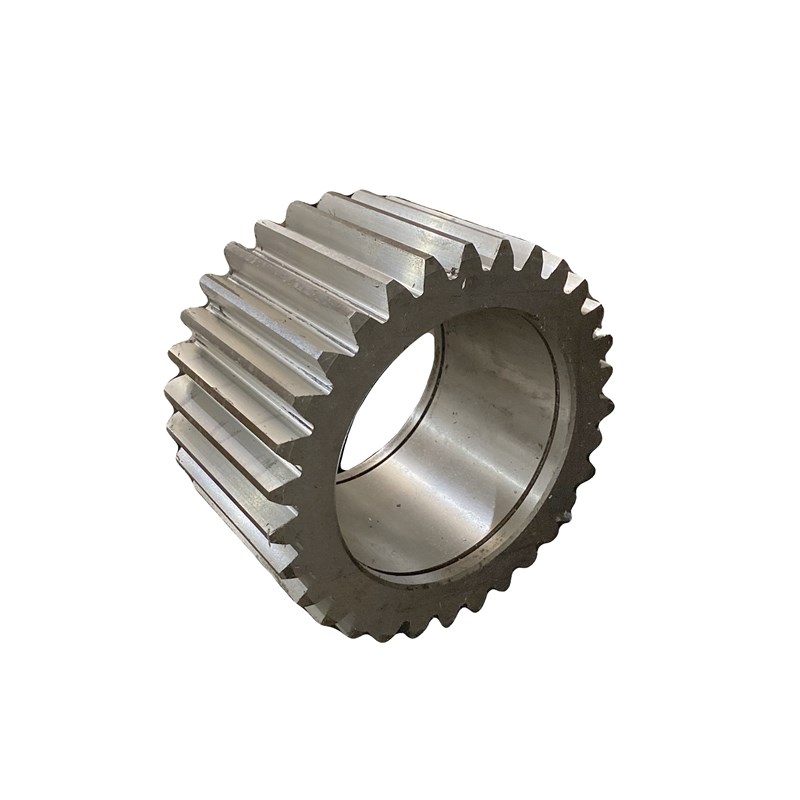
Against such technical pain point, Gearseiko takes hot forward extrusion as core mature production process for spur gear preform with four evident superiorities:
- Simplified tooth cavity forming Tooth outline is defined precisely by inner die cavity; preheated blank flows along axial direction and naturally copies complete tooth geometry. The forming process stays stable regardless of gear module and tooth quantity, realizing flexible production for diversified spur gear specs.
- Reduced overall forming resistance Distinguished from closed-die upsetting & radial extrusion, forward extrusion mainly applies axial compressive load on workpiece with low comprehensive stress value. Combined with high-temperature softened steel flow stress, required press tonnage drops sharply and effectively lessens equipment wear loss.
- Prolonged die service lifespan Lower forming load decreases die cavity stress concentration; our engineering team optimizes fillet transition radius and implements professional surface strengthening treatment for forming dies. Actual mass production verifies our die service cycle far exceeds common industrial level.
- Promoted raw material utilization & fatigue performance Compared with traditional hobbing/shaping cutting, hot forward extrusion lifts material utilization by maximum 30% and cancels rough machining steps. Continuous metal grain streamline closely follows tooth profile to boost tooth root bending fatigue resistance and heavy-load bearing capacity, perfectly matching high-torque new energy & commercial vehicle drivetrain parts.
Gearseiko’s Optimized Die Design System for Stable Hot Extrusion Production
Reliable mass production of hot extruded spur gears relies on systematic refined die design; Gearseiko summarizes mature standardized design specifications accumulated from long-term on-site manufacturing:
- Simplified stepped punch construction: Step-type punch structure eases machining and ensures accurate axial positioning; interference assembling between punch and upper platen prevents loose shift under cyclic alternating load.
- Precision controlled forming clearance: Strict minimal gap between punch working band and die cavity avoids reverse material flash, finished via precision grinding and matched thermal expansion compensation.
- Pre-stressed shrink-fit die set: Outer shrink sleeve provides pre-compressive residual stress to offset tensile forming stress inside cavity, effectively improving die crack resistance and overall structural strength.
- Built-in high-temperature resistant ejection unit: Long gear blank is extruded first then split into fixed length; integrated stable ejector realizes smooth part demoulding under sustained high forming temperature.
- Thermal insulation layout: Heat insulation inserts between die and press bolster cut invalid heat loss, stabilizing blank forming temperature and avoiding uneven metal flow caused by temperature fluctuation.
- Core split-type die innovation: Separated forming working ring and lower guiding sleeve structure realizes fast replacement of wear-prone tooth forming insert without discarding whole die set. Before die machining, multi-round FEA thermal expansion simulation compensates cavity dimension to counteract high-temperature thermal deformation error.

Two-Stage Forming: Hot Extrusion + Cold Sizing for Final Precision
Even with top-tier die design, hot-forged parts still have tiny dimensional shrinkage and residual oxide scale after natural cooling. Gearseiko innovates compound process: primary hot forward extrusion for near-net preform + secondary cold coining/shaving sizing. This hybrid craft combines high formability & cost advantage of hot forging and high dimensional precision of cold working to reach final assembly-ready tolerance standard.
Core Competitive Edge of Gearseiko Hot Precision Forging Solution
Our technical advantage originates from full-chain detailed optimization instead of simple process introduction: sealed atmosphere heating restrains high-temperature oxidation, self-developed high-temperature lubricant reduces forming friction and improves full cavity filling. We conduct pre-production digital simulation according to clients’ actual gear drawing, confirming optimal preform outline, die thermal compensation parameter and matched heat treatment schedule prior to formal die making.
For purchasing managers and design engineers troubled by hard-to-process straight spur gears, Gearseiko supplies verified mature hot precision forging solution. Whether near-net blanks for subsequent finish machining or fully finished ready-to-install spur gears, customized cost-efficient forming scheme is available.
Reach out to Gearseiko now to launch your gear forging project evaluation and cut your drivetrain component comprehensive cost via advanced hot precision forming technology.
FAQ | Hot Precision Gear Forging & Spur Gear Forward Extrusion
Q1: What core strengths does hot precision forging have versus cold forging?
A1: Superior high-temperature plasticity fits complex gear forming, lower required press tonnage and adapts to all kinds of alloy steel grades.
Q2: Why is hot forward extrusion the preferred process for straight spur gears at Gearseiko?
A2: Smooth tooth cavity filling, low forming resistance, extended die life, higher material utilization and intact continuous grain flow improving fatigue performance.
Q3: What key optimized structures are applied on Gearseiko’s hot extrusion dies?
A3: Pre-stressed shrink-fit design, split forming insert, thermal insulation structure, built-in ejection system and clearance-controlled punch.
Q4: How does Gearseiko fix dimensional error and surface defects of hot-forged gears?
A4: Adopt atmosphere-controlled heating + post hot-forging cold coining/shaving sizing compound process.
Q5: What’s the material saving rate of hot forward extrusion vs conventional gear cutting?
A5: Up to 30% higher raw material utilization and elimination of rough machining procedure.
How Gearseiko Redefines the Manufacturing Standard for High End Precision Gears
Gearseikos Core Technology for High End Precision Gears
Related Article