How Gearseiko Delivers High-Performance Power Transmission with Advanced Gas Carburizing Technology
author: Cash
2026-05-29
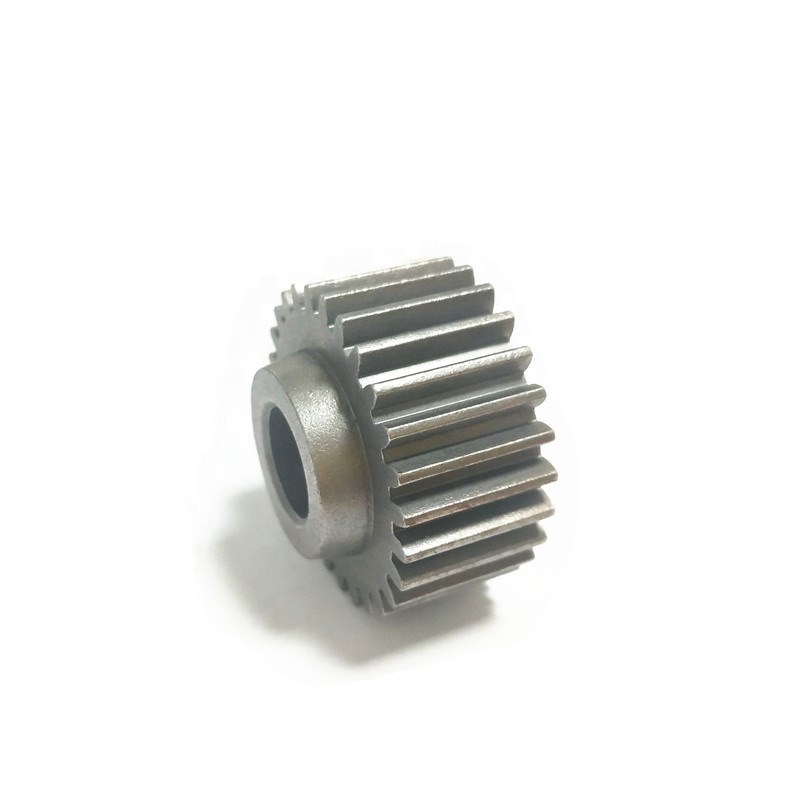
Carburizing and Quenching Processes for Common Carburizing Steels: How Gearseiko Delivers High-Performance Power Transmission with Advanced Gas Carburizing Technology | Gearseiko
In modern industrial systems, gears act as the core component of power transmission. Their performance directly determines the reliability, operating efficiency and service life of the entire equipment. For high-precision gears required to carry heavy loads and resist fatigue and wear, carburizing and quenching stands as a vital heat treatment process. It enhances surface hardness while preserving excellent toughness of the gear core. As a professional manufacturer of high-end precision gears, Gearseiko has long focused on the research, innovation and optimization of carburizing technologies, especially gas carburizing and quenching for widely used carburizing steels. This article introduces our professional carburizing workflows, and illustrates how the upgrade from traditional methods to modern gas carburizing empowers gears with superior overall performance.Explore professional carburizing and quenching solutions and high-performance gears at Gearseiko.
Evolution of Carburizing Technology: From Solid, Liquid to Gas Carburizing
Carburizing can be traced back to the early Industrial Revolution. The earliest applied technique was solid carburizing: gears were buried in charcoal or animal bone char and heated for a long time, so that carbon atoms slowly penetrated into the material surface. Though functional, this method was time-consuming, delivered uneven carbon distribution and suffered from poor process controllability. Later, liquid carburizing was developed with cyanide salt molten baths to boost efficiency, yet it was gradually phased out due to extreme toxicity and environmental hazards.
Gas carburizing brought a revolutionary breakthrough. With continuous upgrades to carbon potential monitoring and testing devices such as oxygen probes and infrared analyzers, the process has evolved from simple open-loop control relying merely on temperature and time to today’s multi-parameter, multi-mode closed-loop precision control. Gearseiko fully adopts advanced gas carburizing technology. It not only eliminates the quality instability of conventional processes, but also achieves energy conservation, environmental friendliness, high productivity and consistent repeatable quality.
Advantages of Gas Carburizing: Preferred Process for Precision Gear Production
Gas carburizing has become mainstream in the gear industry thanks to its prominent strengths:
- Stable and controllable quality: Real-time automatic carbon potential adjustment guarantees uniform case depth and surface carbon content across different batches.
- Optimal comprehensive mechanical properties: Regulated hardness gradient creates ideal performance, with surface hardness reaching 58–62 HRC and a tough, ductile core.
- Energy-saving and eco-friendly: It produces no solid residues or toxic salt solutions compared with solid and liquid carburizing. Waste gas can be fully combusted and purified for clean discharge.
- Wide adaptability: Well-suited for large-scale continuous production, and perfectly compatible with common carburizing steels including 20CrMnTi, 17CrNiMo6 and 20CrMo.

Two Major Gas Carburizing Processes at Gearseiko: Endothermic & Drip-Feed
Based on different atmosphere generation modes, mainstream gas carburizing is divided into endothermic type and drip-feed type. Gearseiko selects or combines these two processes flexibly according to gear material, dimension and customer performance requirements to achieve optimal carburizing results.
1. Endothermic Gas Carburizing
This process depends on an external atmosphere generator. Organic media such as natural gas or propane are delivered into high or low temperature cracking generators. With the effect of catalysts, carrier gas (diluent or protective atmosphere) mainly consisting of CO, H₂ and N₂ is generated. This reducing atmosphere prevents oxidation and decarburization on gear surfaces. Afterwards, enriching gas like methane, propane or butane is injected into the carburizing furnace to raise carbon potential and realize rapid deep carburizing.
Our endothermic carburizing production lines are equipped with advanced automatic carbon potential control systems, which can set and maintain carbon potential stably within 0.8%–1.2%. For large heavy-load gears with required case depth over 1.5 mm, such as components for wind turbine gearboxes and construction machinery drives, endothermic carburizing shows outstanding efficiency and uniformity for deep carburizing treatment.
2. Drip-Feed Gas Carburizing
Different from endothermic carburizing which needs external generators, the drip-feed method features simpler workflow. Diluent (methanol, ethanol) and enriching agent (propanol, isopropanol, kerosene, acetone) are directly dripped into the high-temperature carburizing furnace. These liquids crack instantly and form carburizing atmosphere containing CO, H₂ and CH₄.
We adopt high-precision metering pumps and digital flow controllers on drip-feed lines to adjust the dripping ratio dynamically according to gear materials. Taking 20CrMnTi gears for automotive transmissions as an example, we use methanol as diluent and isopropanol as enricher. The carburizing temperature is controlled at 920–930 °C, and carbon potential is precisely kept at 1.0%±0.05 %. After carburizing, gears can be quenched directly, or cooled slowly then reheated for quenching. Gears processed in this way form fine martensitic microstructure with controllable retained austenite and zero network carbides, which greatly improves contact fatigue strength and spalling resistance.
The drip-feed process requires no extra equipment, features low investment cost and fast startup speed, making it the ideal choice for high-mix, small-batch customized gear orders. In contrast, endothermic carburizing delivers better economic efficiency and quality stability for mass continuous production. Our technical team will also adopt hybrid solutions combining carrier gas and enriching gas based on actual order demands.
Full-Process Precision Control: From Carburizing to Quenching
Carburizing lays the foundation, while quenching determines the final performance. After carburizing, we apply isothermal quenching oil or pressure quenching machines for rapid cooling. The gear surface forms high-hardness martensite, and the core retains tough bainite or low-carbon martensite. For thin-walled gears sensitive to deformation, we use professional simulation software to predict distortion tendency, and optimize furnace loading layout and quenching agitation parameters. The overall deformation is strictly controlled within micron level.

Quality Inspection & Continuous Technical Upgrade
Every batch of carburized and quenched gears undergoes comprehensive tests, including metallographic examination (surface carbon content, non-martensitic structure, retained austenite rating), hardness gradient detection, case depth measurement and tooth root fatigue testing. Our in-house laboratory is equipped with fully automatic microhardness testers and carbon potential calibration devices, ensuring all products comply with AGMA, DIN and ISO industry standards.
Sticking to the philosophy of "Precision for the Future", Gearseiko keeps pace with the development of gas carburizing technology and devotes to intelligent optimization of process parameters. We regard carburizing and quenching as a sophisticated technology integrating material science and precision control engineering, rather than simple heating and cooling work. When you cooperate with Gearseiko, you get reliable high-performance and long-service-life gear transmission solutions. Every procedure from raw carburizing steel to finished gears embodies our pursuit of top-tier quality.
If you need premium carburized gears for harsh working conditions, welcome to visit our official website or contact our technical team. We will customize the most suitable heat treatment process for your applications.
FAQ: Carburizing & Quenching Technology
Q1: What are the development stages of carburizing technology?
A1: It has evolved from early solid carburizing and liquid carburizing to modern gas carburizing, which realizes better controllability, efficiency and environmental performance.
Q2: What are the core advantages of gas carburizing?
A2: It ensures stable batch quality, creates perfect combination of hard surface and tough core, saves energy, causes less pollution, and adapts well to mass production and common carburizing steels.
Q3: What is the difference between endothermic and drip-feed gas carburizing?
A3: Endothermic carburizing relies on external generators, suitable for mass production and deep carburizing of large gears. Drip-feed carburizing has simpler structure, lower cost and is ideal for small-batch and diversified orders.
Q4: How does Gearseiko control gear distortion during quenching? A4: We use professional simulation software to predict deformation, optimize loading and quenching parameters, and keep distortion within micron range for distortion-sensitive gears.
Q5: What quality tests are conducted for carburized and quenched gears?
A5: We carry out metallographic inspection, hardness gradient test, case depth measurement and tooth root fatigue test to meet AGMA, DIN and ISO standards.
How Gearseiko Redefines Gear Performance with Precision Heat Treatmen
Flame Hardening Process Explained by Gearseiko
Related Article