Gearseikos Guide to High-Precision Gear Manufacturing
author: Cash
2026-06-08
Types and Accuracy of Gear Hobs: Gearseiko’s Guide to High-Precision Gear Manufacturing | Gearseiko
In high-end precision gear manufacturing, gear hobbing serves as the most reliable and widely adopted forming process. The precision grade, structural type and machining performance of gear hobs directly determine finished gear’s tooth profile accuracy, flank surface finish, meshing stability and overall production efficiency. As a professional manufacturer focusing on high-precision custom gears and mass production, Gearseiko deeply masters the matching logic between hob types and machining scenarios. This systematic guide elaborates on gear hob working principles, mainstream classifications, accuracy characteristics and selection criteria, helping engineering teams optimize hobbing processes and achieve upgraded gear machining quality.
Working Principle & Theoretical Foundation of Precision Gear Hobs
Gear hobbing processing is derived from the conjugate meshing theory of helical gear pairs. Theoretically, a standard precision gear hob is designed as a slotted helical cylindrical worm with a specific rake angle (conventional 0° zero rake angle) and relief clearance angle. Different from ordinary gears, industrial hobs adopt a low-start structure (1–4 starts) and large helix angle, forming a slotted involute worm structure, where the hob start quantity corresponds to the equivalent tooth number of the meshing helical gear.
The ideal involute basic worm features standard involute transverse tooth profile and smooth convex axial tooth profile, delivering zero theoretical profile deviation and ultra-high machining accuracy. However, its complex manufacturing and grinding process lead to high costs and low practicability, so it is rarely used in actual production. Modern industrial manufacturing mainly adopts two optimized approximate worm structures: Archimedean worm and normal straight-sided worm. Both produce tiny controllable profile errors, and the deviation can be further reduced by increasing the hob helix angle (reducing lead angle), fully meeting industrial precision manufacturing standards.
Archimedean Gear Hobs: First Choice for High-Precision Finishing
The Archimedean basic worm is characterized by a straight axial tooth profile and standard Archimedean spiral transverse profile. Through professional tooth profile angle correction, its machining performance can be infinitely close to ideal involute hobs. With prominent advantages of easy machining, convenient precision detection and stable tooth profile accuracy after repeated sharpening, Archimedean hobs have become the mainstream finish hobbing tool for small and medium-module gears (module ≤10mm) in China and most international industrial standards.
In Gearseiko’s precision production system, high-grade Archimedean hobs are widely used for finish hobbing of high-precision gears. Strict profile calibration and tool inspection ensure processed gears feature uniform tooth flank texture, accurate involute profile and excellent meshing coordination, perfectly matching high-standard scenarios such as precision instruments and new energy vehicle transmission gears.

Normal Straight-Sided Gear Hobs: Cost-Effective for Roughing & Large-Module Gears
Normal straight-sided basic hobs adopt a straight normal tooth profile and extended involute transverse profile. After reasonable profile correction, they can simulate involute meshing motion, but retain slightly higher theoretical errors than Archimedean hobs. Limited by inherent accuracy characteristics, this type of hob is not applicable for ultra-precision finishing, and is mainly used for gear roughing, blank pre-processing and large-module gear pre-cutting.
Gearseiko adopts a hybrid processing strategy: matching normal straight-sided hobs for high-efficiency rough stock removal and Archimedean hobs for precision finishing. This layered processing mode effectively balances production efficiency, manufacturing cost and finished accuracy, realizing economical and stable mass production of large-module heavy-duty gears.
Hob Diameter & Gash Design: Key Factors Affecting Machining Accuracy
Industrial standard precision hobs are mostly single-start, right-handed, zero-rake-angle designs with axial straight gashes. Under the same module specification, increasing the hob outer diameter can raise the pitch circle diameter, reduce the tool lead angle, and greatly weaken theoretical profile errors caused by approximate worm structures, which is the core method to improve hobbing precision.
Meanwhile, increasing the number of uniform gashes enlarges the quantity of effective cutting edges, disperses single-edge cutting load, optimizes tooth surface roughness, and extends overall hob service life. Straight axial gashes simplify tool manufacturing and sharpening procedures, effectively controlling rake face radial runout and ensuring consistent positioning accuracy.
It is worth noting that when the lead angle exceeds 5°, straight gashes will cause slight unequal working rake angles on left and right cutting edges. Even so, its outstanding stability and error controllability still make it the optimal solution for almost all precision gear hobbing scenarios.
Complete Classification & Industrial Application of Gear Hobs
Combining structural design, manufacturing material, start quantity and processing purpose, gear hobs are classified into multiple types for differentiated scenario applications:
-
By Structure: Solid integral hobs and inserted-blade combined hobs. Solid hobs feature high rigidity and precision for small/medium-module finishing; inserted-blade hobs are convenient for blade replacement and suitable for large-module heavy cutting.
-
By Material: High-speed steel (HSS) hobs and carbide hobs. HSS hobs deliver excellent toughness for conventional soft gear processing; carbide hobs feature high hardness and wear resistance for hard gear hobbing and high-speed cutting.
-
By Start Quantity: Single-start hobs and multi-start hobs. Single-start hobs ensure ultra-high precision for finishing; multi-start hobs boost efficiency for medium and large-batch roughing.
-
By Processing Purpose: Roughing hobs, finishing hobs, pre-grinding hobs, pre-shaving hobs and ultra-precision finishing hobs, supporting full-process gear forming and post-processing.
In addition, Gearseiko supports customized special hobs, including low-pressure-angle hobs, wave-edge hobs, unequal tooth-height hobs and full-cut hobs, to meet personalized processing demands of special-shaped gears and non-standard transmission components.
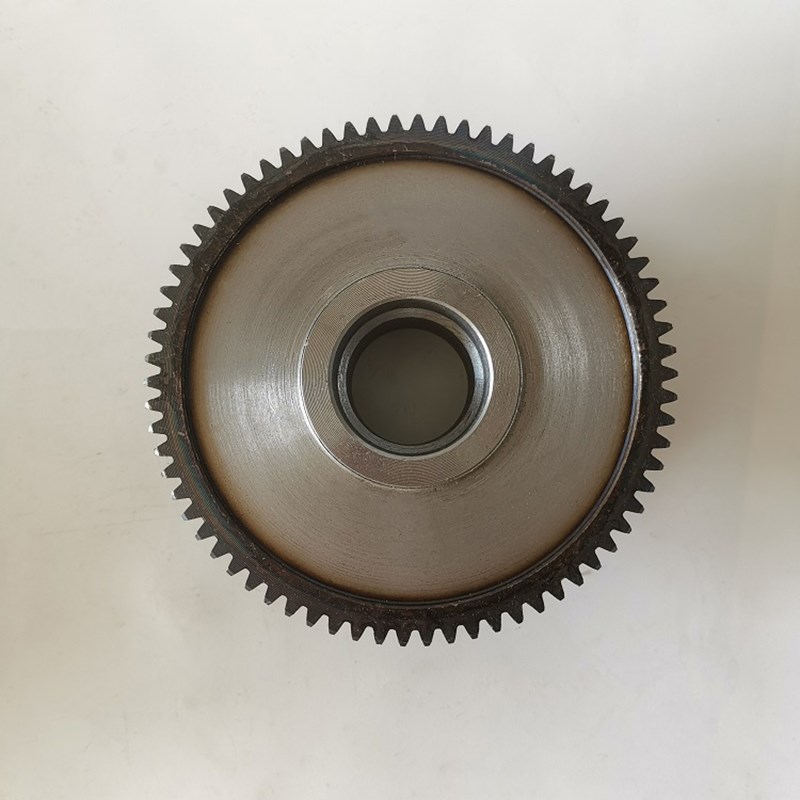
Gearseiko’s Precision Control Advantage in Hob Matching & Machining
Gear precision is determined by tool accuracy. Gearseiko takes scientific hob selection and full-cycle tool precision control as the core of gear machining quality management. Based on strict involute meshing principles, we match different hob types, specifications and processing parameters according to gear module, material hardness, precision grade and application scenario.
From small-module ultra-precision instrument gears to large-module heavy-duty industrial gears, our differentiated hob matching scheme ensures every batch of products achieves stable dimensional accuracy, low-noise meshing performance and long-term operational durability. By optimizing the cooperation of roughing and finishing hobs, we help customers reduce tool loss, shorten production cycles and lower comprehensive manufacturing costs.
Choose Gearseiko as your precision gear manufacturing partner. We rely on professional hob application technology and mature hobbing craftsmanship to create high-precision, high-stability transmission gears for global industrial equipment.
FAQ | Gear Hob Types, Accuracy & Selection Guide
Q1: What are the two mainstream hob types for industrial gear hobbing?
A1: Archimedean gear hobs and normal straight-sided gear hobs, both optimized based on theoretical involute worm structure for industrial practicality.
Q2: What is the main application of Archimedean hobs?
A2: They are the preferred tool for precision finishing of small and medium-module gears (module ≤10mm) due to stable accuracy and easy sharpening.
Q3: What scenarios are normal straight-sided hobs suitable for?
A3: They are mainly used for gear roughing, blank pre-processing and large-module gear pre-cutting for cost-effective high-efficiency material removal.
Q4: How do hob diameter and gash design affect hobbing accuracy?
A4: Larger hob diameter reduces theoretical profile errors; more gashes improve surface roughness and tool life; straight gashes ensure stable sharpening and positioning accuracy.
Q5: What customized hob solutions can Gearseiko provide?
A5: We provide standard solid/inserted, HSS/carbide, single/multi-start hobs, as well as special low-pressure-angle, wave-edge and unequal tooth-height custom hobs.
Practical Insights from Gearseiko
Key Steps by Gearseiko to Enhance Gear Machining Accuracy
Related Article