Gearseikos Core Technology for High End Precision Gears
author: Cash
2026-06-02
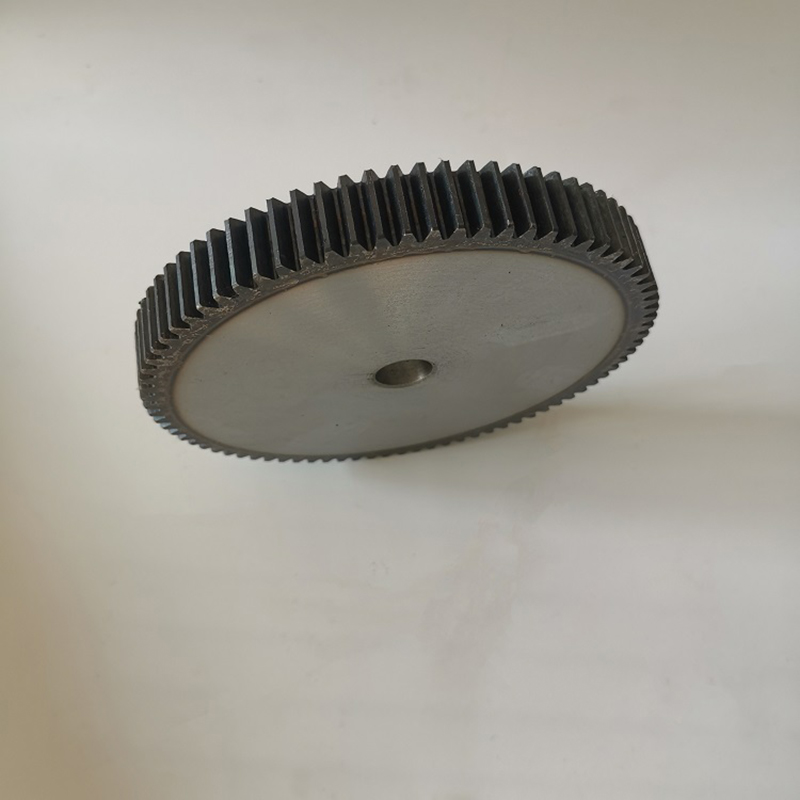
Warm Precision Forging Process: Gearseiko’s Core Technology for High-End Precision Gears | Gearseiko
In premium advanced manufacturing, gears act as core power-transmission components whose dimensional precision and surface finish directly determine system running performance, noise level and overall service lifespan. Most high-end gear makers struggle to strike a balance: acquiring cold-forging-level accuracy & surface quality while realizing near-net forming of intricate tooth profiles with stable high productivity. Warm precision forging fills exactly this technical gap. With in-depth process research and iterative technical optimization, Gearseiko stands as a leading specialist manufacturer for premium warm-forged precision gears across global markets.Contact Gearseiko’s engineering team to get customized warm forging feasibility evaluation and quotation.
Definition of Warm Precision Forging
Warm precision forging refers to metal forming between ambient temperature and material recrystallization temperature. For conventional automotive carbon & alloy steels, the standard warm forging range falls at 650°C~950°C; Gearseiko further narrows the optimized stable forming window to 650°C–850°C for mainstream vehicle gear steel grades.
This exclusive intermediate temperature range brings unique dual merits inherited from hot and cold forging: material plasticity approximates hot forging to smoothly fill complicated tooth cavities; meanwhile moderate heat restrains severe high-temperature oxidation, generating negligible scale and delivering surface quality nearly matching cold-forged components. Different from rough hot forging, most Gearseiko warm-forged gears skip full post-grinding to satisfy high-precision specs, effectively cutting production expense and shortening lead time greatly.
Three Core Temperature-Selection Principles at Gearseiko
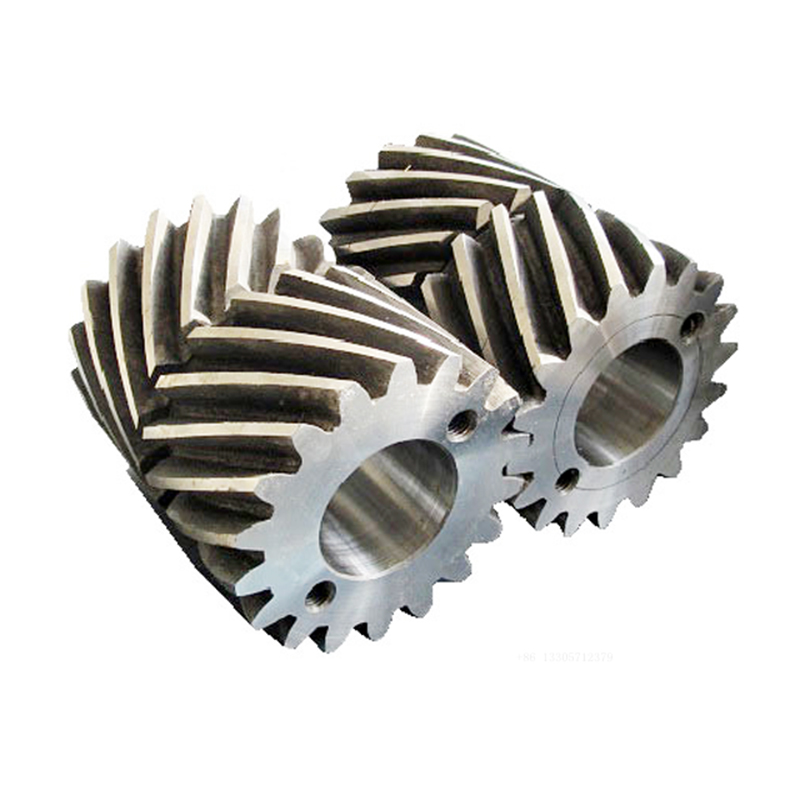
Our process department sets three strict rules to lock optimal forming temperature for every gear specification:
- Remarkable reduction of flow resistance: Proper heating sharply drops material yield strength to cut forming load, protect expensive tooling and extend press service life.
- Restrain violent oxidation: Temperature is controlled below intensive oxidation threshold to keep minimal oxide scale and retain pristine as-forged surface condition.
- Match optimal lubrication working zone: Each steel-lubricant pairing owns a specific low-friction temperature band. Massive lab testing enables us to fix target temperature for each workpiece for smooth metal flow and suppressed die abrasion.
High-Performance Lubricant: Core Guarantee for Stable Warm Forging
Warm forming’s alternating thermal & mechanical load imposes rigorous requirements on lubricants. Gearseiko develops and selects dedicated warm-forging lubricants complying with five critical indicators:
- Strong adhesion & proper viscosity: Firmly attach to die and blank surfaces without being extruded under extreme compression to guarantee steady plastic flow.
- Superior thermal stability & heat insulation: Remain intact without decomposition under 650–850°C; form insulation layer to slow heat transfer toward die substrate.
- Excellent chemical inertness: Resist oxidation and degradation during cyclic warm forming, avoiding die corrosion.
- Full wetting plus auxiliary cooling: Spread evenly to build complete protective film and dissipate partial frictional heat against local overheating.
- Anti-sticking property: Wrap newly exposed fresh metal surface thoroughly to avoid workpiece galling & die cavity adhesion damage.
Outstanding Technical Advantages of Gearseiko Warm-Forged Gears
1. Premium precision & flawless surface finish
We minimize forming temperature within feasible plasticity limits to approach cold forging precision. Final tooth surface meets DIN6~7 accuracy; most parts can be directly assembled into new-energy vehicle transmissions and high-precision reducers without extra finishing.
2. Excellent plasticity, low forming resistance & boosted productivity
Sub-recrystallization heating improves ductility while keeping much lower deformation resistance than room-temperature cold forging, supporting larger single-pass forming reduction and fewer intermediate working steps. Our warm forging workshop gains around 30% higher hourly output compared with full cold forging production lines.
3. Systematic die protection against alternating thermal-mechanical fatigue
Warm dies endure repeated mechanical pressure plus cyclic thermal shock. Gearseiko solves die life challenges via premium high-temperature die steel, forced circulating cooling system and real-time dynamic lubrication control. All die sets pass FEA simulation and pilot verification before mass run, stably achieving tens of thousands of qualified parts per die service cycle.
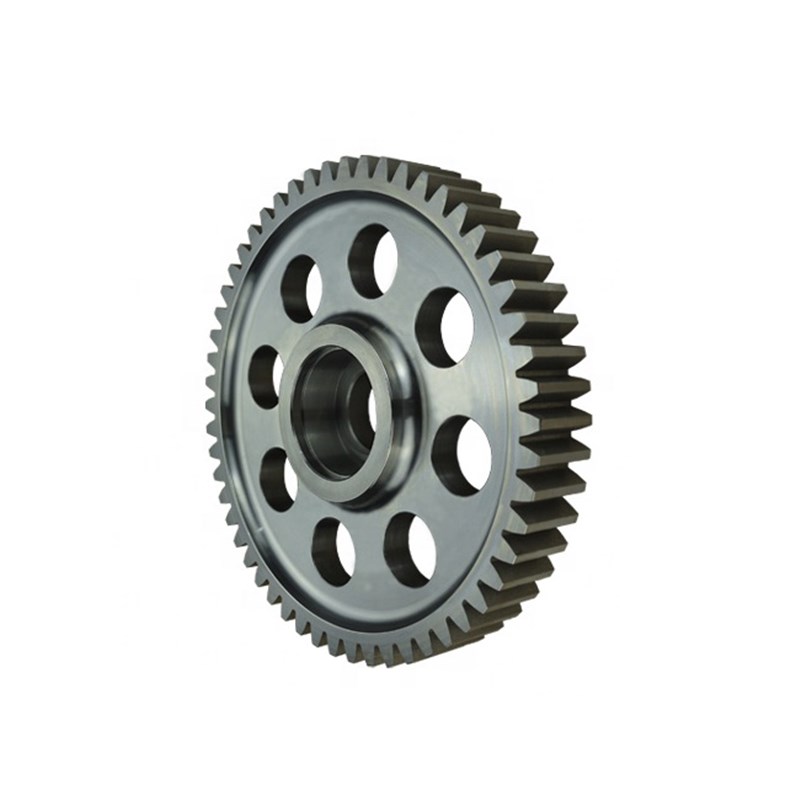
Why Cooperate with Gearseiko for Warm-Forged Gears?
We have maturely applied warm precision forging into automotive transmission gears, differential gears and heavy-duty construction machinery high-load gears. Supported by integrated temperature regulation, tailored lubrication formula and sophisticated die design plus full-process quality inspection from raw blank to finished goods, our clients obtain core benefits below:
- DIN6~7 dimensional precision close to cold-forged standard
- Scale-free clean tooth surface with no mandatory polishing
- Capability to produce complex tooth profiles unavailable via conventional cold forging
- Shorter production cycle and reduced per-unit comprehensive cost
Warm precision forging is never a compromised mid-way option between hot and cold forging; it is an advanced composite forming technology combining the respective superiorities of both processes.
Gearseiko – Every precision gear is elaborately warm-forged for steady long-term operation.
Reach out to our technical team anytime for detailed warm-forging technical consultation and custom project solution discussion.
FAQ: Warm Precision Gear Forging Technology
Q1: What is Gearseiko’s optimized warm forging temperature range for common automotive steel?
A1: 650°C–850°C, controlled between room temperature and recrystallization temperature of steel.
Q2: What are three criteria for warm forging temperature selection?
A2: Lower material deformation resistance, avoid severe oxidation, match the optimal lubrication temperature window.
Q3: What core features does dedicated warm-forging lubricant need?
A3: High adhesion, thermal stability, chemical inertness, full wetting cooling performance and anti-welding anti-galling capability.
Q4: What accuracy can Gearseiko warm-forged gears reach?
A4: DIN6~7 precision grade with clean oxide-free tooth surface, partial items need no secondary finishing.
Q5: What is the output advantage versus pure cold forging?
A5: Around 30% higher production capacity and capable of forming more complex gear geometries.
How Gearseiko Delivers High-Performance Solutions for Demanding Applications
How Gearseiko Sets a New Benchmark for High End Precision Gears
Related Article