Gearseiko Leads the Efficient Hard Hobbing Era
author: Cash
2026-06-15
How Carbide Hobs Are Reshaping Hardened Gear Finishing: Gearseiko Leads the Efficient Hard Hobbing Era | Gearseiko
Hardened gears feature outstanding contact fatigue strength and bending fatigue resistance, making them indispensable components for high-precision power transmissions widely used in wind power, aerospace, robotics and electric vehicles. For decades, grinding was regarded as the only reliable finishing method for hardened gears. The emergence of carbide hobs has completely changed this industry norm. As a professional manufacturer of gear cutting tools, Gearseiko takes the lead in industrializing carbide hobs and skiving hobbing (hard hobbing) technologies, helping manufacturers produce high-precision hardened gears with lower costs and higher efficiency.
Carbide Hobs: A Revolutionary Technology
It was long believed that gears hardened to over 45 HRC could only be finished by grinding. Though grinding delivers excellent machining accuracy, it requires heavy equipment investment, long production cycles and high unit costs. Besides, some special gears such as internal gears, double-helical gears and shaft gears with narrow undercut areas are technically difficult or even impossible to grind.
Carbide hobs make hard skiving hobbing (hard hobbing / scudding) fully practical. Made of high-performance carbide substrates with premium coatings and precision re-sharpening, these hobs can directly machine hardened tooth flanks to remove excess stock and rectify heat treatment distortion. Its core advantages are as follows:
- No dedicated grinders required; standard and CNC hobbing machines are fully compatible.
- Ultra-high efficiency: the machining cycle can be cut by over 80% compared with grinding.
- Lower overall cost: long service life of tools, no expensive wheel dressing systems or complex coolant filtration devices needed.
Process Challenges for Hardened Gears & Gearseiko’s Targeted Solutions
To maximize the performance of carbide hobs, it is essential to master the processing characteristics of hardened gears. Based on rich on-site experience, Gearseiko has summarized three core principles and integrated them into tool design and process services.
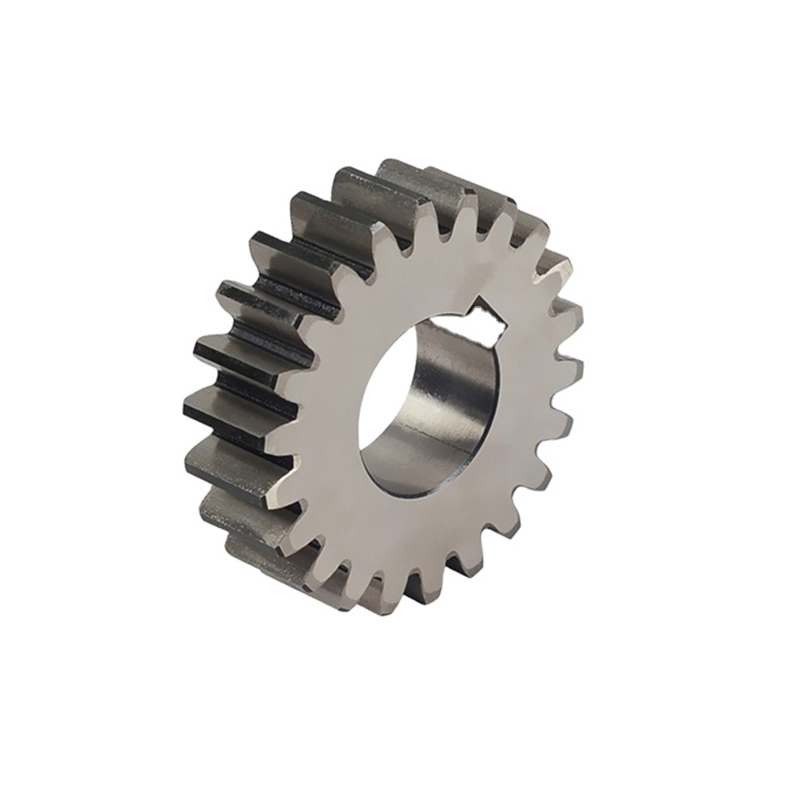
1. Precision Determines Load Capacity
Unlike soft gears, hardened gears have almost no running-in property. Tiny manufacturing errors, assembly deviations or installation misalignment will cause local overload on tooth flanks and roots, reducing load capacity and triggering premature failure. Therefore, absolute precision is the top priority for hardened gear machining.
Our carbide hobs are manufactured via ultra-precision grinding, reaching Class AA or higher tool accuracy. We also suggest clients strictly control pre-hobbing quality including uniform machining allowance and minimized heat treatment distortion, and adopt high-rigidity hobbing machines. When tool, machine and workpiece are well matched, the finished gears can steadily meet DIN Class 6 accuracy and above after hard hobbing.
2. Profile & Lead Modification: Must-Have Design
Hardened gears have high elastic modulus and poor running-in performance. Load-induced deflection cannot be offset by natural wear. Without proper modification, meshing impact, vibration, noise and dynamic load will severely impair transmission performance.
Gearseiko’s carbide hobs support customized tooth profile modification (tip rounding, K-chart profile, etc.) and lead modification (crowning, end relief, etc.). Manufactured on 5-axis CNC grinders, the tools can form complex modified geometries directly during hard hobbing without secondary grinding. This ensures accurate modification parameters and shortens the process flow effectively.
3. Low Surface Roughness: Key to Extended Service Life
Surface roughness Ra exerts limited influence on the load capacity of soft gears. However, surface irregularities on hardened gears will cause severe stress concentration and greatly shorten contact fatigue life, so much lower roughness is required.
Our carbide hobs go through special polishing to form sharp and smooth cutting edges. After finish hard hobbing, the tooth surface roughness is generally below Ra 0.8 μm. For scenarios demanding ultra-low noise and anti-scuffing performance, we recommend post-hobbing worm gear honing, which further reduces roughness to Ra 0.2 μm or below. The combined hard hobbing plus honing process delivers near-grinding quality at a much lower cost.
Main Application Scenarios for Gearseiko Carbide Hobs
- Rough machining instead of rough grinding: For gears that need final grinding, use carbide hobs for high-efficiency hard hobbing to remove most stock and correct distortion, leaving only 0.05–0.10 mm allowance for finish grinding, which greatly saves grinding time.
- Finishing for non-grindable gears: Ideal for double-helical gears with small pinion sections, shaft gears with limited undercut and internal gears that are hard or impossible to process via grinding.
- Cost reduction for mass production: For automotive transmissions, industrial reducers and other high-volume products, replacing grinding with hard hobbing can cut unit cost by more than 50% while maintaining stable precision.
Reasonable Selection of Cutting Parameters
The overall machining quality of carbide hard hobbing depends on four elements: workpiece pre-machining, machine rigidity, tool performance and cutting parameters. Beyond supplying premium tools, Gearseiko provides complete process guidance: the recommended cutting speed ranges from 80–150 m/min, and feed rate is set at 0.5–2 mm/rev, together with professional cutting oil selection advice. For old machines with insufficient rigidity, we optimize tool geometry to lower cutting force. For high-rigidity CNC hobbing machines, we adopt higher feed rates to maximize productivity.
Conclusion
The mature application of carbide hob hard hobbing has ushered in a new era, where grinding and hard hobbing complement each other as two mainstream finishing methods for hardened gears. For manufacturers pursuing balanced efficiency and cost control, Gearseiko’s carbide hobs and supporting hard hobbing processes help you produce high-precision hardened gears with less equipment investment and shorter lead time.
If you plan to replace grinding processes or optimize existing hardened gear production lines, please contact Gearseiko. We offer one-stop services covering tool selection, modification design and cutting parameter optimization to upgrade your transmission system performance.
Gearseiko – Your reliable partner for precision cutting, making hardened gear finishing more efficient and cost-effective.
FAQ | Carbide Hobs & Hard Hobbing Technology
Q1: What are the core advantages of carbide hobs compared with grinding?
A1: Higher efficiency (cycle time reduced by over 80%), lower cost, and compatibility with conventional hobbing machines.
Q2: Why is high precision so critical for hardened gear machining?
A2: Hardened gears have no running-in ability; minor errors will lead to local overload and early failure.
Q3: What common modifications are applied to hardened gear teeth?
A3: Tooth profile modification such as tip rounding, and lead modification including crowning and end relief.
Q4: What is the typical tooth surface roughness after hard hobbing and honing?
A4: Below Ra 0.8 μm after hard hobbing, and down to Ra 0.2 μm or lower after honing.
Q5: What are the applicable scenarios for carbide hard hobbing?
A5: Rough machining before finish grinding, finishing non-grindable gears, and cost reduction for mass production.
Unlocking High Hardness Gear Cutting with Negative Rake Angles
Balancing Accuracy, Cost, and Heat Treatment Distortion
Related Article