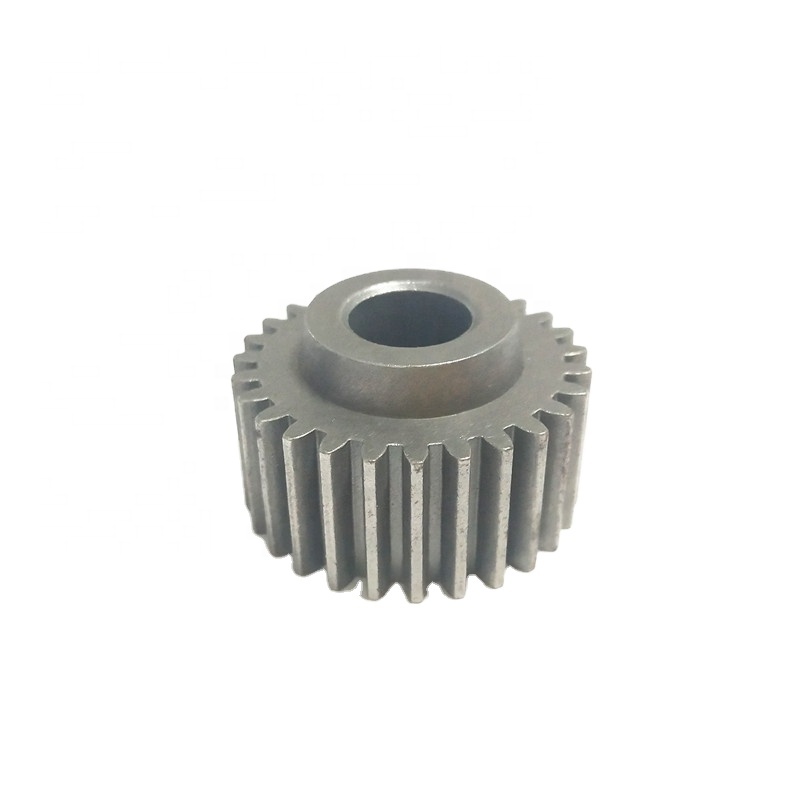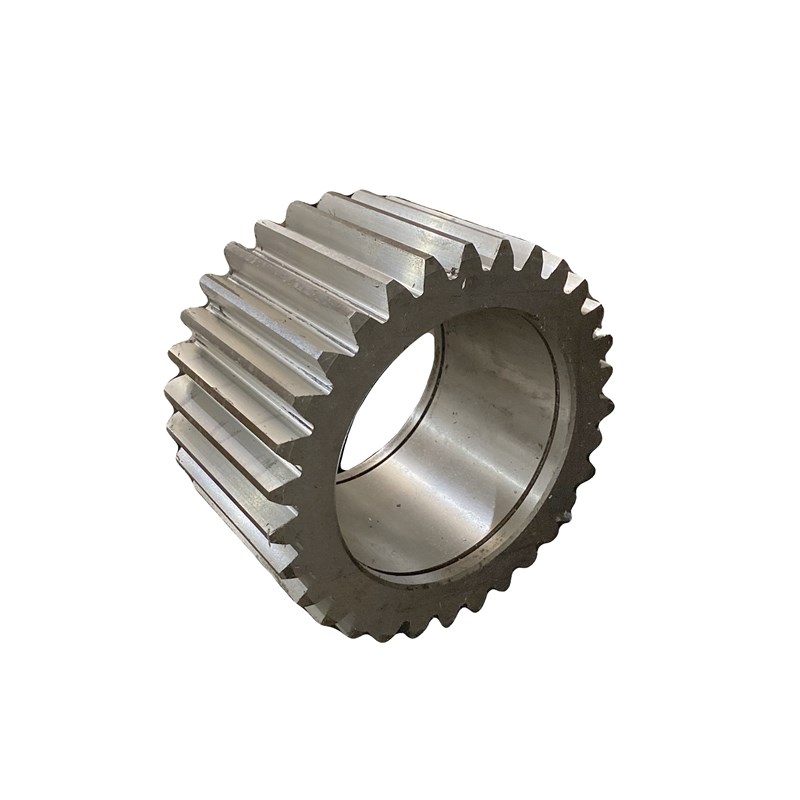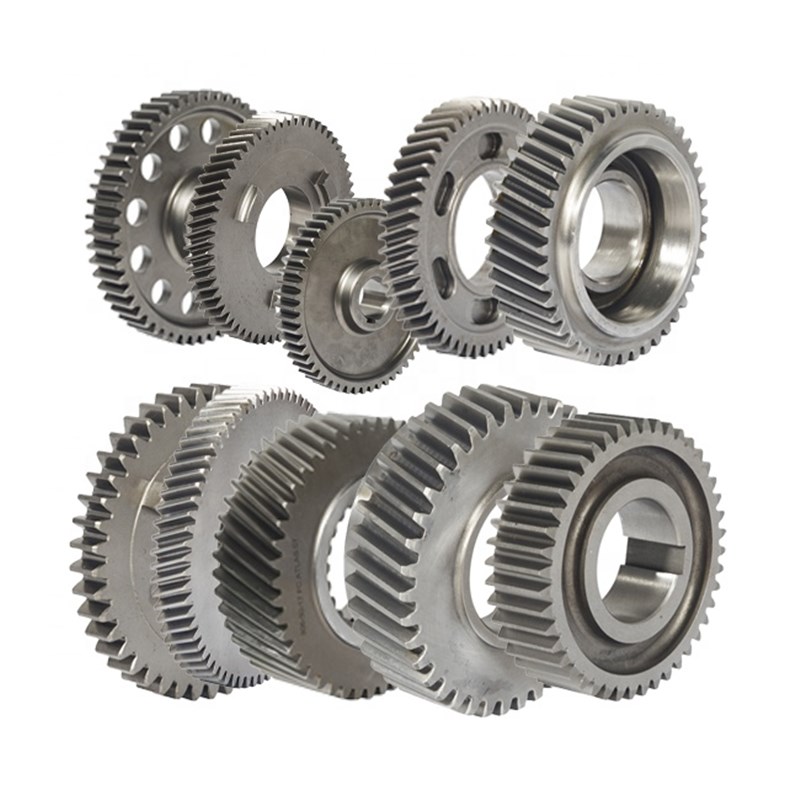
Gear neural network model
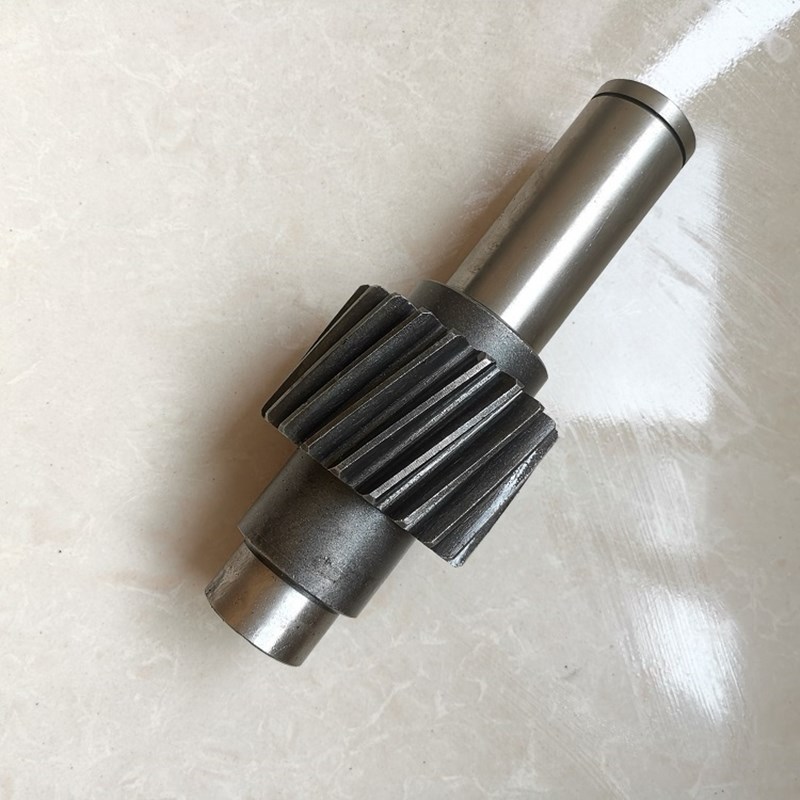
Neural Network-Driven Precision Gear Design: How Gearseiko Reinvents High-End Transmission Reliability
In the research and manufacturing of high-end precision gears, accurate prediction of structural response and reliability analysis have always been core challenges. Under complex variable operating conditions, precision gears experience multiple nonlinear couplings, including contact stress, bending fatigue, and thermal deformation. While the finite element method (FEM) provides high accuracy, it is computationally expensive and difficult to scale for real‑time optimization or large‑scale Monte Carlo simulations. In recent years, artificial neural networks (ANNs) have gained significant attention due to their ability to globally approximate any continuous nonlinear function. As a manufacturer specializing in high-end precision gears, Gearseiko has pioneered the integration of gear neural network models into its product development process, successfully shifting from “empirical trial‑and‑error” to “intelligent mapping.”

From Finite Elements to Neural Networks: An Efficiency Revolution
Classic studies have shown that multi‑layer feedforward networks (BP networks) and radial basis function (RBF) networks can theoretically approximate any continuous nonlinear function with arbitrary accuracy. This means that once a well‑trained neural network model is built using finite element calculations or experimental data, it can replace time‑consuming FEM simulations. In milliseconds, the model predicts highly nonlinear mappings between gear structural responses (e.g., maximum root stress, tooth surface contact deformation) and random variables (module, pressure angle, modification parameters, material hardness, etc.).
The R&D team at Gearseiko has developed a dedicated ANN surrogate model for precision gears. Using hundreds of high‑precision finite element results as training samples, we employ an improved Levenberg‑Marquardt backpropagation algorithm. The network architecture – including hidden neurons, activation functions, and regularization strategies – is optimally balanced. After thorough training, our gear neural network model predicts tooth root bending stress with an error below 1.2%, while computational speed is nearly a thousand times faster than traditional FEM.
A New Paradigm for Reliability Analysis: ANN + Monte Carlo Simulation
Failure probability assessment is critical in high‑end gear transmission design. Traditional methods rely on response surface methodology (RSM) to approximate limit state functions. However, for highly nonlinear fatigue life equations or contact stress safety margins, RSM often introduces large deviations. As J. V. Chapman et al. applied ANN to pipeline failure probability prediction, and M. Papadrakakis et al. combined Monte Carlo simulation with ANN for elastoplastic structural reliability analysis, Gearseiko has transferred this concept to the gear domain.
We have built a dual‑mode gear reliability analysis platform using BP networks and RBF networks. For a tooth root fatigue limit state function g(X)=σlim−σmax(X)g(X)=σlim−σmax(X), the neural network globally approximates the true limit state surface after learning a limited set of samples. Then, by combining with Monte Carlo sampling – generating hundreds of thousands of random parameter combinations – the network quickly outputs the corresponding failure status for each combination, yielding high‑confidence failure probability. Compared with direct FEM‑Monte Carlo coupling, this method reduces computation time from several weeks to a few hours, with negligible loss of accuracy.

Overcoming the Challenges: From Manual Tuning to Adaptive Optimization
Although ANNs possess powerful fitting capabilities, their accuracy is influenced by the choice of training samples, network topology, and hyperparameter settings. Many engineers complain that neural networks resemble “alchemy” – parameter selection is subjective, and achieving optimal generalization with limited samples is difficult. Gearseiko has developed systematic engineering solutions to address these challenges:
-
Optimized Design of Experiments: We combine Latin hypercube sampling with adaptive sequential sampling to ensure that samples cover key nonlinear regions in the high‑dimensional gear parameter space (e.g., tooth root fillet transition zone, tooth tip modification starting point).
-
Automatic Network Architecture Search: We have developed a Bayesian optimization‑based tool that automatically determines the number of hidden layers, neurons, and dropout rates, eliminating manual trial‑and‑error.
-
Ensemble Learning and Error Compensation: Multiple networks with different initial weights are trained to form an ensemble model. Residual networks are then used to perform secondary correction of prediction deviations, significantly improving fitting robustness in sparse sample regions.
Through these efforts, Gearseiko’s gear neural network models have been successfully applied in reliability optimization of planetary gears for heavy‑truck transmissions, accessory drive gears for aero‑engines, and precision gears for robotic joint reducers. The fatigue life distributions predicted by the model closely match bench test results, validating the industrial effectiveness of this approach.
Future Outlook: AI‑Driven Intelligent Gear Engineering
Neural network technology continues to evolve rapidly. X. Li et al. proved that RBF networks can approximate both a function and its derivatives simultaneously – a finding that supports our next step: building a joint “stress‑sensitivity” prediction model. In the future, gear designers will not only obtain stress values but also directly receive gradient information of stress with respect to each design parameter, accelerating convergence in gradient‑based optimization.
Gearseiko will continue to deepen research into gear‑specific ANN models. By integrating digital twins with real‑time monitoring data, we aim to predict the actual degradation trends of gears during operation in real time. We firmly believe that neural networks are not “black boxes” that replace engineers, but rather intelligent engines that move gear design from passive verification to active creation.
If you are looking for high‑end precision gear solutions with higher reliability and shorter development cycles, please contact Gearseiko. Let us work together to redefine the boundaries of gear engineering with neural networks.
Gear Kriging Model
Gear polynomial response surface
Related Article