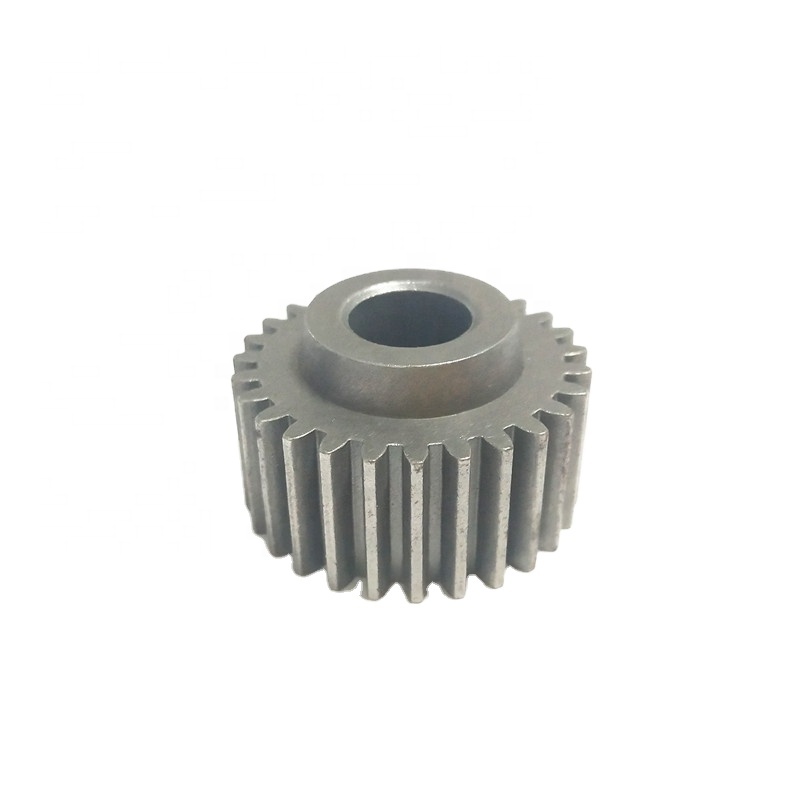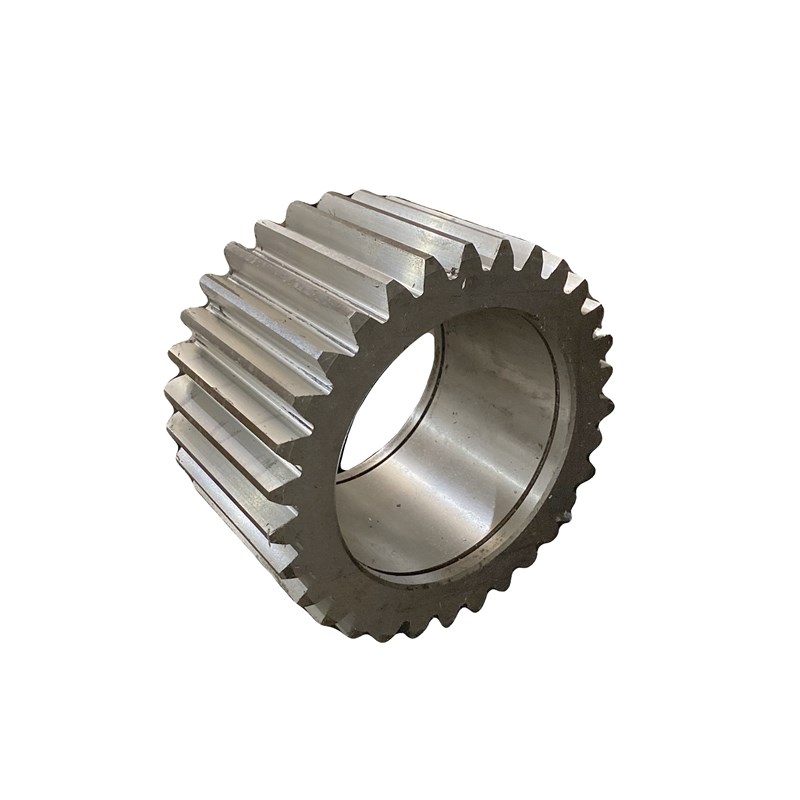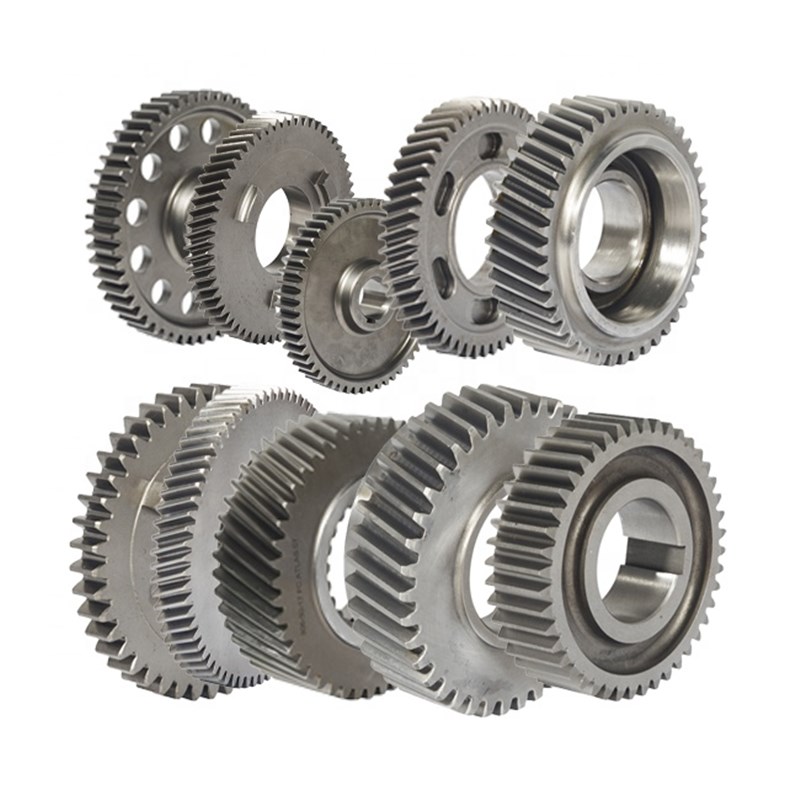
Gear bending fatigue test
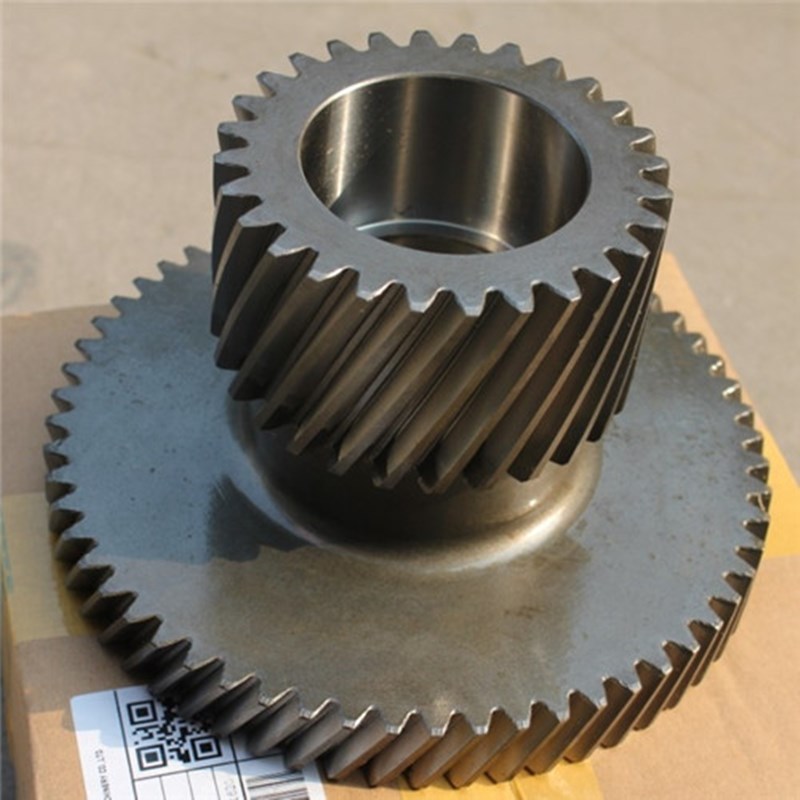
Gear Bending Fatigue Testing: Why Power‑Recirculating Rotating Tests Reveal True Strength?
In high‑performance drivetrain systems, the bending fatigue strength of gear teeth directly determines the reliability and service life of the entire equipment. This is especially critical in applications such as helicopter planetary gear systems, wind turbine gearboxes, racing transmissions, and precision robotics, where gears endure long‑term cyclic loading under extreme conditions.
Under such service environments, the strength of a gear gradually degrades – not in a simple linear fashion, but as a dynamic process influenced by multiple coupled factors: material microstructure, tooth root geometry, surface finish, heat treatment residual stress, lubrication conditions, and the actual load spectrum. Purely theoretical analysis, regardless of its sophistication, cannot accurately predict this degradation. This is why Gearseiko – a leading manufacturer of high‑precision gears – places testing and validation at the very heart of its gear development and quality assurance system. We firmly believe that only test methods capable of truly simulating real‑world operating conditions can provide credible bending fatigue life data, which in turn serve as essential input variables for reliability prediction models.
Limitations of Conventional Pulsating Load Testing
For many years, researchers and engineers have relied on pulsating load methods (also known as unidirectional or hydraulic pulsator tests) to obtain gear tooth bending fatigue life data. This approach is relatively simple to set up and can quickly establish the relationship between root stress and cycle count, often using a notched specimen or a single tooth loading configuration. However, pulsating loading has a fundamental drawback: it cannot replicate the dynamic characteristics of actual gear meshing.
In real gear meshing, the tooth root experiences a complex multiaxial stress state – not only bending stress, but also shear stress from tooth sliding, and additional local stresses caused by contact pressure at the flank. Moreover, the presence of lubricant (its inflow, outflow, pressure distribution, and temperature) significantly alters the stress field at the root surface and influences crack initiation and propagation. Pulsating load tests are open‑loop, unidirectional loading events. They lack the continuous rolling and sliding of tooth flanks, and they fail to capture the real effect of lubrication on stress redistribution. Consequently, fatigue data obtained from such tests often deviate from actual in‑service performance by a large margin – sometimes by a factor of two or more in predicted life.

Gearseiko’s Advanced Solution: Power‑Recirculating Rotating Gear Testing
To accurately predict the reliability of demanding applications such as helicopter planetary gear systems, Gearseiko has fully adopted power‑recirculating (closed‑loop) rotating gear test rigs in its internal test programme and customer validation services. This method, also known as a back‑to‑back gear test rig, has become the gold standard in advanced gear fatigue research. The key advantages are detailed below.
1. True simulation of meshing dynamics
The test gear rotates continuously in a closed power loop. Each tooth experiences the complete meshing sequence – entry, full engagement, and exit. The root stress cycle is therefore nearly identical to that in real operation, including the effects of tooth stiffness variation, load sharing, and impact loading at mesh entry.
2. Multiaxial stress state
Rotating tests naturally produce a multiaxial stress state. The gear tooth root is subjected not only to bending cycles but also to alternating shear stresses due to sliding and to compressive residual stress relaxation. This combination activates crack propagation paths that match real failure modes observed in field‑returned gears.
3. Lubrication effects fully included
In a power‑recirculating rig, lubricant (type, viscosity, flow rate, temperature, and even additive chemistry) can be added exactly as in service. This allows a full evaluation of how lubrication affects root bending fatigue strength – including the influence of oil film pressure on stress distribution and the possible lubricant‑induced degradation of surface integrity.
4. Energy efficiency for long‑duration testing
The closed‑loop design only needs to compensate for power losses (mostly from bearings, seals, and churning). This makes long‑duration fatigue tests – up to 10⁷ or 10⁸ cycles – economically feasible, whereas an open‑loop rig would require massive prime power and cooling.
How Gearseiko Performs Bending Fatigue Tests – Step by Step
At Gearseiko, every bending fatigue test follows a rigorous protocol:
-
Test specimen preparation – Gears are manufactured with the same materials, heat treatment, grinding, and shot peening as production parts. Surface residual stress is measured by X‑ray diffraction.
-
Rig calibration – The power‑recirculating rig is calibrated using strain‑gauged master gears to map applied torque to root stress.
-
Test matrix definition – Typically, a staircase (up‑and‑down) method is used at 3–5 stress levels, with at least 8–10 specimens per level.
-
Running conditions – Oil temperature is controlled at 80 ± 2 °C, flow rate matches the target application, and test speed is selected to avoid bulk heating.
-
Failure criterion – A gear is considered failed when a root crack of 0.5 mm or more is detected by periodic magnetic plug inspection or when a tooth breaks completely.
-
Data analysis – The fatigue limit (run‑out at 5 × 10⁶ cycles) and the S‑N curve (stress vs. life) are fitted using maximum likelihood estimation.
Using this advanced method, Gearseiko has successfully generated bending fatigue life data for a wide range of gear specimens – covering modules from 0.5 to 10, various alloy steels (18CrNiMo7‑6, 20MnCr5, AISI 9310, etc.), carburizing and nitriding, and different profile modifications.

Real‑World Value: Feeding Reliability Models with Accurate Data
In a recent collaborative project on a helicopter planetary gear system, the customer initially used bending fatigue limits derived from pulsating tests. Their reliability prediction model showed unacceptably high scatter. Gearseiko then performed rotating closed‑loop tests on the same gear geometry. The results showed that the actual fatigue limit was 23% lower than the pulsating test suggested, and the scatter of life at high stress was significantly wider. After incorporating Gearseiko’s test data into their reliability model, the predicted time‑to‑first‑maintenance matched field observations within 5% error. This case demonstrates why choosing the right test method is not an academic detail – it directly impacts safety and lifecycle cost.
Why Choose Gearseiko?
As a factory dedicated to high‑end precision gears, Gearseiko’s mission is to ensure that every gear withstands the most severe fatigue challenges. We offer:
-
In‑house developed power‑recirculating rotating fatigue test rigs – Covering modules 0.5–10, speeds up to 10,000 rpm, and torque up to 3,000 Nm.
-
Multi‑channel data acquisition – Real‑time monitoring of root strain (via telemetry), vibration, oil temperature, and torque.
-
Bending fatigue strength database – Calibrated from over 500 test runs, supporting customised reliability analysis for our customers.
-
International test standards – Our procedures comply with ISO 6336‑3, AGMA 2101, and FVA guidelines.
-
Fast turnaround – Typical fatigue test campaigns completed in 4–6 weeks.
Conclusion
Gear bending fatigue is not a simple number from a theoretical formula. It is the result of interactions among material, design, manufacturing, lubrication, and operating dynamics. If you are looking for a partner that can provide realistic, reproducible, dynamically matched bending fatigue life data – data you can trust for safety‑critical reliability models – Gearseiko looks forward to working with you.
Let our test gears rotate, and let us lay the most solid foundation for the reliability of your drivetrain systems.
Gearseiko – Precision gears. Fatigue strength proven by testing under real dynamics.
(For technical white papers, sample test reports, or to arrange a test consultation, please contact our gear fatigue engineering team via our official website.)
Gear reliability test method
Pulsating loading gear tooth bending fatigue test equipment
Related Article