From Profiling to CNC Gearseikos Engineering Practice
author: Cash
2026-06-19
Advanced Manufacturing of Crowned Gears: From Profiling to CNC – Gearseiko’s Engineering Practice | Gearseiko
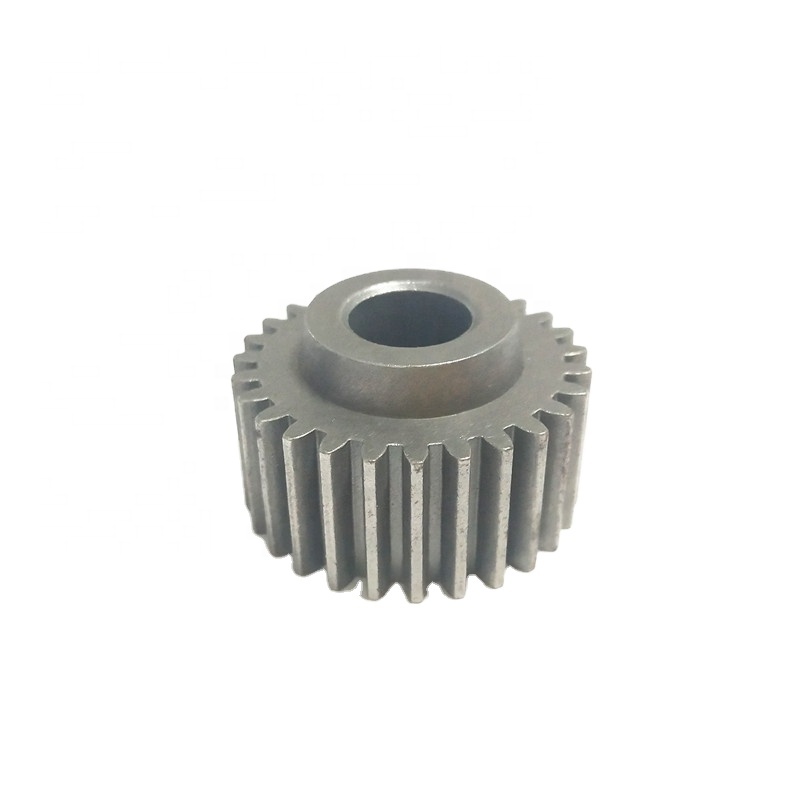
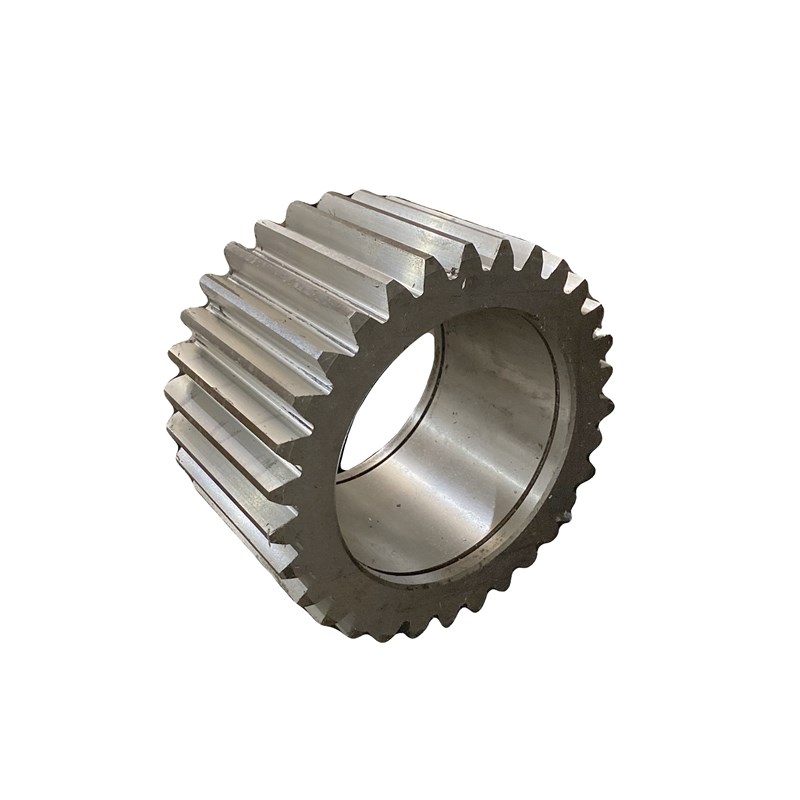
In high-speed and heavy-duty power transmission systems widely used in automotive transmissions, precision industrial machinery and aerospace equipment, crowned gears are irreplaceable core transmission components thanks to optimized tooth crowning modification design. The special arc-shaped tooth profile can effectively compensate gear shaft deflection, assembly misalignment and running vibration errors during meshing. It greatly reduces edge contact stress, cuts transmission noise, boosts overall load-bearing capacity and extends the service life of gear pairs. Nevertheless, high-precision crowned gear machining has long been a difficult bottleneck restricting high-end gear manufacturing. As a professional high-precision gear manufacturer with independent R&D capabilities, Gearseiko has fully iterated and optimized full-chain crowned gear processing technologies, covering early traditional profiling processes and modern full closed-loop CNC hobbing solutions. This article systematically sorts out the technical iteration logic of crowned gear machining, and shares Gearseiko’s mature on-site engineering practices for mass production.
1. Working Principle of Crowned Gear Hobbing
The core difference between standard gear hobbing and crowned gear hobbing lies in the composite motion track of the hob. In conventional straight hobbing processes, the hob only makes fixed axial vertical feeding following workpiece rotation, with stable and unchangeable feeding parameters matched by fixed change gears throughout the whole machining cycle.
To achieve uniform tooth crowning modification, an additional synchronous radial feeding motion must be superimposed on the standard hobbing workflow. With each full rotation of the workpiece worktable, the hob carries out quantitative radial linkage feeding. Through the coordinated compound motion of vertical slide carriage feeding and horizontal column reciprocating movement, the hob spindle runs along a standard circular arc trajectory. This targeted arc motion finally forms symmetrical crown tooth profile on both ends of gear tooth width. Such processing logic can be realized by mechanical refitting of ordinary hobbing machines or external auxiliary processing attachments.
2. Three Traditional Profiling Machining Technologies & Their Defects
Before the large-scale popularization of CNC gear processing equipment, all crowned gears relied on profiling auxiliary devices for forming machining. The mainstream traditional profiling technologies are divided into three categories, all with obvious inherent limitations unable to meet modern high-precision mass production demands:
2.1 Hydraulic Profiling Mechanism
This structure adopts hydraulic servo linkage system: the horizontal column follows vertical slide carriage feeding to realize synchronous hydraulic driving movement. It features simple machine tool refitting, low early transformation cost and easy on-site installation. However, hydraulic components are susceptible to oil temperature fluctuation, oil pressure deviation and internal leakage. The feeding stability and repeated positioning consistency are poor, resulting in unstable tooth crowning volume and inconsistent tooth profile precision between batches. This method is only suitable for low-precision, low-batch non-critical gears and gradually eliminated by mainstream factories.
2.2 Electromechanical Profiling Mechanism
Composed of electronic control circuit, mechanical transmission structure and customized profiling template, this semi-automatic profiling scheme improves the stability defect of hydraulic systems. During vertical feeding of the tool carriage, the curved template triggers inductive probes, and signals are transmitted to inductance comparators and relay control units to control positive and negative rotation of driving motors. The motor drives the column to make intermittent horizontal reciprocating motion through reducers to complete arc hobbing track.
Compared with hydraulic profiling, it reduces manual intervention and improves processing repeatability. But it still depends on customized templates, with long mold opening cycle and poor flexibility for different crown modification parameters.

2.3 Pure Mechanical Profiling Mechanism
Driven purely by cam and linkages without any electric or hydraulic auxiliary control, this earliest profiling solution has extremely rigid motion tracks. It requires one exclusive cam template for each different crown height, module and tooth width. The setup process is complicated, debugging cycle is long, and modification parameter adjustment is inflexible. This technology has been completely phased out in current precision gear manufacturing industry.
Common Pain Points of All Traditional Profiling Processes
-
Massive customized templates required, high mold opening cost and long production lead time
-
Complicated manual clamping and parameter debugging, extremely low production efficiency
-
Poor processing flexibility, unable to respond quickly to customized crown modification demands
-
Low dimensional consistency of finished tooth crown, high subsequent rejection rate
3. Full Closed-Loop CNC Machining: Gearseiko’s Optimized Core Solution
Aiming at all defects of traditional profiling technology, Gearseiko upgrades ordinary hobbing machines with independent developed full closed-loop CNC servo control system, which becomes our standard process for mass production of high-precision crowned gears. Equipped with DC servo driving system and high-precision grating ruler linear position feedback module, the whole system realizes full digital automatic control without manual template assistance.
This CNC hobbing system is installed as an external matched accessory on existing hobbing equipment, realizing seamless docking with original machine tool functions. It supports one-click switching between standard gear hobbing and crowned gear hobbing without changing original machine tool structure.
Core Advantages of Gearseiko CNC Crowned Gear Hobbing
-
No customized templates needed: All crown modification parameters are digitally set on human-machine interface, saving template manufacturing cost and shortening production preparation cycle greatly
-
Eliminate column creeping error: High-precision grating ruler real-time position feedback forms closed-loop control, avoids low-speed creeping of machine column, optimizes gear tooth surface roughness and improves surface finish
-
Full tooth width consistent crown profile: Compensate transmission backlash error of traditional radial feeding chain, eliminate middle cylindrical tooth section, ensure uniform and complete tooth crowning from left to right tooth width
-
Strong flexible production capability: Support arbitrary crown height, arc radius and tooth width parameter adjustment, perfectly meet diverse customized crowned gear demands for different transmission equipment
4. Hardware & Software Architecture of Gearseiko Independent CNC System
4.1 Complete Hardware Configuration
The whole set of servo control hardware is matched and optimized independently by Gearseiko’s R&D team, including three core units:
-
DC servo driving unit: Thyristor power supply module matches DC driving motor, providing stable and stepless feeding power
-
Position feedback unit: High-precision grating ruler digital display and column position sampling interface, realizing real-time monitoring and error feedback of horizontal displacement
-
Mechanical transmission unit: Planetary cycloidal pinwheel reducer and claw clutch, connected with original manual handwheel of hobbing machine to realize free switching between automatic CNC mode and manual debugging mode
4.2 Modular Software System
The supporting control software adopts five independent modular designs to ensure stable operation and convenient operation:
-
Human-machine interaction module: Realize parameter input, function selection, operation monitoring and alarm display
-
Crown gear mathematical model & interpolation module: Calculate standard arc motion track and complete tooth crown interpolation operation
-
Full closed-loop position control module: Real-time position correction and feeding linkage control
-
Error detection and automatic compensation module: Detect mechanical backlash and thermal deformation errors, and automatically compensate in real time
-
System protection subroutine module: Overload protection, timeout protection and emergency stop protection to ensure machine tool safety
Before formal machining, operators only need to input hob vertical feed speed, crown radius, modification volume and workpiece parameters on the touch screen. The system automatically completes initialization reading, parameter preprocessing and arc interpolation calculation without repeated mechanical debugging.

Conclusion
The manufacturing history of crowned gears is a process from passive mechanical profiling to active digital CNC precise control. Traditional hydraulic, electromechanical and mechanical profiling processes are restricted by templates and mechanical errors, unable to adapt to current high-precision and flexible gear manufacturing demands. Relying on self-developed full closed-loop CNC hobbing system, Gearseiko solves the long-standing pain points of unstable crown accuracy, poor batch consistency and low production efficiency in crowned gear processing.
We support both standard and non-standard customized crowned gears, covering full specifications for high-speed and heavy-duty transmission scenarios. Our mature CNC engineering practice ensures stable tooth profile accuracy, consistent crown modification amount and excellent meshing performance of every finished gear.
Upgrade your crowned gear manufacturing process with Gearseiko’s CNC hobbing technology for higher precision and better batch consistency.
FAQ | Crowned Gear Machining & CNC Hobbing Technology
Q1: What is the core function of crowned gear tooth crowning modification?
A1: It compensates shaft deflection and assembly errors during gear meshing, avoids tooth edge contact, reduces transmission noise, relieves meshing stress and improves overall load capacity and service life.
Q2: What motion principle is adopted for crowned gear hobbing?
A2: On the basis of conventional vertical hobbing feed, synchronous radial hob feeding is added. The composite motion of vertical slide carriage and horizontal column makes the hob move along a circular arc track to form crown tooth profile.
Q3: What are the disadvantages of traditional profiling processing methods?
A3: They need lots of customized templates, have long setup time, poor production flexibility, unstable machining precision and low batch consistency, not suitable for modern mass production.
Q4: What advantages does Gearseiko’s closed-loop CNC system have?
A4: No templates required, free digital parameter adjustment; eliminates column creeping and transmission backlash errors; realizes full-tooth-width uniform crown profile; improves production efficiency and finished gear surface quality greatly.
Q5: Can the CNC system be refitted on ordinary hobbing machines?
A5: Yes. Gearseiko’s CNC servo system is designed as external accessories, which can be directly installed on conventional hobbing machines without changing original main machine structure, supporting quick mode switching.
Q6: What application scenarios need crowned gears most?
A6: High-speed and heavy-duty transmission equipment including automotive transmissions, precision industrial robots, machine tool transmission systems and aerospace power mechanisms.
Key Considerations in Precision Hobbing Technical Insights from Gearseiko
Mastering the Art of Tooth Machining for Heavy Duty Applications
Related Article