Current Status of Research on the Reliability of Gear Structures
From Structural Safety to High‑Reliability Gears: Gearseiko’s Continuous Breakthrough in Gear Structural Reliability Research
In 1947, the concept of “structural safety” was first introduced, laying the theoretical foundation for structural reliability. It made engineers recognize the random factors inherent in real structures and brought probabilistic analysis and probabilistic design into practical engineering. That same year, Soviet scholars proposed the basic idea of the first‑order second‑moment method, along with formulas for calculating structural failure probability and reliability indices. In the decades that followed, successive contributions from researchers such as Cornell, Hasofer, Lind, Rackwitz, Zhao Guofan, Li Yungui, and many others drove reliability theory from linear to nonlinear, from normal to non‑normal distributions, and from first‑order to second‑order methods. In 1968, R.L. Disney and others gave reliability calculation formulas for various common stress‑strength distribution combinations. In 1969, C.A. Cornell proposed using the reliability index β as a measure of structural safety and established a second‑moment model for structural safety assessment. In 1974, A.M. Hasofer et al. introduced a reliability index defined by the failure surface – the improved first‑order second‑moment method. In 1978, D. Kececioglu proposed a fatigue strength reliability design method based on the interference model, which was widely applied in engineering. That same year, R. Rackwitz et al. presented the “equivalent normal” method, extending the improved first‑order second‑moment method to non‑normal variables. In 1984, Zhao Guofan developed a reliability analysis method suitable for non‑normal variables, becoming one of the earliest researchers in China to work on reliability theory. Also in 1984, K. Breitung proposed the second‑order reliability method, which provides a secondary correction to first‑order reliability results. In 1994, Li Yungui et al. addressed reliability analysis of correlated random variables in a generalized random space and presented an asymptotic reliability analysis method using Laplace integration theory. Gong Jinxin et al. proposed an adaptive step‑size control method based on the nonlinearity of the performance function, achieving control over the iteration process and convergence – a fairly general reliability index calculation method.

As reliability techniques were increasingly introduced into automobiles, aviation, aerospace, power generation equipment, and other fields, the limit state equations of structural failure modes often became implicit and highly nonlinear, rendering the above methods no longer applicable. For such problems, the most common approach is the Monte Carlo method, which is based on the law of large numbers and the central limit theorem. It is a high‑precision reliability research method. However, its huge computational workload limits its application, and it is often used only to validate other methods. Especially when the system failure probability is very small, to ensure a sufficiently reliable estimate (i.e., a small coefficient of variation), Monte Carlo simulation time increases dramatically. Therefore, it is difficult to perform reliability analysis for small failure probabilities and implicit performance functions in a short time.
Studies have found that reliability analysis of complex structures faces two major challenges. First, designers tend to adopt large safety margins to ensure safety and conservatism – meaning that such structural products have extremely high reliability. Evaluating such reliability levels with Monte Carlo random simulation requires an enormous number of sample points. Hence, small failure probability problems are currently a key focus of reliability research. Second, in engineering products, the limit state function is often implicit. For a gear system, obtaining dynamic characteristics requires numerical computation methods. To obtain more realistic structural responses, researchers often increase model complexity to improve computational accuracy, and each simulation demands substantial computation time. Therefore, it is also difficult to calculate system reliability through large‑scale Monte Carlo simulations.
For the first problem, researchers have proposed various variance reduction techniques, such as importance sampling, directional sampling, and subset simulation. Although these techniques can reduce the required sample size to some extent, their applicability is limited. For example, the selection of the sampling function affects the efficiency and accuracy of importance sampling; the accuracy of subset simulation is influenced by the correlation among sample points. For the second problem, current research tends to build more complex and realistic models. For a gear transmission system, for instance, models have evolved from pure torsional to bending‑torsional, then to bending‑torsional‑axial or bending‑torsional‑axial‑swing models, with complexity and computational cost increasing accordingly. To address the high computational cost, researchers often resort to first‑order or second‑order reliability methods. However, these methods have inherent potential errors, making it difficult to guarantee the accuracy of the results.
With the advancement of science and technology, structural complexity continues to increase, and reliability analysis has become a key factor for product safety. Driven by other disciplines, structural reliability theory is showing a positive development trend, and reliability research has attracted widespread attention from scientists and engineers.
It is precisely in this context that Gearseiko, a manufacturer focused on high‑precision gears, has been transforming structural reliability research from academic papers into tangible engineering practice. We understand that gear reliability is not an isolated calculation problem but a system‑level engineering task spanning design, materials, manufacturing, and testing.
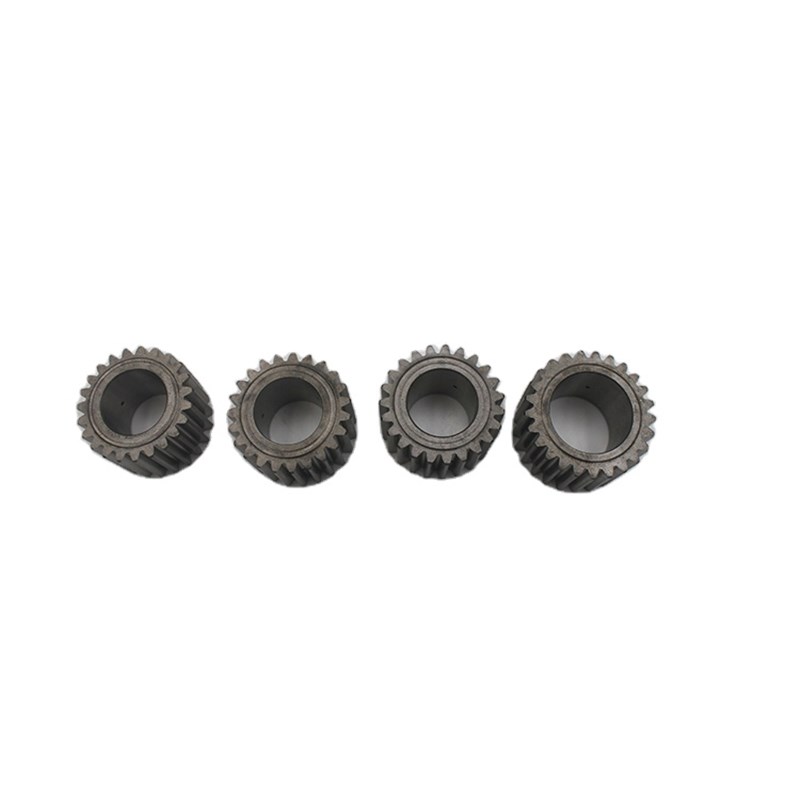
Building on classical reliability theory, Gearseiko’s R&D team integrates modern numerical simulation and intelligent algorithms to form our own technical approach:
-
Multi‑source uncertainty quantification: For random factors such as geometric tolerances, material dispersion, and dynamic load fluctuations in gear meshing, we establish statistical distribution models based on measured data, avoiding subjective assumptions.
-
Adaptive surrogate modeling: For implicit performance functions of bending‑torsion‑axial‑swing coupled systems, we employ surrogate models such as Kriging and neural networks to replace high‑fidelity simulations. This improves reliability calculation efficiency by one to two orders of magnitude while maintaining accuracy.
-
Small failure probability algorithms: By combining importance sampling and subset simulation in a hybrid strategy, together with Gearseiko’s self‑developed adaptive iterative convergence control algorithm, we can stably solve failure probabilities down to 10⁻⁵ or lower, with cross‑validation using a small number of Monte Carlo check points.
Today, Gearseiko has integrated the above reliability analysis methods into our in‑house gear design platform. From planetary gear trains in wind turbine gearboxes to accessory drive gears in aero‑engines and drive gears in high‑speed trains, the reliability of our products under extreme operating conditions has been rigorously verified through theoretical calculation and bench testing. Structural reliability theory has evolved for more than seven decades, and Gearseiko’s mission is to bring these advanced methods out of academic papers and into production lines – turning them into quantifiable safety margins for every precision gear.
At the forefront of gear reliability research, Gearseiko continues to keep pace with academic advances, using data‑driven models to tackle implicit performance functions and intelligent sampling techniques to overcome the challenge of small failure probabilities. Because we believe that a truly high‑end precision gear must have not only micron‑level manufacturing accuracy but also a structural reliability that can withstand probabilistic analysis.
About Gearseiko
Gearseiko is committed to providing high‑precision, high‑reliability gear transmission solutions for global high‑end equipment. Grounded in structural reliability theory and integrating advanced manufacturing processes with numerical simulation technologies, we help our customers move from empirical design to probabilistic design – making every gear mesh trustworthy.
Current Status of Gear Reliability Research
Research Status of Gear Testing Technology
Related Article