Breakthrough in Gear Vibration Reliability Analysis
author: Cash
2026-05-08

2026 Gear Vibration Reliability: Breakthrough in Gear Vibration Reliability Analysis
In high-precision power transmission, vibration control of gear systems is a key indicator of operational stability and service life. Gear vibration not only affects the comfort of equipment operation but also directly relates to the structural integrity of gears—excessive vibration can accelerate wear, cause tooth damage, and even lead to catastrophic failure. At Gearseiko, we deeply understand the critical role of vibration reliability in high-end gear applications, which is why we integrate advanced vibration testing technology into our quality control system, ensuring every gear we produce meets the strictest vibration performance standards.
1. The Core Significance of Gear Vibration Reliability
Gear vibration is not just a simple mechanical movement phenomenon; it is closely related to the gear’s material properties, tooth geometric accuracy, lubrication condition, and meshing state. In high-precision transmission scenarios (such as aerospace, industrial robots, and high-speed drive systems), even slight vibration anomalies can lead to reduced transmission efficiency, increased noise, and accelerated fatigue of gear components. For example, excessive torsional vibration during gear meshing can cause uneven stress distribution, leading to premature cracking of tooth roots; radial vibration may damage the bearing system, affecting the overall stability of the transmission chain.
Gearseiko’s precision gears are designed to minimize vibration from the source: by optimizing tooth profile parameters, improving surface finish, and strictly controlling the meshing clearance, we reduce the vibration excitation source during gear operation. At the same time, we conduct targeted vibration testing for each batch of gears to ensure that the vibration amplitude and frequency are within the design range, laying a solid foundation for the long-term stable operation of the equipment.
2. Key Factors Affecting Gear Vibration
The vibration performance of gears is affected by multiple factors, and each link directly determines the reliability of the transmission system:
- Tooth Profile Accuracy: Deviations in tooth profile (such as involute error, helix angle error) will cause uneven meshing, leading to periodic impact and generating vibration;
- Lubrication Condition: Insufficient lubrication or improper lubricant type will increase friction between tooth surfaces, resulting in abnormal vibration and noise;
- Material and Heat Treatment: Uneven hardness or unstable microstructure of the gear will cause inconsistent stress distribution during meshing, triggering vibration concentration;
- Meshing Clearance: Excessive or insufficient meshing clearance will lead to impact vibration during gear engagement and disengagement.
Based on these influencing factors, Gearseiko has established a complete vibration performance control system, covering design, processing, testing, and other links, to fundamentally reduce vibration risks.
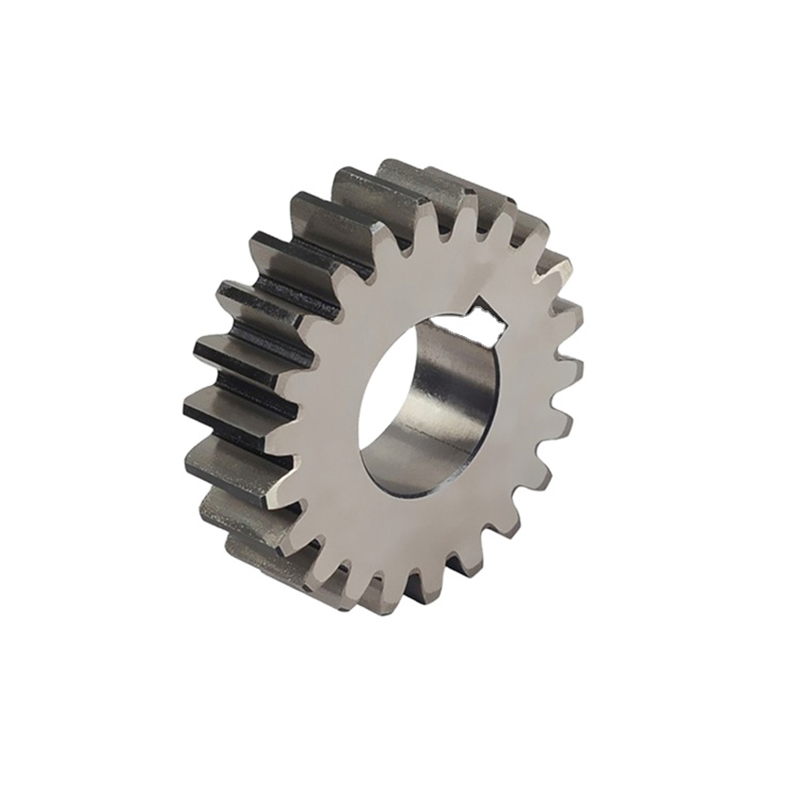
3. Gearseiko’s Vibration Testing and Optimization Solutions
To ensure that the gear system maintains stable vibration performance in actual operation, we adopt a “testing + optimization” dual-driven strategy:
- Pre-production vibration simulation: Use professional simulation software to predict the vibration characteristics of gears under different working conditions, optimize tooth profile and meshing parameters in advance, and avoid potential vibration excitation points;
- In-process vibration monitoring: During the gear processing, real-time detect the vibration data of the processing process, adjust the cutting parameters in time, and avoid the residual stress caused by processing defects leading to vibration;
- Post-production vibration testing: Use high-precision vibration testing equipment to detect the vibration amplitude, frequency, and noise level of the gear under rated load, and eliminate unqualified products that do not meet the vibration standards;
- Targeted optimization: For gears with abnormal vibration, analyze the root causes (such as tooth profile error, meshing clearance, etc.), and adjust the process parameters to ensure that the vibration performance meets the application requirements.
4. Application Scenarios of Vibration Control
Gear vibration control is particularly critical in high-demand fields:
- Aerospace Transmission: Strictly control the vibration amplitude to avoid affecting the stability of the entire aircraft or equipment;
- Industrial Robot Joints: Ensure the smooth operation of the robot arm, avoid vibration affecting the positioning accuracy;
- Electric Vehicle Reducers: Reduce vibration and noise to improve the driving experience and extend the service life of the reducer;
- High-precision Transmission Equipment: Ensure the stability of the transmission process, avoid vibration affecting the processing accuracy or product quality.
At Gearseiko, we not only focus on the static accuracy of gears but also pay more attention to the dynamic vibration performance, making every gear not only meet the precision requirements but also maintain stable and low-vibration operation in long-term use.
Gear Random Vibration Reliability Analysis Based on Process Excursion Theory
Bending Fatigue Testing Enhances High-Precision Gear Performance
Related Article