Bending fatigue failure and contact fatigue failure of the gear teeth
Understanding Bending and Contact Fatigue in High-Precision Gears: Insights from Gearseiko
In the world of high-performance power transmission, gears are expected to deliver reliability under extreme conditions. Yet even the most精密齿轮 can fail. Two of the most common failure modes—bending fatigue (tooth root fracture) and contact fatigue (pitting and spalling)—account for the majority of premature gear failures. At Gearseiko, we specialize in manufacturing premium precision gears designed to resist these fatigue mechanisms. In this article, we’ll explore the root causes, stress behaviors, and failure processes of bending and contact fatigue—and how our engineering approach mitigates these risks.
Bending Fatigue: When the Tooth Root Reaches Its Limit
Bending fatigue occurs when cyclic loading generates tensile and compressive stresses at the tooth root. Through detailed failure analysis, Gearseiko engineers have confirmed that the maximum tensile stress appears on the loaded tooth flank (drive side) at the root surface, while the maximum compressive stress develops on the opposite (coast) side. A zero-stress point exists below the intersection of the tooth centerline and the root circle.
Stress concentration factors on the drive-side root can vary between 1.4 and 2.5, making this area the primary site for crack initiation. Once a micro-crack forms at the root surface, it propagates toward the zero-stress point. As the crack grows, the zero-stress zone shifts toward the coast-side root. Eventually, the remaining cross-section can no longer support the load, leading to sudden tooth fracture.
On the fracture surface of the first broken tooth, two distinct zones are typically visible: a smooth crack propagation zone (where fatigue slowly advanced) and a rough, instantly fractured zone with bright metallic luster and ductile failure features. This pattern is a telltale sign of bending fatigue.
At Gearseiko, we counteract bending fatigue through optimized root fillet design, controlled shot peening, and using high-cleanliness alloy steels. Our precision grinding and finishing processes minimize stress concentrations, significantly extending bending fatigue life.
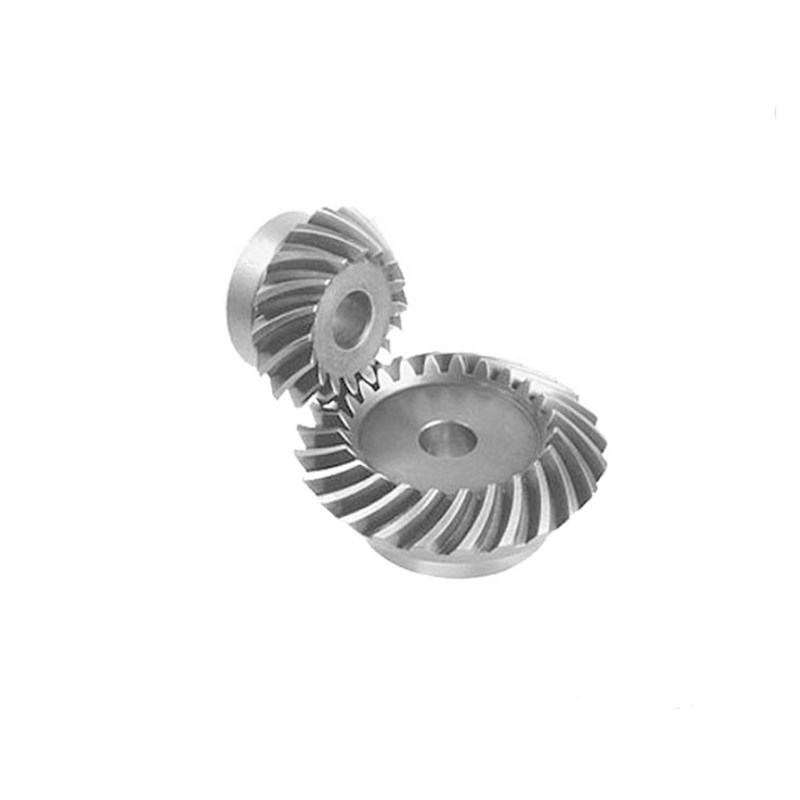
Contact Fatigue: The Hidden Enemy Below the Surface
Contact fatigue, often manifesting as pitting or spalling, originates from repeated Hertzian contact stresses. Unlike bending fatigue, contact fatigue cracks typically begin below the surface—specifically 0.18 to 0.30 mm beneath the contact area, where the maximum shear stress occurs. These cracks initially run parallel to the surface. Under continuous rolling-sliding cycles, they may deflect upward, eventually causing small pieces of material to detach.
Pitting often occurs in three zones: at the pitch point (pure rolling) and on either side of the pitch line (combined rolling and sliding). Early-stage pits have edges perpendicular to the surface, but subsequent rolling flattens them. In many cases, pitting remains localized, does not propagate, and can even “self-heal” under favorable lubricant and operating conditions. However, Gearseiko’s experience shows that ignoring even minor pitting can lead to progressive damage.
Two distinctive features separate rolling-contact fatigue pitting from other forms:
-
No plastic deformation is observed on the damaged surface.
-
In hardened surfaces containing martensite and retained austenite, a unique “butterfly wing” microstructure appears—especially when shear stresses are high and surrounding material constrains plastic flow.
The Role of Sliding and Rolling: Why Gear Position Matters
When two contacting surfaces move at identical speeds, pure rolling dominates. But gear teeth experience varying sliding velocities. At the tooth tip, sliding and rolling occur in the same direction (positive sliding). At the tooth root, they move oppositely (negative sliding), which is more severe. Negative sliding shifts the maximum shear stress toward the surface, promoting surface-initiated pitting.
Consequently, contact fatigue is more likely to initiate at the dedendum (root area) of the tooth, where pits tend to be larger and more damaging. Severe pitting can even trigger bending fatigue. Another high-risk zone is the lowest point of single-tooth contact—where the tooth meets the tip of the mating gear. Here, high stress, high sliding velocity, and negative sliding combine to accelerate contact fatigue damage rapidly.
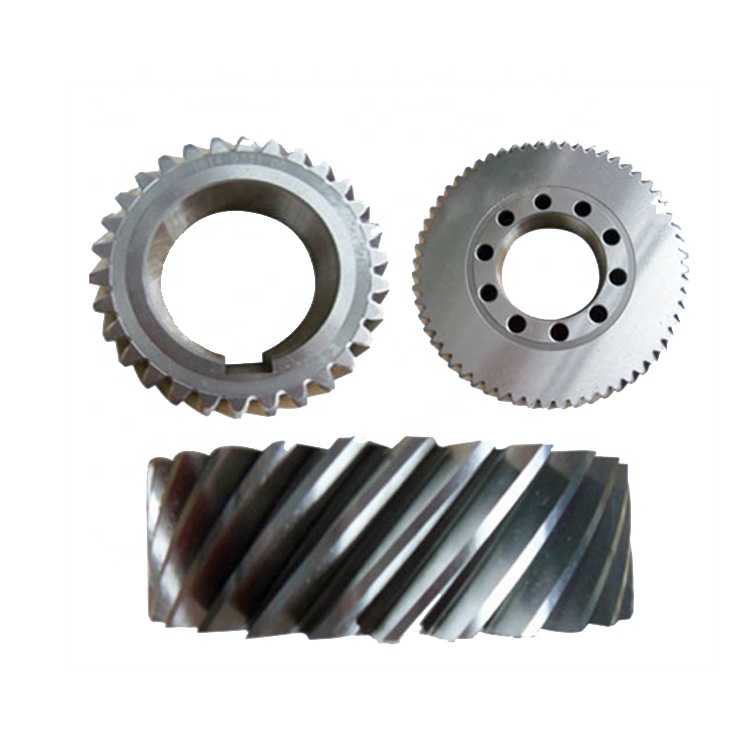
Spalling: When Pitting Goes Deep
Spalling is an advanced form of contact fatigue where larger metal fragments detach from the tooth surface. Two primary mechanisms lead to spalling:
-
Progressive pitting – Under cyclic stress, pits grow and cracks extend deeper into the material, eventually causing large cavities.
-
Subsurface-initiated spalling – Common in case-hardened gears, where metallurgical defects at the interface between the hardened case and the softer core become weak points. Because these defects lie deep, spalling craters are typically larger and deeper than standard pits.
Gearseiko’s Approach: Engineering Fatigue Resistance
Understanding these failure mechanisms allows Gearseiko to design and manufacture gears with superior fatigue resistance. We control material cleanliness, optimize heat treatment profiles (carburizing, nitriding, induction hardening), and apply advanced finishing technologies (profile grinding, superfinishing) to minimize stress concentrations and subsurface shear stress. Our quality assurance includes non-destructive testing and rigorous validation under real-world loading conditions.
Whether your application demands high-speed industrial drives or heavy-duty automotive transmissions, Gearseiko delivers precision gears engineered to resist bending and contact fatigue—ensuring longer life, higher reliability, and lower total cost of ownership.
Looking for durable, high-precision gears? Contact Gearseiko today to discuss your application requirements.
Gear reliability test method
The tooth surface of the gear has flaked off.
Related Article