Background and Significance of Gear Transmission Reliability
1. Introduction: The Enduring Dominance of Gear Transmission
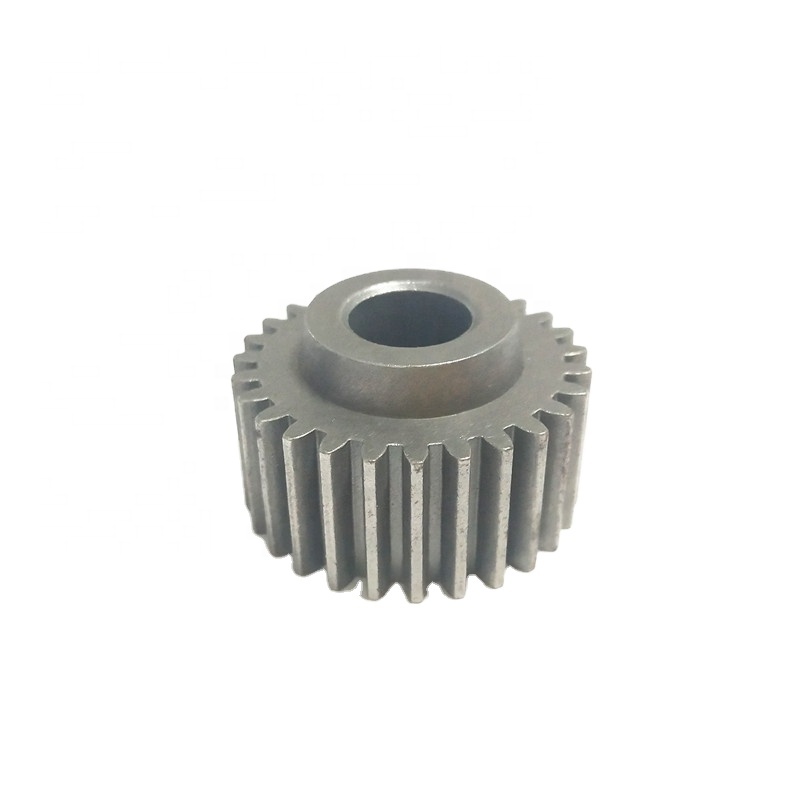
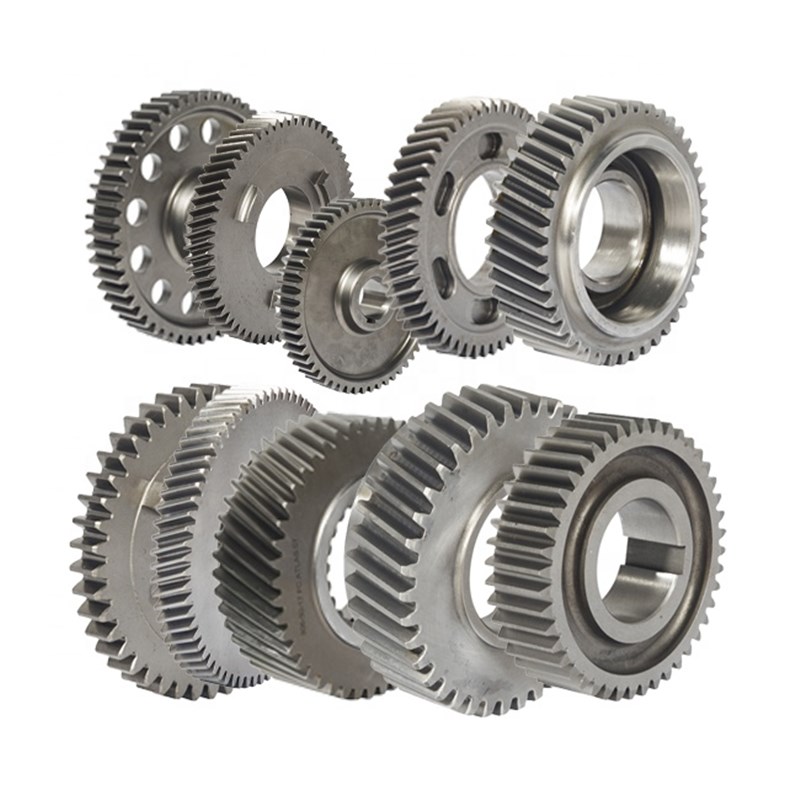
Gear transmission is one of the most common and fundamental mechanical drive forms in modern engineering. Compared with other transmission methods—such as belt drives, chain drives, hydraulic transmissions, and electric drives—gear transmission offers a series of outstanding advantages: wide power range, high transmission efficiency, high pitch line velocity, accurate transmission ratio, long service life, and compact structural dimensions. These inherent benefits have made gear transmission the preferred solution for countless industrial applications over the past century.
In recent years, significant progress has been made in the manufacturing technology of other transmission components, and electric drive technology has also seen rapid development. However, gear transmission remains the dominant drive form across various mechanical sectors. Why is this the case? Because in demanding environments involving heavy loads, high speeds, shock loads, or extreme temperatures, gear transmission consistently delivers stable and reliable power transfer. Its ability to maintain precise speed ratios under varying loads, combined with its high power density, makes it irreplaceable in critical machinery such as aero-engines, wind turbines, industrial robots, electric vehicles, and heavy-duty construction equipment.
2. What Determines Gear Transmission Reliability?
Reliability in gear transmission is not a single attribute but a system-level performance indicator. It encompasses:
-
Fatigue life: Resistance to tooth flank pitting, tooth root bending fatigue, and surface contact fatigue under cyclic loading.
-
Anti-scuffing capability: Ability to withstand high temperatures and pressures at the tooth contact zone without material transfer or scoring.
-
Wear resistance: Long-term dimensional stability under abrasive or adhesive wear conditions.
-
Noise and vibration characteristics: Smooth meshing and low dynamic excitation.
-
Fault tolerance: Ability to continue operating safely under minor manufacturing deviations or lubrication interruptions.
Achieving high reliability requires careful attention to material selection, heat treatment, tooth profile design, manufacturing accuracy, assembly precision, and lubrication conditions. In high-performance applications, even microscopic deviations in tooth flank geometry or surface integrity can significantly shorten service life.
3. Planetary Gear Transmission: A Benchmark of Reliability
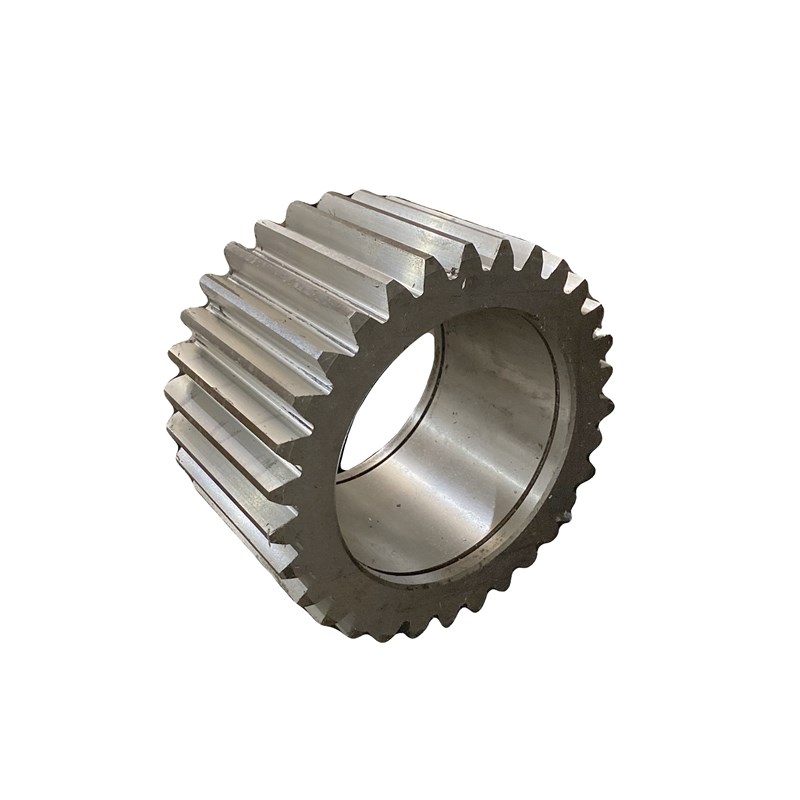
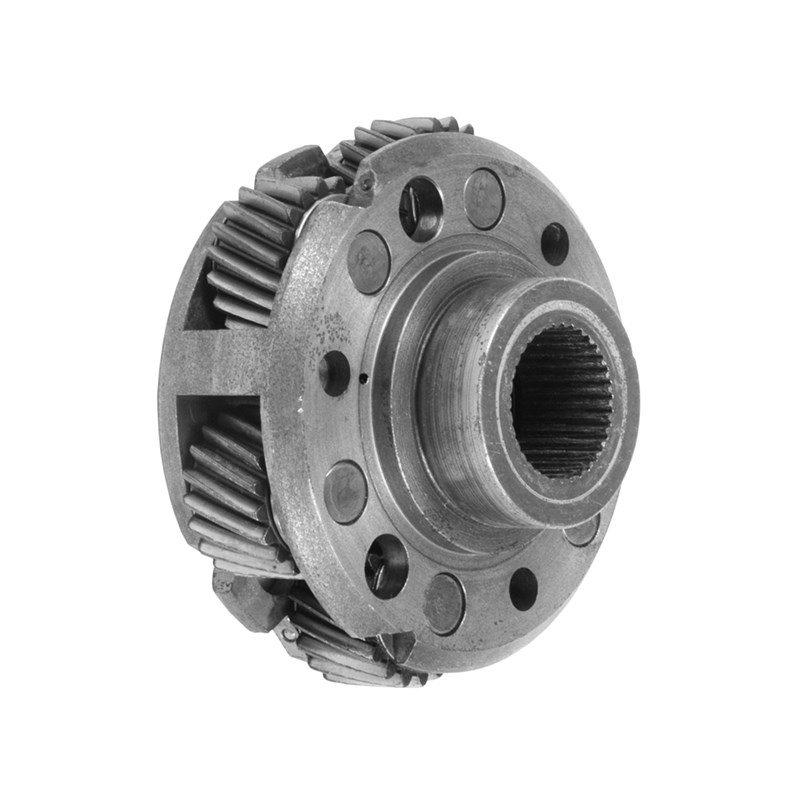
Among the various types of gear transmission, planetary gear transmission stands out as a typical representative. It has been widely adopted in important fields, especially those requiring low weight, compact structure, high efficiency, and long service life. From aerospace engine accessory drives to wind turbine gearboxes, from industrial robot precision reducers to electric vehicle coaxial drive axles, planetary gear transmission plays an indispensable role.
Compared with ordinary fixed-axis gear transmission, planetary gear transmission offers several remarkable advantages:
3.1 Large Transmission Ratio in a Compact Space
By appropriately selecting the tooth counts of the sun gear, planet gears, and ring gear, a planetary system can achieve speed reduction or increase ratios ranging from several times to over one hundred times within a very small envelope. This is particularly valuable when installation space is limited.
3.2 High Power Density and Compact Structure
Planetary gear transmission uses several evenly distributed planet gears to transmit motion and power simultaneously. The radial forces exerted by these planet gears on the central gears cancel each other out, resulting in low net radial load on the main shaft and high power-carrying capacity. For the same volume, a planetary gearbox can transmit significantly more power than an ordinary gearbox. In addition, because it uses internal meshing (ring gear), the available space is fully utilized.
3.3 Coaxial Input and Output Shafts
The input shaft and output shaft are on the same main axis. This coaxial characteristic greatly simplifies system integration, making planetary gearboxes ideal for applications with strict radial and axial space constraints, such as robotic joints and integrated electric drive axles.
3.4 Motion Synthesis and Decomposition
Planetary gear trains can be configured as differential mechanisms to achieve speed compounding and power splitting. This capability is widely used in vehicle steering differentials, hybrid powertrain coupling systems, and precision servo mechanisms.
3.5 Improved Load Distribution and Smooth Operation
Because multiple planet gears share the load, the contact stresses on tooth flanks and bending stresses at tooth roots are more evenly distributed. This results in lower peak stresses, improved transmission smoothness, and reduced noise and vibration compared to ordinary gear drives.
In many practical applications, planetary gear transmission has already replaced ordinary gear transmission as the preferred solution for reducers, increasers, and speed variators in various mechanical systems.
4. The Hidden Challenges: Why Reliability Must Be Engineered
Despite the inherent advantages of the planetary gear principle, achieving high reliability in real-world applications is far from automatic. The following factors directly affect reliability:
-
Material quality: Inclusions, segregation, or inconsistent hardenability can lead to premature fatigue failure.
-
Heat treatment: Proper case hardening (carburizing, nitriding, induction hardening) and control of retained austenite, grain size, and residual stress are critical.
-
Tooth profile modification: Without proper tip relief and crowning, edge loading and mesh impact can drastically reduce gear life.
-
Manufacturing precision: Tooth profile deviation, pitch error, and runout affect load sharing among planet gears and increase dynamic excitation.
-
Assembly quality: Misalignment or improper bearing preload can cause uneven load distribution and premature wear.
-
Lubrication and cooling: Inadequate oil film thickness leads to scuffing, while insufficient cooling accelerates fatigue.
In high-speed or heavy-load applications, even small manufacturing defects can cause catastrophic failure in a short time. Therefore, reliability is not simply a design margin but a result of extreme process control throughout the entire production chain.
5. Gearseiko: Engineering Reliability from the Ground Up
This is precisely where Gearseiko excels. As a manufacturer dedicated to high-end precision gears, Gearseiko understands that reliability must be built into every manufacturing step, not just verified at the end.
Gearseiko implements a comprehensive quality assurance system that includes:
-
Strict raw material control: Using only premium-grade alloy steels with full traceability and certification. Each batch is tested for cleanliness, hardenability, and grain structure.
-
Advanced heat treatment: State-of-the-art carburizing furnaces with precise atmosphere and temperature control, followed by controlled quenching and tempering. Post-heat-treatment residual stress measurement and optimization are standard.
-
Precision gear grinding: High-speed form grinding or generating grinding on CNC gear grinders achieving DIN or AGMA quality classes well above general industrial requirements.
-
Superfinishing and surface treatments: Optional processes such as superfinishing (isotropic superfinishing) or shot peening to improve surface finish, introduce compressive residual stress, and increase scuffing resistance.
-
100% in-process inspection: On-machine measurement of tooth profile, lead, and pitch deviations, complemented by offline CMM and gear measuring centers. Magnetic particle inspection and eddy current testing for critical components.
-
Full traceability: Every Gearseiko gear can be traced back to its raw material lot, heat treatment batch, and individual manufacturing parameters.
By combining advanced design support (including tooth contact analysis, FEA, and micro-geometry optimization) with rigorous manufacturing discipline, Gearseiko delivers planetary gear components that consistently achieve long, predictable service life even under demanding operating conditions.
6. Conclusion: Reliability as the Foundation of Progress
In summary, gear transmission reliability—particularly in planetary gear systems—is a fundamental enabler for the long-term, stable operation of high-end machinery. As Industry 4.0, electrification, and intelligent manufacturing continue to reshape industrial landscapes, the demands for higher power density, longer maintenance intervals, and greater energy efficiency will only intensify.
Only by deeply integrating elegant design principles with precision manufacturing processes can we create truly trustworthy gear drive solutions. Gearseiko is committed to this mission, working alongside global partners to push gear transmission technology to new heights through engineering excellence and craftsmanship.
Whether you are designing the next generation of wind turbines, electric vehicles, industrial robots, or aerospace actuators, reliability begins with the gears. Choose Gearseiko—where precision meets durability.
Current Status of Reliability Research on Gear Transmission Systems: Challenges and Breakthroughs
Precision Transmission Steel Metal motorcycle engine Helical Spur Gear
Related Article