A High Accuracy Alternative When Large Gear Shapers Are Unavailable
author: Cash
2026-06-22
Precision Internal Gear Hobbing: A High-Accuracy Alternative When Large Gear Shapers Are Unavailable | Gearseiko
Large internal gears serve as vital load-bearing transmission components widely deployed in heavy-duty planetary reducers, large ship lock drive systems and tunnel boring machinery. Gear shaping has long been the conventional manufacturing process for internal gears, yet it suffers from low processing efficiency and relies heavily on dedicated large gear shapers and oversized shaping cutters. Once such shaping equipment is unavailable, manufacturers will face severe production bottlenecks for large internal gear orders. As a professional manufacturer focusing on full-process precision gear fabrication with mature internal gear hobbing technology, Gearseiko adopts precision internal gear hobbing as a reliable substitute process. This method delivers accuracy comparable to gear shaping while significantly boosting production efficiency, effectively resolving manufacturing obstacles caused by the lack of large gear shaping machines.
1. Standard Machine Setup Specifications for Precision Internal Gear Hobbing
Precise and standardized machine debugging is the fundamental prerequisite for qualified internal gear hobbing. Gearseiko equips standard hobbing machines with special internal gear hob attachments to realize internal gear cutting without additional investment in large shaping equipment. The whole setup procedure follows unified calculation and adjustment standards.
1.1 Calculation of Indexing and Differential Change Gears
Technicians calculate indexing change gears according to the transmission schematic diagrams of both the hobbing machine and the internal gear hob head. Modern hobbing machines fitted with electronic gearbox modules support automatic high-precision parameter computation to reduce manual errors. Most well-designed internal gear hob heads feature the same transmission chain ratio as external gear hob heads. Therefore, the formulas for indexing and differential feed change gear calculation remain identical for internal and external gear hobbing, greatly shortening machine setup time.
1.2 Precise Angular Calibration of Hob Head
Adjusting the internal gear hob head to a specific angle φ is the core setup step. The angle must be calibrated to align the cutting direction of hob teeth with the tooth orientation of the internal gear, calculated by the unified formula: φ = β ± γ₀. β stands for the gear helix angle, and γ₀ refers to the hob lead angle. Unlike disc milling cutter adjustment, the hob’s central position stays unchanged after angular rotation, eliminating the need for secondary center correction and position compensation to simplify debugging.
1.3 Standard Hob Mounting Requirements
The finishing cutting teeth of the internal gear hob must pass strictly through the hob head’s centerline. When the hob thickness matches the benchmark mounting width of the hob head, operators must ensure the finishing cutting edge overlaps perfectly with the thickness symmetry line of the hob. Gearseiko implements standardized tool setting inspection workflows to avoid tooth profile deviation induced by offset hob installation and guarantee uniform cutting allowance on all gear teeth.
2. Working Principle & Structural Design of Special Internal Gear Hobs
2.1 Working Principle of Worm-Type Internal Gear Hobs
Worm-type fixed hobs are the most commonly adopted cutting tools for internal gear hobbing. Different from the generative enveloping cutting principle of ordinary external gear hobs, worm-type internal gear hobs adopt direct forming cutting, which shapes internal gear tooth spaces in one forming motion and adapts well to the narrow enclosed inner processing space of internal gears.
2.2 Unique Asymmetric Tooth Layout Design
A standard worm-type internal gear hob features 1 to 2 rows of spiral cutting teeth with differentiated functional design: only one independent finishing tooth fully matches the standard involute tooth profile of finished internal gears for final precision forming, while all other teeth are roughing teeth arranged on one side of the finishing tooth.
Roughing teeth are manufactured with gradually reduced tooth thickness and shortened tooth height. This asymmetric structure brings two core advantages: first, it completely separates roughing and finishing cutting procedures to prevent roughing teeth from scratching finished precise tooth flanks; second, it distributes cutting allowance evenly on each roughing tooth to balance instantaneous cutting load, lower tool wear and cutting vibration, and extend the overall service life of the hob.
2.3 Advanced Generative Hobs: Spherical & Ellipsoidal Hobs
For flexible small-batch production of multi-specification internal gears, Gearseiko applies upgraded spherical and ellipsoidal hobs based on the generative cutting principle. Breaking the one-hob-one-specification limitation of worm-type forming hobs, this advanced tool can machine all internal gears with the same module but varying tooth counts. In addition, the relieved tooth structure allows repeated resharpening without damaging original tooth profile precision, cutting tool customization costs and greatly improving process flexibility.
3. Core Advantages of Internal Gear Hobbing vs Traditional Gear Shaping
- Wide Equipment Compatibility: No costly large gear shapers and oversized shaping cutters required; processing can be completed on ordinary hobbing machines matched with low-cost internal gear hob attachments.
- Higher Processing Efficiency: Continuous spiral hobbing replaces intermittent reciprocating cutting of gear shaping, shortening production cycles by over 30%.
- Stable High Precision: Consistently achieves ISO Grade 6–7 precision, fully meeting the accuracy requirements of heavy-duty transmission equipment.
- Controlled Manufacturing Cost: Reduces extra equipment investment, custom tool expenses and production downtime losses caused by insufficient shaping equipment.
4. Gearseiko’s Strength in Precision Internal Gear Manufacturing
Equipped with a full lineup of high-precision hobbing machines, independent R&D team and professional tool debugging laboratory, Gearseiko masters three mainstream internal gear manufacturing processes: internal gear hobbing, form milling and gear shaping. We flexibly switch processes according to customers’ on-site equipment conditions, production batch sizes and precision standards. Our one-stop service covers process scheme design, tool setting debugging, formal cutting, heat treatment, full dimensional precision inspection and finished product delivery.
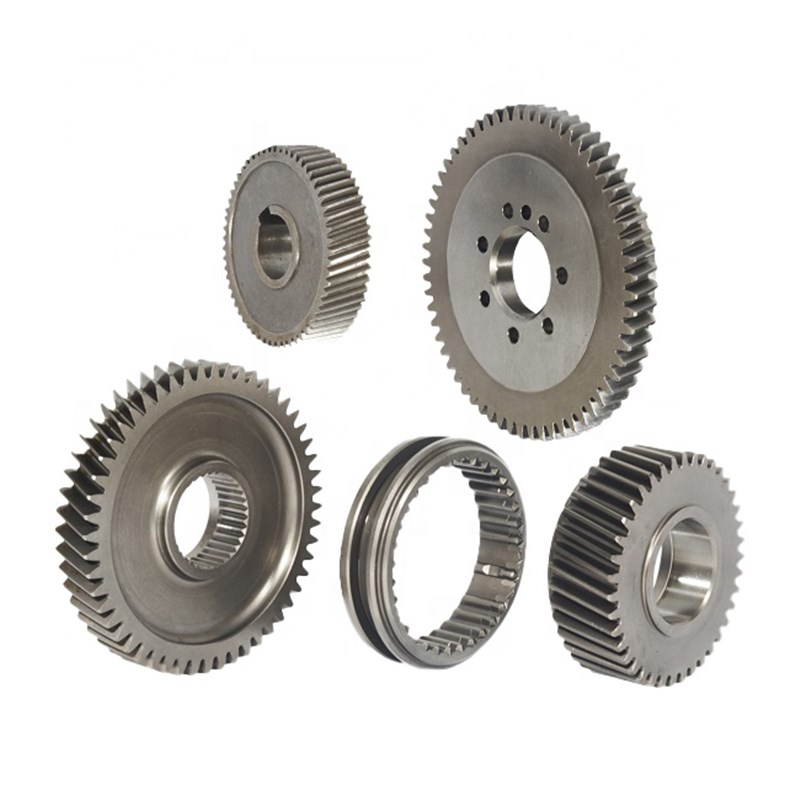
Supported by self-owned precision processing equipment, we also provide gear prototype fabrication and mirror rotary EDM services. Our product range covers micro-precision gears (M0.15–M1.5) and large-module heavy-duty internal gears, including spur gears, helical gears, racks, sprockets, timing pulleys, worm gears and bevel gears. We deliver customized OEM & ODM gear solutions for wind energy, mining, marine engineering, construction machinery and aerospace industries worldwide.
Conclusion
When large gear shaping equipment is unavailable, precision internal gear hobbing serves as an optimal substitute process featuring high accuracy, high efficiency and low equipment dependency. Accurate calculation of machine parameters, precise hob head angular adjustment and targeted structural design of internal hobs jointly secure the final processing quality of internal gears. Compared with traditional gear shaping, internal gear hobbing breaks equipment limitations, lifts production efficiency and controls manufacturing costs without compromising gear meshing precision.
Gearseiko reasonably matches gear shaping, form milling and internal gear hobbing processes for diverse internal gear projects, solving various complex production difficulties of large internal gears and supplying durable, high-precision transmission gear components for global heavy machinery manufacturers.
Internal gear hobbing eliminates equipment bottlenecks, delivering high-precision, cost-effective internal gear solutions without large gear shapers.
FAQ | Precision Internal Gear Hobbing Technology
Q1: Why can internal gear hobbing replace gear shaping?
A1: Internal gear hobbing reaches ISO Grade 6–7 precision equivalent to gear shaping; it can be processed on ordinary hobbing machines without large gear shapers and delivers higher continuous cutting efficiency.
Q2: Are change gear calculation formulas different for internal and external gear hobbing?
A2: No. With matched internal gear hob head attachments, the calculation principles and formulas for indexing and differential change gears are completely consistent for internal and external gear hobbing.
Q3: What is the function of the asymmetric tooth layout of internal gear hobs?
A3: It separates roughing and finishing cutting to avoid scratches on tooth flanks, evenly distributes cutting load, and reduces tool wear and cutting vibration.
Q4: What advantages do spherical generative internal gear hobs have?
A4: One single hob can machine multiple internal gears with the same module but different tooth numbers; the relieved tooth structure supports repeated resharpening to cut tool procurement costs.
Q5: What precision grade can Gearseiko’s internal gear hobbing achieve?
A5: It stably reaches ISO Grade 6 to Grade 7 precision, suitable for high-load, high-precision heavy-duty planetary reducers and tunnel boring equipment.
Q6: Can Gearseiko recommend the optimal process among hobbing, shaping and form milling?
A6: Yes. We offer free process evaluation based on gear module, tooth count, batch quantity, on-site equipment and precision requirements to select the most cost-effective manufacturing solution.
How Gearseiko Achieves High End Transmission Quality with Craftsmanship
A Technical Deep Dive for Precision Engineering
Related Article