2026 Contact Fatigue of Gear Teeth How High-Precision Gears Break Through the Life Bottleneck
author: Cash
2026-05-05
2026 Contact Fatigue of Gear Teeth: How High-Precision Gears Break Through the Life Bottleneck? | Gearseiko
In high-speed, heavy-load industrial transmission applications, the long-term reliable operation of gears is the core guarantee of equipment stability. However, contact fatigue – one of the most common failure modes of gears – remains a serious challenge for engineers.
Under cyclic meshing forces, micro-cracks initiate on the tooth flank surface, gradually develop into pitting and spalling, and eventually cause increased vibration, noise, and even tooth breakage in the entire drive system. So, how can we suppress contact fatigue at the source?
As a professional brand in the field of high-precision gears, Gearseiko, drawing on years of practical experience, provides an in-depth analysis of the mechanism of contact fatigue and the ways to counteract it. Explore Gearseiko’s contact fatigue prevention and high-precision gear solutions here.
1. The Nature of Contact Fatigue: Micro-Damage Under Hertzian Stress
Gear meshing is essentially an elastic contact between two curved surfaces under load. Theoretically, the contact mark on the tooth flank is just a line or a point; but under actual elastic deformation, it forms a tiny elliptical contact area. Because the contact area is extremely small, the surface material is subjected to very high Hertzian contact stress. Studies have shown that the maximum shear stress occurs precisely in the subsurface layer, not on the surface.
Under cyclic stress, the material exhibits complex elastic-plastic behavior. Depending on the microstructure and grain orientation distribution of the tooth flank, stress concentrates at specific locations (such as inclusions or grain boundaries), gradually initiating fatigue cracks.
Practice has found that hard, brittle, and sharp‑angled inclusions are ideal sites for crack initiation – they disrupt the continuity of the material matrix and become stress concentration sources. Once a crack forms, lubricating oil penetrates into the crack tip under high pressure, causing a "hydraulic wedging" effect that accelerates crack propagation and eventually leads to pitting or spalling of the surface layer.
2. Chain Reaction of Failure: From Pitting to Tooth Breakage
Contact fatigue does not occur in isolation. Once pitting or spalling appears on the working flank of a gear tooth, a series of severe consequences follow, affecting the entire drive system:
-
Secondary damage: Detached metal particles enter the lubricating oil, forming abrasives that accelerate wear of bearings, seals, and other gears, leading to abrasive wear failure.
-
Stress concentration: The edges of damaged areas become new stress concentration points, which can easily induce bending fatigue cracks under bending stress, eventually resulting in tooth breakage.
-
Load redistribution: The actual tooth profile of the failed tooth deviates from the theoretical profile, forcing adjacent teeth to share additional load, causing rapid overload failure propagation.
-
Dynamic performance deterioration: Vibration and impact of the gear pair increase significantly, operating noise rises, and the smoothness and reliability of the entire machine sharply decline.
It is clear that contact fatigue not only shortens the service life of the gear itself but also drags down the entire drive system, increasing maintenance costs and unplanned downtime.
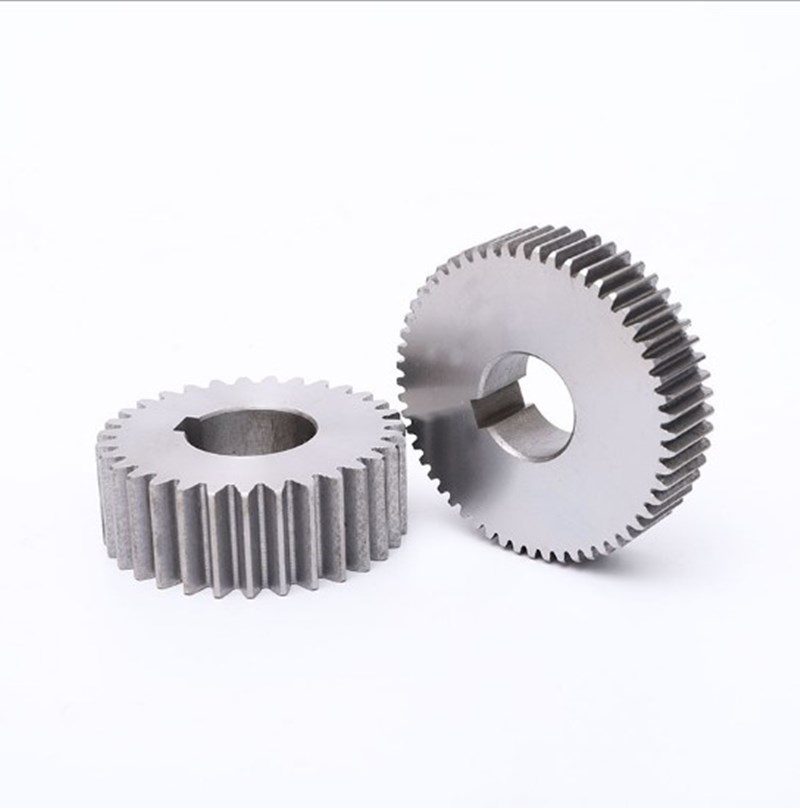
3. Gearseiko’s Anti‑Fatigue Approach: Precision Manufacturing & Material Technology
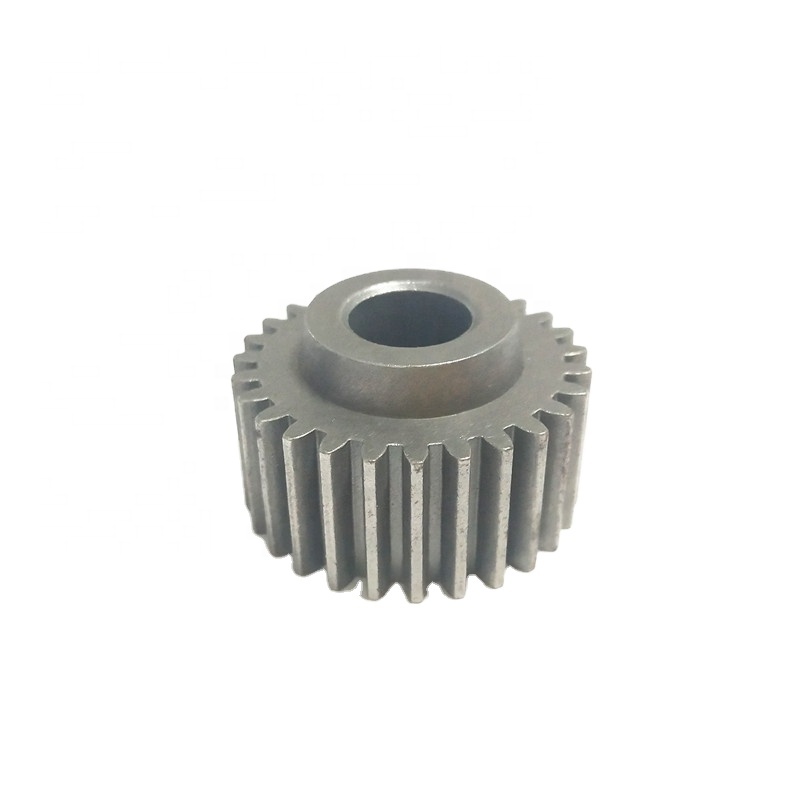
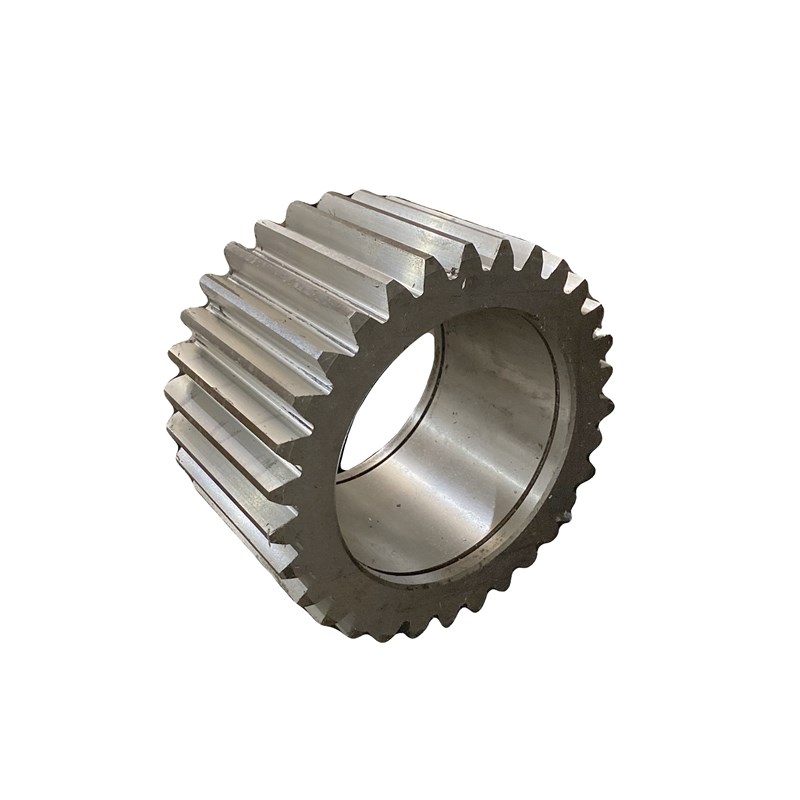
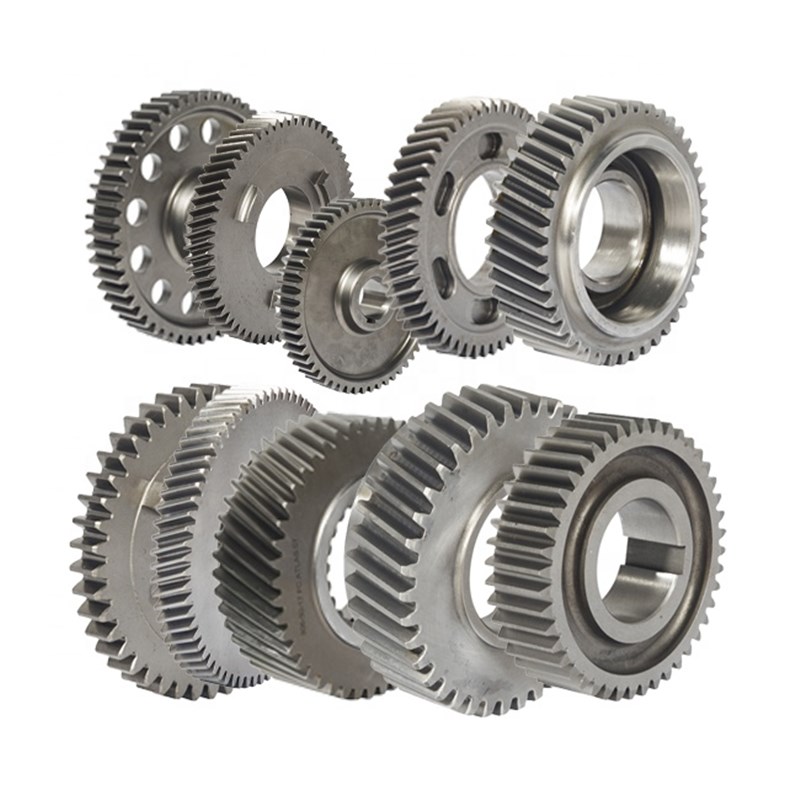
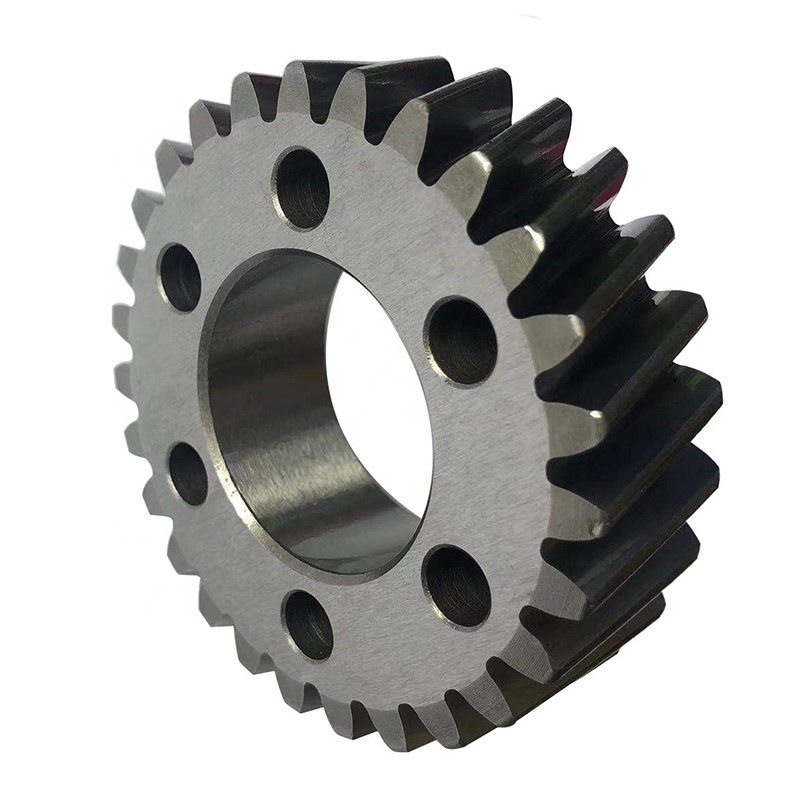
Facing the threat of contact fatigue, Gearseiko tackles the problem across the entire chain – from design, material, and machining to heat treatment – to provide customers with high‑precision gears (including spur gears, helical gears, and custom non-standard gears) that resist contact fatigue and break through the life bottleneck.
3.1 High‑purity material control
We strictly select steel suppliers and adopt vacuum degassing + electroslag remelting processes to minimize the size and quantity of brittle inclusions such as oxides and sulfides. Through metallographic inspection and ultrasonic testing, we ensure that the subsurface of the tooth flank is free of harmful inclusions – eliminating crack initiation sites at the source.
3.2 Micro‑geometry optimization of tooth flanks
Using finite element contact analysis, Gearseiko designs micro‑modified tooth profiles (tip and root relief, and crowning) to distribute contact stress evenly and avoid edge stress concentration. At the same time, we optimize surface roughness to Ra ≤ 0.2 μm, reducing local peak contact stress and further suppressing contact fatigue.
3.3 Advanced case hardening treatment
We employ carburizing and quenching + ultra‑precision grinding to obtain a high‑hardness (58‑62 HRC) case with a hardness gradient, while maintaining core toughness. A residual compressive stress is generated on the tooth flank, effectively counteracting external tensile stress and delaying crack propagation. Additionally, shot peening or carbonitriding can be applied to further enhance fatigue resistance.
3.4 Full traceability quality assurance
Every Gearseiko gear undergoes magnetic particle inspection, grinding burn detection, and contact pattern testing to ensure no micro‑cracks or grinding burns. We provide a detailed fatigue life prediction report to help customers anticipate maintenance intervals and avoid unplanned downtime. Learn more about Gearseiko’s simulation-driven contact fatigue prevention and precision manufacturing capabilities here.
4. Choose Gearseiko – Avoid the Cost of Unplanned Downtime
In wind power, new energy vehicles, aerospace, and heavy machinery, the cost of unplanned downtime caused by contact fatigue is often dozens of times higher than the value of the gear itself. Gearseiko is committed to delivering gears with predictable life and controllable failure modes, thanks to German/Japanese‑grade precision manufacturing technology and a strict quality management system.
We deeply understand that a micron‑sized pit can trigger a chain of disasters. That is why from material cleanliness to tooth flank topography, from residual stress distribution to lubrication condition matching, Gearseiko spares no effort in anti‑fatigue details.
FAQ: Gear Tooth Contact Fatigue Prevention & Solutions
Q1: What is the core cause of gear tooth contact fatigue?
A1: The core cause is high Hertzian contact stress on the tooth flank (maximum shear stress in the subsurface layer) under cyclic meshing forces, which initiates micro-cracks at stress concentration points (such as inclusions) and leads to pitting or spalling.
Q2: What chain reactions can gear contact fatigue trigger?
A2: It can cause secondary abrasive wear, new stress concentration (leading to tooth breakage), load redistribution (accelerating failure propagation), and deteriorated dynamic performance (increased vibration and noise).
Q3: How does Gearseiko eliminate contact fatigue crack initiation sites?
A3: We use vacuum degassing + electroslag remelting to produce high-purity materials, minimize harmful inclusions, and conduct metallographic and ultrasonic testing to ensure the tooth flank subsurface is free of defects.
Q4: What key measures does Gearseiko take to enhance gear anti-contact fatigue performance?
A4: High-purity material control, micro-geometry tooth profile optimization, advanced case hardening treatment (to form residual compressive stress), and full-traceability quality inspection.
Conclusion
Contact fatigue is the main bottleneck limiting the service life of high-precision gears in high-speed, heavy-load applications. Its mechanism starts with micro-crack initiation under Hertzian stress, develops into pitting/spalling, and eventually triggers a chain reaction of system failure.
Gearseiko addresses contact fatigue through a full-chain solution, integrating high-purity material control, precision design, advanced heat treatment, and strict quality assurance, helping gears break through the life bottleneck and ensuring long-term reliable operation of the entire drive system.
For more information on contact fatigue prevention, failure analysis, or custom gear solutions, please contact the Gearseiko technical team. Let your drive system say goodbye to the "pain of pitting" once and for all.
For more details about Gearseiko’s anti-contact fatigue precision gears, manufacturing capabilities, and ODM/OEM services, visit our official website //www.gearseiko.com and feel free to contact us for professional consultation.
Gearseiko – Precision drives reliability, anti‑fatigue creates value.
2026 Decoding Rolling Contact Fatigue The Hidden Challenge and Breakthrough for High-End Precision Gears
2026 Preventing Tooth Bending Fatigue Fracture How Gearseiko Builds More Durable Precision Gears
Related Article