2026 Breaking Through Nonlinearity Challenges How Gearseiko Reinvents Gear Reliability Analysis with Advanced Response Surface Technology
author: Cash
2026-04-30

2026 Breaking Through Nonlinearity Challenges: How Gearseiko Reinvents Gear Reliability Analysis with Advanced Response Surface Technology | Gearseiko
In modern high-precision gear manufacturing, key response functions such as tooth contact stress and transmission error often exhibit strong nonlinearity. Traditional finite element simulations are accurate but computationally expensive, making them difficult to embed directly into reliability analysis workflows.
Polynomial Response Surface Method (PRSM), due to its simple form and ease of programming, has long been considered an effective tool for tackling implicit limit state functions. However, as a large body of research has revealed, when dealing with strongly nonlinear problems, correlated variables, or highly complex implicit responses, standard quadratic PRSM suffers from significant limitations in fitting accuracy and global approximation capability.
This is precisely the core technical bottleneck that Gearseiko — as a technology pioneer in precision gearing — is committed to breaking through. Explore Gearseiko’s advanced response surface-driven gear reliability solutions here.
The Double-Edged Nature of Polynomial Response Surfaces
Since L. Faravelli introduced experimental design into response surface methodology and F.S. Wong combined two-level factorial designs with finite element analysis for slope stability and dynamic structures, PRSM has been widely applied in rock mechanics, civil engineering, railway bridges, aerospace, and beyond.
The core concept is straightforward: using a small number of deterministic experimental points, a least-squares regression is performed to obtain an approximate analytical expression between the structural response and the input random variables, thereby replacing the expensive true model.
But accuracy problems have always remained. Research has shown that when a gear system is subject to a large number of nonlinear random variables (such as material hardness fluctuations, tooth profile modification parameters, assembly deviations, lubrication conditions, etc.) with correlations among them, conventional quadratic polynomials cause a sharp increase in computational cost, while the fitted surface struggles to faithfully represent the true response surface.
An even more fundamental drawback is that this is a local approximation — if the location of the design point cannot be predetermined, constructing a suitable response surface becomes very difficult. Although scholars have proposed multiple response surfaces and improved sequential response surfaces, for strongly implicit, highly nonlinear functions such as gear contact stress, the accuracy bottleneck remains unresolved.
Gearseiko’s Technological Breakthrough: Precision Engineering Beyond Polynomial Response Surfaces
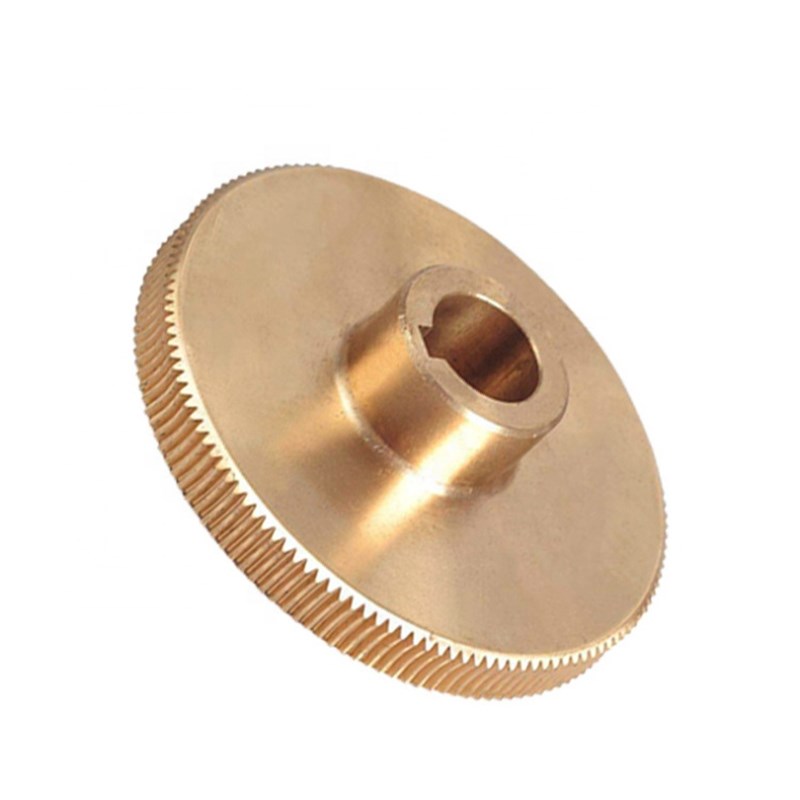
At Gearseiko, we understand that traditional response surfaces alone cannot satisfy the sub‑micron accuracy requirements of high‑end gear reliability analysis. Therefore, we have gone beyond conventional polynomial fitting by integrating adaptive sampling strategies, rational polynomial techniques, and machine learning surrogate models to build a hybrid precision‑enhanced framework specifically for implicit gear performance functions.
1. Rational Polynomials with Adaptive Partial Derivative Correction
Building on academic research into the influence of quadratic terms and rational polynomial techniques for partial derivative computation, we have developed an efficient approximation algorithm for gear contact stress fields. This method significantly improves local fitting quality near the design point while maintaining computational efficiency, avoiding reliability index drift caused by abrupt curvature changes.
This technology is particularly applicable to our high-precision gear prototypes and mass-produced gears, including spur gears, helical gears, and worm gears, ensuring sub-micron accuracy in reliability analysis.
2. Fusion of Sequential Response Surfaces with Global Approximation
The Gearseiko engineering team has combined a refined sequential response surface method with sparse grid sampling, progressively contracting the design space and adaptively updating the response surface. This strategy enables us to obtain robust global approximations even in strongly nonlinear regions (e.g., strain concentration zones at the tooth root fillet), completely overcoming the inherent limitations of “local approximation.”
Learn more about Gearseiko’s simulation-driven response surface technology and precision design capabilities here.
3. Specialized Validation Framework for Implicit Functions
Every Gearseiko precision gear undergoes cross‑validation between hundreds of high‑fidelity finite element measurements and response surface predictions. We quantitatively evaluate how different response surface functional forms affect reliability results, and calibrate the surrogate model accordingly.
This closed‑loop process ensures that even for extremely demanding applications — such as aviation or racing gearboxes, which are core application scenarios for our custom non-standard gears — the final reliability calculations maintain high confidence.

From Method Innovation to Tangible Gear Quality
For end users, what does all this technological investment mean? In short: more realistic life predictions, safer design margins, and superior transmission accuracy consistency. While ordinary gear manufacturers still rely on empirical formulas or low‑order response surface approximations, Gearseiko has already achieved the ability — at an acceptable computational cost — to accurately capture the nonlinear evolution of micro‑pitting and dynamic transmission errors.
We also quantify the combined effects of material, manufacturing, and operational uncertainties on system reliability, ensuring our gears meet the high standards required for automotive transmissions, industrial robotics, wind turbines, and aerospace engines.
FAQ: Advanced Response Surface Technology for Gear Reliability Analysis
Q1: Why does standard quadratic PRSM fail in high-precision gear reliability analysis?
A1: High-precision gear systems involve strongly nonlinear random variables (material fluctuations, tooth modification, assembly deviations) with correlations; standard quadratic PRSM has poor fitting accuracy, weak global approximation capability, and high computational cost in such scenarios.
Q2: What technological breakthroughs has Gearseiko made to overcome PRSM limitations?
A2: We integrate rational polynomials with adaptive partial derivative correction, fuse sequential response surfaces with global approximation, and establish a specialized validation framework for implicit functions, balancing accuracy and computational efficiency.
Q3: Which gear products benefit from Gearseiko’s advanced response surface technology?
A3: All our high-precision gears, including spur gears, helical gears, worm gears, bevel gears, and custom non-standard gears, especially those for aviation, racing, wind power, and new energy vehicle applications.
Q4: How does Gearseiko ensure the accuracy of response surface-based reliability analysis?
A4: We conduct cross-validation between high-fidelity finite element measurements and response surface predictions, quantify the impact of different functional forms, and calibrate surrogate models to maintain high confidence in results.
Conclusion
Polynomial response surface methodology is a milestone in structural reliability analysis, but when faced with the truly complex, strongly nonlinear implicit functions inherent in precision gear engineering, it is by no means the final answer. Gearseiko continuously invests in cutting‑edge research on high‑accuracy surrogate models and adaptive reliability algorithms, turning every theoretical breakthrough into tangible performance improvements for our customers.
If you are seeking gear drive solutions that maintain reliable operation even under extreme operating conditions, we invite you to talk with us — let accuracy no longer be limited by approximation methods, and let reliability come from genuine technical depth.
For more information about Gearseiko’s advanced response surface technology, high-precision gear manufacturing capabilities, and ODM/OEM services, visit our official website //www.gearseiko.com and feel free to contact us for professional consultation.
Gearseiko: Precision Gear Engineering — Mastering Determinism Out of Nonlinearity.
2026 Enhancing High-End Precision Gear Reliability with Neural Networks Gearseiko Innovation Path
2026 Breaking the Computational Bottleneck Surrogate Models Elevate Reliability Analysis of High-Precision Gears to a New Level
Related Article